Fun Animals Wiki,Videos,Picture,Stories

Tuesday, August 2, 2016

Cute Animal Feature - Barn Owls


Barn owls, Tyto alba, is the most common and widely distributed owl species, as well as one of the most widespread bird specie, on earth. These birds are often called the common barn owl, which helps distinguish it from the other species in its family (Tytonidae). The barn owl can be found in almost every part of the world, except from the desert and polar regions, areas north of the Himalayas, majority of Indonesia, and certain Pacific islands.
It’s seen in all continents, except Antarctica. The barn owl’s range covers all of Europe (except Malta and Fennoscandia), most of the area of Africa and parts of the Sahara, the indian subcontinent, Southeast Asia, all of Australia, many of the Pacific islands, and North, Central, and South America. Barn owls are considered to be sedentary, which means that they prefer to stay in one area where they can find food and mate. They would even stay there even when there are better foraging areas nearby. However, their movements seem to vary depending on where they are located. Barn owls in the United States and Europe travel the most distance, averaging at 998 mi. Those in other areas of the world would travel an average distances of 400 mi.

This medium sized bird has pale-colored feathers with long wings and a short, square tail. Sizes vary from subspecies with an average measurement of around 33 to 39 cm (13 to 15 in) in overall length, and a wingspan of 80 to 95 cm (31 to 37 in). They also vary in weight, depending on their location. Some weigh at 260 g (9.2 oz) while other can reach a whooping 555 g (19.6 oz). Researchers have generalised that those who live in smaller islands are smaller and lighter, mainly because of their diet, which is mainly composed of insects.  These birds also need to be lighter to help them stay agile while hunting through the forests.

Barn owls have a very specifically shaped tail what helps distinguish them from other owls while on flight. Other features that make them stand out are their undulating flight pattern and feather-covered legs that they dangle while flying. Their pale, heart-shaped face and black eyes give these birds a distinguishing look, which looks like a flat mask that has oversized, oblique black eye slits. Above their beak, these birds have a ridge of feathers that resembles a nose.

These birds come in a range of color between pale brown and shades of grey. Some of the subspecies that have a more richer brown color have small black and white speckles all over their body, but these are not as visible on their main wing feathers. Their heart-shaped face is commonly a bright white, however some have facial feathers in brown. The lower parts of their body, which includes the lower leg feathers, varies from white to reddish and may have little blacking-brown speckles.

Their spots are actually an indicator of how healthy they are. In the case of the female continental European populations of barn owls, female specimen who had more spotting were recorded to be healthier compared to those who had little to no spots. However, this does not apply to males since spotting varies across subspecies. Also, males tend to show fewer spots on the breast and underside and are paler in color compared to females. Their beaks come in a
variety of pale horn to dark buff, and their iris is blackish brown. Like their beaks, talons vary in color, ranging from dark pink to a pinkish-grey to black. 

Contrary to what most people believe, barn owls actually don’t hoot. Hooting is typically done by tawny owls and members of the Strix genus. Barn owls actually make a shrieking/screaming sound which can be ear shattering when you get too close. This long, drawn-out shriek is really more eerie than cute, but their looks compensate for their call. They can make a hissing sound, similar to that of a snake, to scare intruders away. It also makes a range of rasping sounds or clicking snaps when defending itself. During mating, males give out a shrill twitter, which signals the females that they are ready to mate.

Although barn owls are very common, there has been a great decline in their population since the end of the Second World War. this is mainly due to the conversion of their  natural habitats into farmlands, towns, suburbs, and other areas used for human dwelling.
read more "Cute Animal Feature - Barn Owls"

Monday, August 1, 2016

Why Does My Cat Act like A Jerk?


Cat owners would agree that sometimes, pet cats can be total jerks. Yes, they’re soft, cute, and lovable, but in actuality, their personalities kinda suck. Before you start bashing us for that, you know it’s true. They can be really selfish at times, and they act like they just don’t care even when we shower them with love and affection.

Which brings us back to the question. Why do cats act like total jerks?

A number of recent studies actually found that it’s not that your cat is a jerk, it’s actually just their nature why they act they way they do. Do don’t feel bad if you think your cat hates you. It’s just behaving normally.
Cat calling

Call on a dog and it’ll run up happily and jump on your lap. A cat, however, won’t even look at you for a second. Although your cat can hear you when you call its name, and even recognize your voice from a stranger's, that cats just don’t want to respond to you. The research involved observing the behaviour of 20 house cats for a span of 8 months to see how cats recognize and respond to our voices when we call out their name. About 70 percent of cats acknowledged their owner by moving their heads or ears. However, only 10 percent actually gave a response to the call, by moving their tail or meowing. According to researchers from the University of Tokyo, cats don’t take human orders because they have not evolved to become as domesticated enough, unlike dogs. The researchers suggested that cats “domesticated themselves” by living with humans.
Cuddling ticks them off

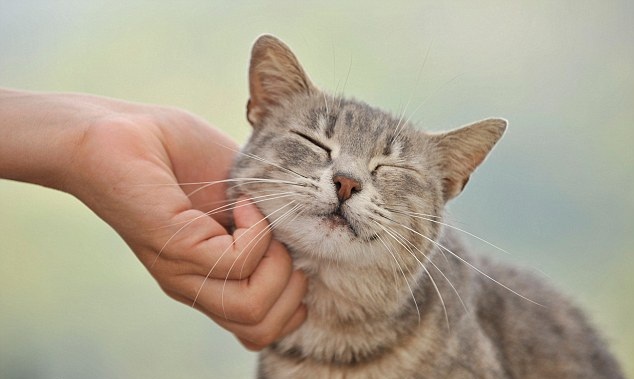
We love to cuddle and pet our cats, but this actually irritates them. According to Daniel Mills, a veterinary behavioral medicine professor at England’s University of Lincoln, some cats actually feel stressed when you pet them. Mills says that cats living in households with other cats are less stressed because they have a lesser chance of getting petted by their owners. Let’s just face it, if Snowball walks away from you when you try to give it physical affection, she just doesn’t want to deal with the stress you give her.
I am the captain now

Just because fluffy is rubbing herself against your leg, it doesn’t mean that it likes you. It might be nice to feel good about yourself when a mean old cat is finally acting nice around you and starts brushing up against you, but what it’s actually trying to say is that it owns you. Physical contact doesn’t automatically translates to “i love you”. Most of the time, it actually means “i own you”. By rubbing itself onto your leg or arm, it’s marking its property by putting his or her scent on you. Like dogs, cats have a heightened sense of smell, and  when a cat rubs against you, it’s informing other cats that you are its territory.

Mr.bigglesworth ain't so smart

A University of Oxford research on animal brains found that dog, because of their very social nature, have developed a bigger brain to adapt better in social settings. Cats, however, are more happy in solitary cultures, so their brains are not as developed to act in social settings. This is why your cat acts like a total stranger and won't come in to greet guests hello. If you’re still not convinced that cats have all the makings of a bad friend, there are countless videos of cats stealing dog beds, or terrorizing other animals so they can't pass through where they usually hang out.
Kitty kissing might lead to scratches

Many believe that a “kitty kiss” or when a cat greets you by slowly staring and blinking at you, is an expression of affection. But you might be surprised why kitty starts acting hostile the moment you reach to pet it. According to animal behavior experts, a long, deep, unblinking stare is a cat’s way of guarding his or her territory, meaning you’re actually not welcome.
Cats won’t hesitate to eat you

No matter how much you love fluffy, that cat is not going to hesitate to eat you if you die at home. According to a forensic pathologist who presented at the American Academy of Forensic Sciences conference, cats would not think twice about eating their owner if they’re left unfeed. When people who live by themselves with pets unexpectedly die, their bodies are usually left inside the house for days without anyone noticing. With their owners dead and no food on the bowls, pets begin to starve. Dogs would go several days without touching their owner’s body, but cats would only wait a day or two. The phenomenon is called “postmortem predation.”

Cat poop is toxic, but it makes you want to have more cats

Cleaning out the litter box is a real hassle, but did you know that i could also be affecting your health and brain? A certain parasite called the Toxoplasma gondii is found in cat poop. In rare occasions, this parasite can actually cause the disease called toxoplasmosis, which starts out with flu-like symptoms and leads to a weakened immune system. The illness has also been linked to a number of serious mental conditions such as anxiety, depression, and schizophrenia. Since the parasite affect people’s mental conditions, some individuals have been recorded to develop a strange and intense, almost obsessive, attraction to cats. Those who have been infected with Toxoplasma are known have a fondness for the smell of cat urine and feces.
Smelly human

And lastly, you might wonder why your cat just loves to keep licking itself. While the activity does give them a calming effect, cats actually lick themselves because they want to get rid of the “human” smell, as well as smooth and groom their fur. so  yes, your cat thinks you stink.

Whether they’re being cute and cuddly or acting like total jerks, we can’t seem to get enough of cats. Like this article? Leave us your comments on why we love cats, and suggestions on future topics. Don’t forget to share this article!
read more "Why Does My Cat Act like A Jerk?"

Monday, July 25, 2016

WARNING! When in a Wildlife Sanctuary, ALWAYS Stay in the Car!

In an open wildlife sanctuary, or any place for that matter where we as humans share space (at least how we think about it but the "wild" animals obviously have stronger instincts like territorial preservation to adhere to), you should never ever take your chances at rubbing elbows with any of place's natural inhabitants. Well, unless of course your Deadpool but we all know that chances of that happening.

This raw video footage shows us exactly why we have to stay in our vehicles. Poor soul of a woman but I doubt we can blame the wild animal on this video since this is his territory after all. What do you think?


read more "WARNING! When in a Wildlife Sanctuary, ALWAYS Stay in the Car!"

Alien Larva Lived Inside Poor Kitten

This has got to be one of the most painful situation any living creature has been subjective to! You can't believe the size of this creature inside the nose of a tiny kitten!


As you may notice on the image above, the image clearly shows the poor kitten's nose is way too enlarged. In fact, it's enlarged to the point of bursting! Needless to say of course, poor kitty is naturally in pain and when you see what alien larva comes out of him, you will realize how lucky the kitten to have survived such an ordeal.


As the removal process starts, you can see the tip of the alien larva trying hard to stay where it wants to feed. Much to the kitten's dismay of course.

But wait... This is seriously too painful for me to write a blow-by-blow account about so by all means, please do check on the video itself for your own sake! :(


Didn't I warn you this is too much to write about?!
read more "Alien Larva Lived Inside Poor Kitten"

Wednesday, July 20, 2016

What’s the Difference Between A Gerbil and A Hamster?


Many of us consider giving our kids small pets to teach them about responsibility at a young age. A dog or cat might be a bit too much for them, so we choose the next best thing, hamsters or gerbils. They’re a great choice for small pets that you can keep at home, they’re easy to take care of, and need very little maintenance. But aren’t these two animals the same? Well, not really. Not only are they different, they also have different needs. Below is a short article on the difference between hamsters and gerbils, as well as how you should take care of them.


Social life

One of the main differences between hamsters and gerbils is their need to socialize. Gerbils are very social animals and live in groups in the wild. This means that if you’re planning to keep them as pets, you’re going to need two or more gerbils since being lonely might make them unhappy. They need to be with others, so buy more than one. It’s also advisable to get younger gerbils since it’s easier for them to bond with each other.

If you don't want to deal with a whole army of gerbils (they mature very quickly and can reproduce in a flash), then apt to get two males. Female gerbils have a tendency to become aggressive with each other. Males, however, get along quite well, especially if they’re littermates or have been housed together since they were young.

On the other hand, hamsters are completely fine with living in solitude. This eliminates the fear of worrying about them reproducing. If you’re looking for a small pet that can live alone, a hamster just may be the pet for you. Like gerbils, female hamsters tend to become aggressive with each other, so if you’re planning to get more than one hamsters, avoid placing two females in the same cage.


Sleeping hours

Another difference between these animals is their sleeping pattern. Hamsters are more active during the night. They spend most of the day sleeping and resting. Gerbils on the other hand are diurnal, so they prefer to play and stay active during the day. If you want to get some sleep, or don’t want to get disturbed by the sound of digging and shuffling at night, then get a gerbil. They’ll live to play with you during the day, while hamsters may get a bit grumpy if you wake them up before the sun is down.


What to eat

For diet, these two animals basically eat the same thing. However, gerbils have a tendency to get very gassy and even suffer from diarrhea when given too much fruits or green vegetables. They do enjoy these, in fact you can give it to them as treats, but keep in mind that you should only be feeding them these in small amounts. There are a number of pet food brands that have products specifically made for gerbils and hamsters, but the usual food pellet will work.
Personality

Personality wise, gerbils are more active and tend to be a bit more hyper. They love to run around and play, while hamsters prefer to dig and curl up under the cage beddings. Both animals need exercise, so it's best to keep a wheel inside their cage so they can play and run on it. Avoid getting those wheels made from wires or those that have slots on them. They can catch a foot in the wheel, and the gerbil's tail could also get stuck. These could cause broken bones, so pick a wheel that has a smooth surface.

Looks

Hamsters and gerbils also have different appearances. Gerbils have a soft tail and stand on their hind legs which are longer compared to their front legs. Hamsters have little, stubby tails that are usually too small to be seen under their thick fur. Gerbils are more rat or mouse-like in appearance since they have a longer snout. They're also more closely related to mice compared to hamsters. If you enjoy the look of mice and rats, you might find gerbils to be more visually appealing. Hamsters have a more round body and thicker fur. They hardly stand on their hind legs and prefer to crawl around. Many find hamsters "cuter" than gerbils because they resemble little teddy bears.  


Health risk

One thing to watch out for with gerbils is that they have a higher risk of experiencing heat strokes. If you don't have an air conditioning unit in the room where you keep them, you'll want to place them in a temperature controlled cage that will keep them from overheating. A good solution for this is to keep them in an aquarium type enclosure and control the temperature to stay between 68° to 77° F (20° to 25° C). this minimizes the chance of the gerbils getting dehydrated in hotter temperatures.  Hamsters keep their cool even in warm temperatures. As long as you keep their water bottle filled with fresh water, they can take on any type of weather.
Temperament and lifespan

Both animals are actually very friendly in nature and can be raised to not bite. However, hamsters are known to be a little more prone to bit, but only when they are suddenly started or woken from sleep. As long as they are trained and handled regularly, hamsters and gerbils will love to be pet and played with. Hamsters and gerbils have more or less the same average life span. They can live up to three years, but some do survive even up to five years when well taken care of. Different varieties also vary in lifespan. Some have lived to seven years, but this is not so common.

Whether you're going for hamsters or gerbils, get ready for a super cute addition to your family. Do share this article to other pet lovers. Leave us your comments and suggestions on topics and other interesting animals.
read more "What’s the Difference Between A Gerbil and A Hamster?"

Tuesday, July 19, 2016

Unicorns - Real Animals Behind The Myth


Magical and mystical, unicorns have been the subject of legends and myths for centuries. This legendary creature is described to be a large beast that looks like a horse, only that it has a pointed, spiral horn growing out of its forehead.  It was mentioned by the ancient Greeks, throughout the Middle Ages and the Renaissance, and even in the bible. European folklore believed the animal to posses strong magical powers that could cure any illness and even bring the dead back to life. 

Although many believed in this creature, no one has really capture one. Hunts to capture this animal were even organized, often coming back with nothing. There have been many reports of sightings, but then again these could be other animals that simply resemble the mythical unicorn's appearance. Here are some possible origins of this magical creature.
Fabricated Evidence
Among the number for prehistoric bones discovered at a site called the Unicorn Cave in the Harz Mountains in Germany, some were taken out and reconstructed Otto Von Guericke, the mayor of Magdeburg. He presented the remains as a unicorn in 1663 and everyone believed that this was the real deal. The reconstructed figure was actually composed of the fossils of a woolly mammoth and the rhinoceros. A narwhal horn was added to the forehead of the skull to give it a realistic look. The remains were later declared as fake but the legend continued. 
Aurochs
During an excavation at the Harappa and Mohenjo-Daro, major sites of the Indus Valley Civilization, small stone seals were found that has elegant depictions of the animals that we seen in the area. Some of the stones had a unicorn-like figure on them, as well as an Indus script that still baffles researchers and scholars till this day. Mind you, these stones were dated back to  2500 B.C, so it's possible that prehistoric man were already believing in unicorns. The closest interpretation of the unicorn seal was that it was a representation of the aurochs, which is a type of wild cattle which once inhabited North Africa, Asia, and Europe. But this still does not explain why the seals only show one horn on its profile.  
Elasmotherium or rhinoceros
Another suggestion for the origins of the unicorn is that it is based on the Elasmotherium, a species of the rhinoceros which is already extinct. This huge Eurasian mammal was a native to the steppers, south of where the woolly rhinoceros of Ice Age Europe lived. The Elasmotherium looked nothing like a horse, but it did have a large single horn growing out of its forehead. This animal were said to have become extinct about the same time as the wooly mammoths and rhinoceros, but some scientist believe that it survived long enough to have been remembered by native European people. 
Single-horned goat
Every now and then, common domesticated animals are born with strange mutations that make them look extraordinary. One of the most common theories about unicorns is that it was actually just a single-horned goat. This theory is supported by the fact that unicorns were also described as goats, not only horses, that had one horn. Some people also produced these single-horned goats by re-modeling the "horn buds" on young goats in a way that their horns would twist and grow together. 
Narwhal
During the Medieval and Renaissance eras in Europe, unicorn horns were often found the cabinets of curiosities. However, many of these were proven to be the straight spiral single tusk of the narwhal, which is an Arctic cetacean. They were hunted and their horns taken and bought to the south as valuable trade objects. Narwhal horns are made out of ivory, so many believed that there were legit unicorn horns. And since these horns were considered to contain magical powers, it would sell for a price worth a fortune. Queen Elizabeth I of England was even reported to have kept one, given to her by Arctic explorer Martin Frobisher. 
Oryx
This animal is an antelope that has two, thin, long horns growing from its forehead. Some suggests that the oryx could have passed as a unicorn, although their horns grew towards the back of their heads, unlike the classic description of a unicorn. However, travelers and explorers who would cross Europe to go to the distant lands of Arabia and Northern Africa would tell stories of this unicorn-like creature. The Peregrinatio in terram sanctam, which is a book that describes the pilgrimage to Jerusalem passing Egypt, describes the many animals that you would see throughout the journey, which includes camels, crocodiles, and unicorns (presumably an oryx which is common in these routes). 
Eland
Southern Africa is known for its many legends and stories of spiritual and mystical creatures, which are often based on real animals. The Eland is a very large antelope that would defend itself against fearsome predators like lions, and even being able to kill them in battle. They're commonly depicted on rock art found in caves and cliffs in the region. People in the area viewed it as a sacred beast, and travelers could have picked up its legend and brought it with them back to Europe. Clan MacLeod in Scotland is reported to have custody of a unicorn horn, which was identified as an eland horn after investigation. 

Whether you believe that somewhere out there, a real unicorn is running free in a field, or that this creature is only the stuff of legends, you should know that it had very deep roots in the history and culture of many places in Europe. Scotland even named the unicorn as their national animal.
Comments? Suggestions? We're open to them. Leave a message and we'll get back to you. Don't forget to spread the magic and share this article.
read more "Unicorns - Real Animals Behind The Myth"