Fun Animals Wiki,Videos,Picture,Stories
Showing posts with label Wild animals. Show all posts

Monday, February 20, 2017

Man Drives Hours Every Day In Drought To Bring Water To Wild Animals


In a land as parched as Kenya's Tsavo West National Park, no visitor arrives with more fanfare than the water man.

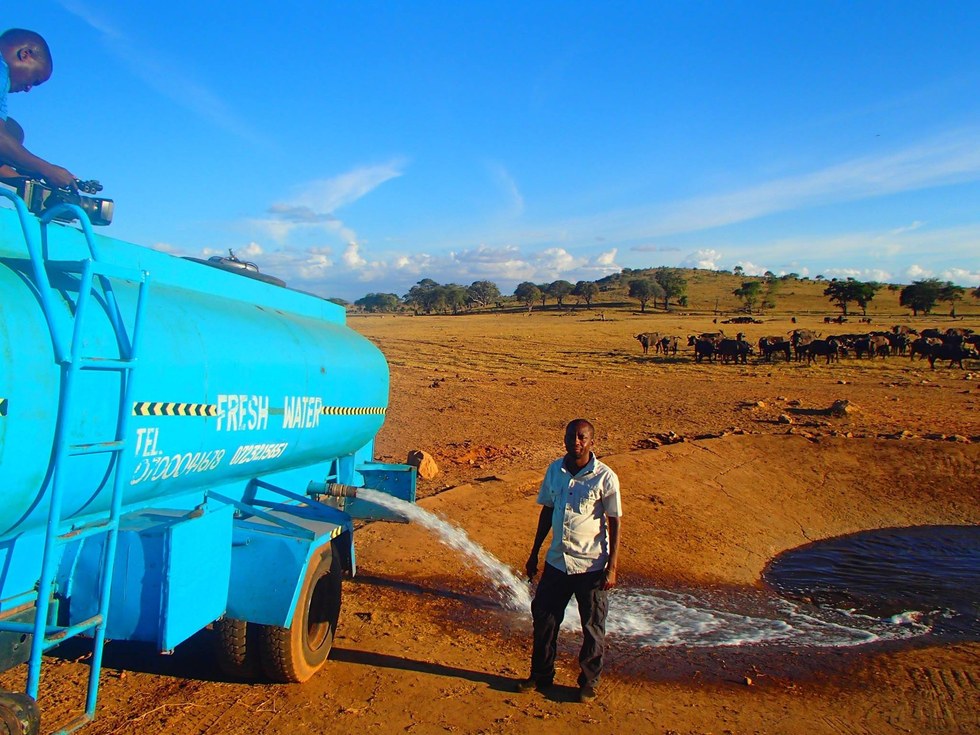
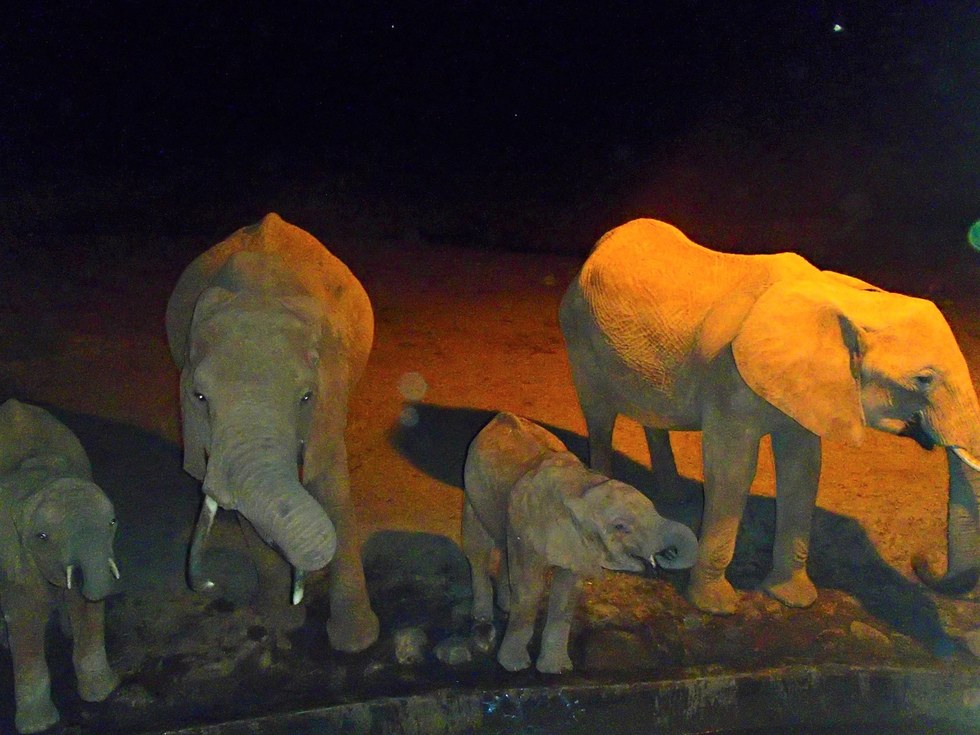
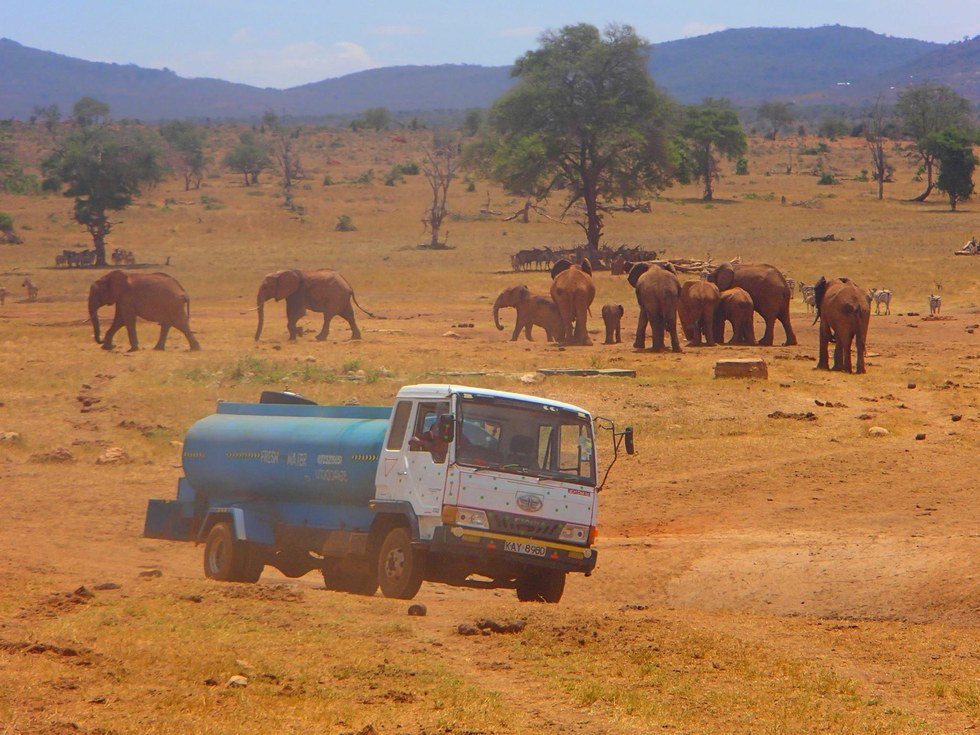
That would be Patrick Kilonzo Mwalua. And when he rumbles down the dusty road bearing some 3,000 gallons of fresh water, the elephants, buffalo, antelope and zebras come running.

They've come to know the water man by the rumble of his engine. And his lifesaving cargo.

"There is completely no water, so the animals are depending on humans," Mwalua tells The Dodo. "If we don't help them, they will die."
Patrick Kilonzo Mwalua
Mwalua fills the bone-dry watering holes in the region, driving for hours on end every day to haul water to where it's most desperately needed.

The holes themselves, lined with concrete, often need cleaning — Mwalua blames it on buffalo droppings — and sometimes, he will just hose down an area of cracked earth for the grateful animals.

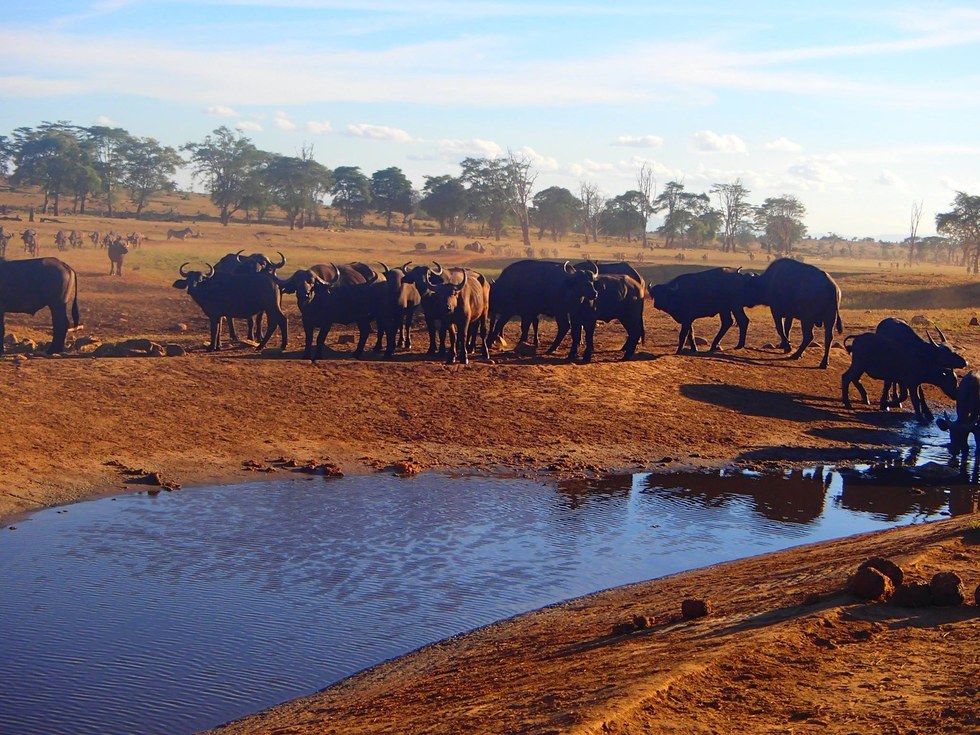
"The buffalo roll in the mud so they suffocate the fleas and ticks," he says.
water truck in tsavo kenya 
Patrick Kilonzo Mwalua
Many animals don't even wait that long, fearlessly crowding the truck as Mwalua cranks the tap.

"Last night, I found 500 buffalo waiting at the water hole," he says. "When I arrived they could smell the water. The buffalo were so keen and coming close to us.

"They started drinking water while I was standing there. They get so excited."
Patrick Kilonzo Mwalua
Mwalua, who is a pea farmer in his local village, came up with the idea after seeing firsthand the grim toll climate change has taken in his native land. In the last year especially, he says, the area has seen precious little precipitation, leaving animals to die of thirst in these cracked lands.

"We aren't really receiving rain the way we used to," he says. "From last year, from June, there was no rain completely. So I started giving animals water because I thought, 'If I don't do that, they will die.'"
Patrick Kilonzo Mwalua
Between road trips, Mwalua runs a conservation project called Tsavo Volunteers. The 41-year-old also visits local schools to talk to children about the wildlife that is their legacy.

"I was born around here and grew up with wildlife and got a lot of passion about wildlife," he says. "I decided to bring awareness to this so when they grow up they can protect their wildlife."
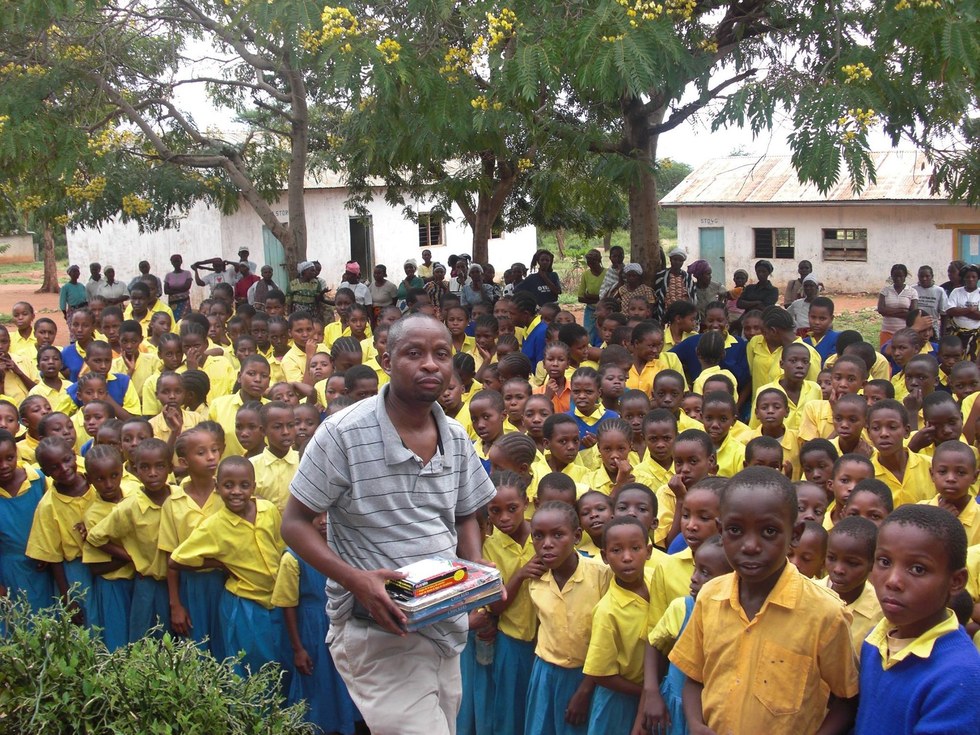
 
Patrick Kilonzo Mwalua
Last year, Mwalua started renting a truck and driving water to several locations in Tsavo West. His mission would extend to several trucks, keeping him on the road for hours every day as he drives dozens of hard miles between stops.

"The truck is heavy and doesn't go very fast," he says. "We have to be very patient and go deliver water."
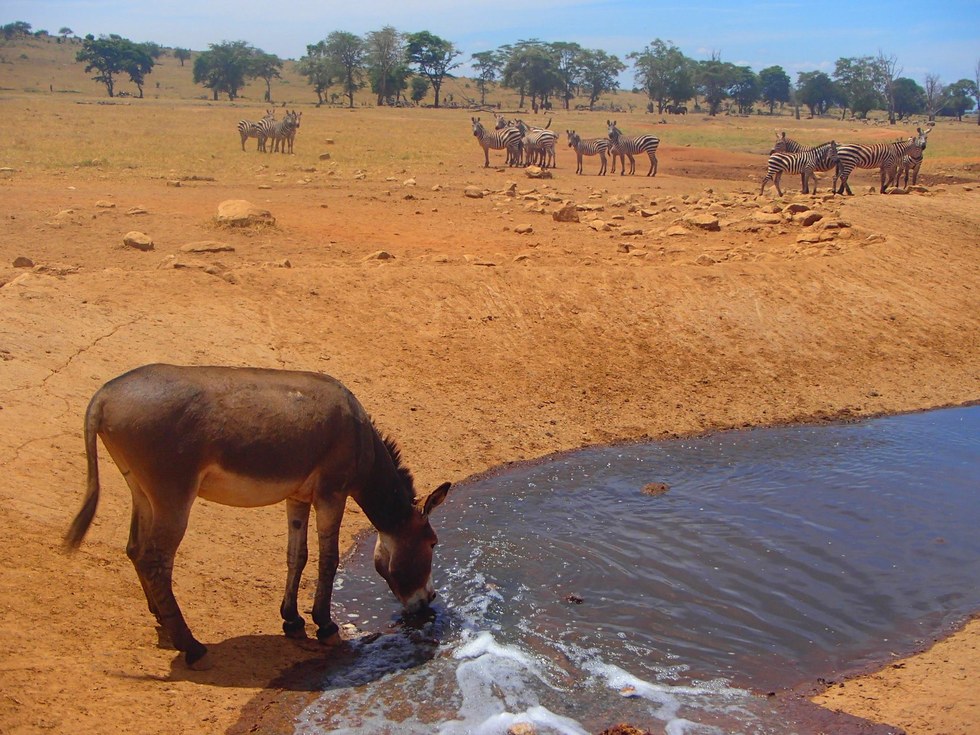
Patrick Kilonzo Mwalua
But his lifeline has also extended from that hose in Tsavo West all the way to the United States — where three women, who have never met him or each other, help him keep the taps flowing.
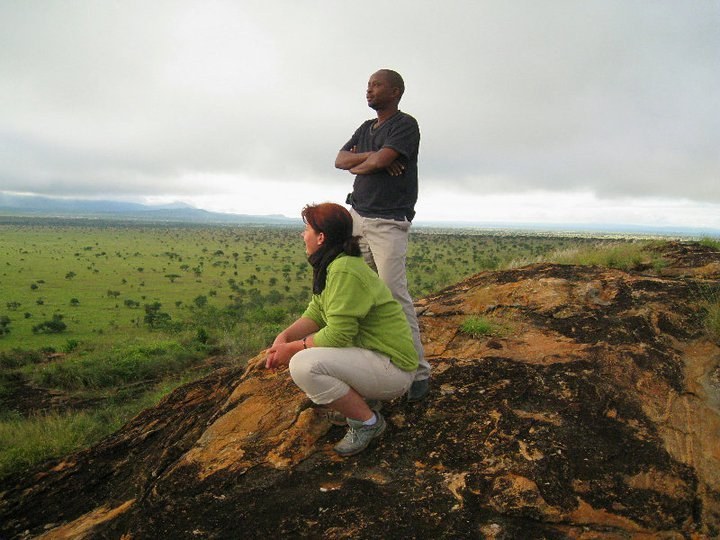
Patrick Kilonzo Mwalua
"I visited Kenya December of 2015, though I didn't know Patrick at the time or meet him," Angie Brown, who lives in Connecticut, tells The Dodo. But the country, and especially the plight of its animals, haunted her.

When she heard about the most recent drought, Brown connected on Facebook with Cher Callaway and Tami Calliope. The trio — Callaway lives in Utah and Calliope in Vermont — decided to help.
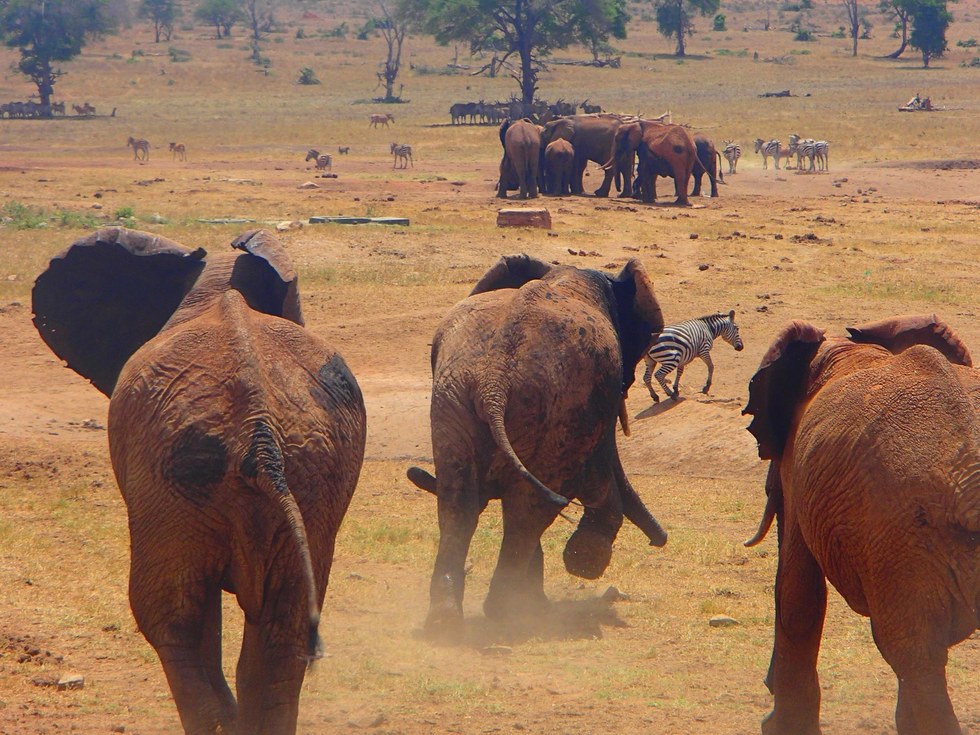
Patrick Kilonzo Mwalua
Callaway, who has worked with Mwalua on several projects — including fundraisers for beehives and night patrols to gently scare elephants away from villages — says Kenya's water delivery man is keeping animals alive during the current drought.

"His commitment to the wildlife and his heritage is unmeasurable," she tells The Dodo. "Even risking his own life in the middle of the night to deliver water to a dry water hole."
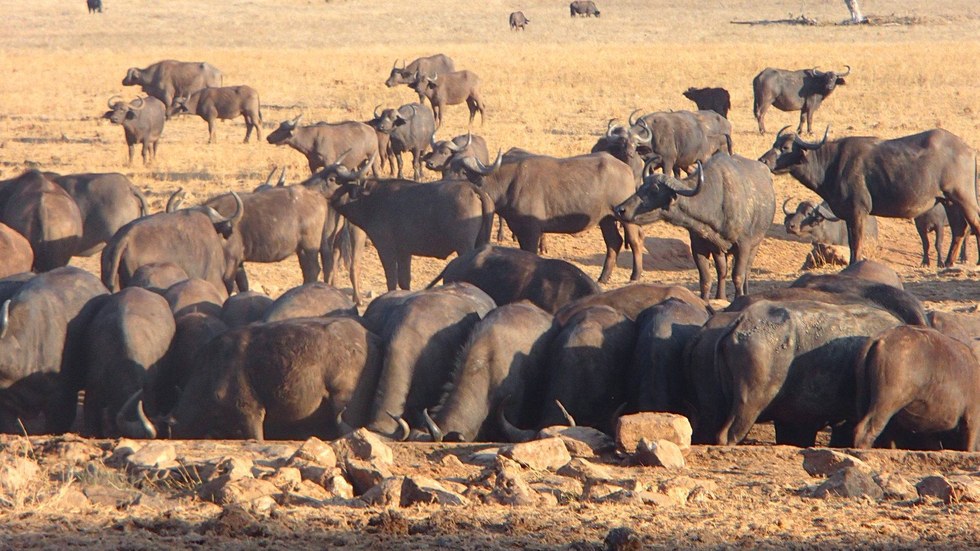
buffalo in kenya 
Patrick Kilonzo Mwalua
Callaway set up a GoFundMe page that has so far collected more than $18,000 from people around the world — all of it going toward Mwalua's water delivery service.
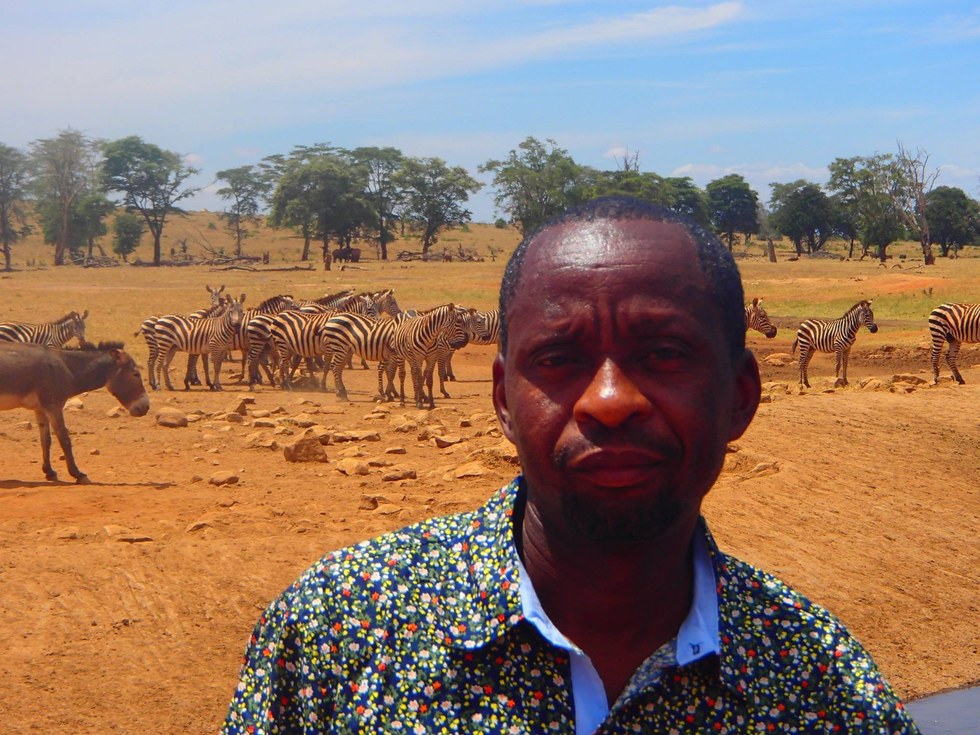
Patrick Kilonzo Mwalua
"We have all spent a lot of time getting the word out about the animals Patrick is helping and the GoFundMe has been a real success," Brown says. "He needs so much more money though."
In fact, they're hoping to soon buy him his own truck.
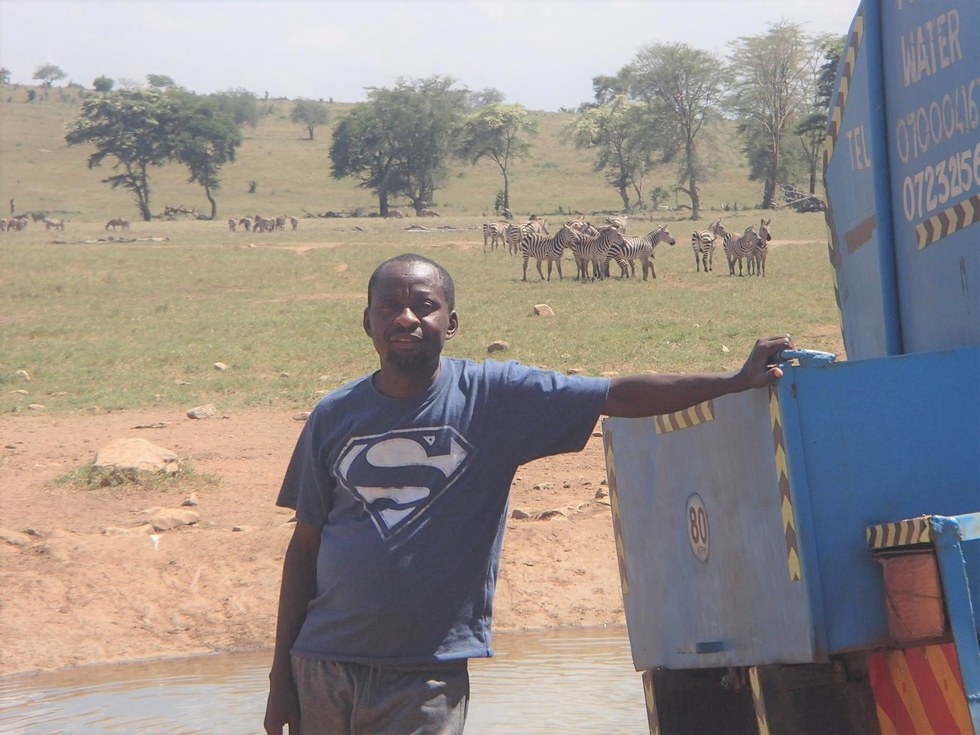
Patrick Kilonzo Mwalua
But one way or another, Mwalua will keep rumbling down those dusty roads. Many miles to go. And many more thirsty mouths.

Want to help? Consider making a contribution here.
read more "Man Drives Hours Every Day In Drought To Bring Water To Wild Animals "

Monday, November 30, 2015

Are Wild Animals Really Grateful When People Rescue Them?


We’ve all seen those heartwarming viral videos where a deer tangled in a fence or a fox with its head stuck in a jar suddenly become calm and “grateful” when a human approaches to save them from their predicament.
For example, take this rescue of a wild deer:


But, as much as we might like to believe that these wild animals are indeed showing gratitude for their rescuer, experts say that’s not really the case.

“Since the animal that is being rescued rarely feels better immediately, it is unlikely that they understand they are being helped,” Dave Zahniser, rescue manager at the Marine Mammal Center, told Discovery.com.

The reason the animal becomes so calm could be due to something called “capture myopathy syndrome,” which is a form of shock.

This is not, however, the cause of that well-known frozen “deer-caught-in-headlights” look, which is due to a deer’s inability to see in bright light, causing it to freeze. It is also not why some animals, like possums, “play dead.” Scientifically referred to as thanatosis, animals use this as a defense mechanism only when escape from a predator is impossible.

So what exactly is capture myopathy?
According to “Zoo & Wild Animal Medicine” by University of California, Davis researcher Murray Fowler, it is “probably an inherent mechanism that hastens the death of an animal following capture by a predator, thereby reducing pain in the prey and conserving energy for the predator — a mechanism which is, in a way, beneficial to both.”

Karen Emanuelson, director of veterinary services at the Oakland Zoo in California, told Discovery.com the syndrome causes an animal to go into a form of shock that “may fill their lungs with fluid and lead to later death, even if they are saved from an immediate threat.”

But what about those cases where wild animals seek out humans to help them like in the video above?
Emanuelson told Discovery.com those animals have usually already become habituated around people.

For example, Emanuelson said that two years ago, a dolphin caught in a hook approached people on a night dive in Hawaii. The divers helped the dolphin free itself. She said the dolphins there “have learned people have capabilities that could benefit them.”

And in those cases of, say, a mother duck quacking loudly when one of her ducklings falls into a sewer, the experts say that’s just a mother’s natural instinct. She is not necessarily trying to get the attention of a potential human rescuer, but merely attempting to maintain communication with her offspring.

Although it might go against our instincts, the experts warn us civilians not to go near wild animals in distress.
“An animal that is injured, ill or orphaned is already experiencing great stress,” notes Wildlife International. “It may be in pain, dehydrated, starving and fearful.”

To minimize further stress, “be prepared and have a plan of action, as well as all the necessary equipment,” Wildlife International recommends.

“A well-meaning action to assist could actually even be illegal, depending on the species and location,” Zahniser told Discovery.com, “so always call a local rescue hotline or animal control to assist.”
read more "Are Wild Animals Really Grateful When People Rescue Them?"

Wednesday, October 29, 2014

7 Islands where Animals Rule


In some places in the world, a certain species of animal seem to rule over humans. From horses to cats and even rabbits, below are 7 places where it seems like there are more animals than humans.

Monkeys - Cayo Santiago, Puerto Rico


Imagine the movie Planet of the apes instead the settling is in an island used as a research facility. There is an estimate of around 800 to 1,200 rhesus macaque that frolic around the area. 409 of these monkeys were actually sent in from India in the late 1930’s to make the research facility, and a couple decades and some generations later, the monkeys have ruled the island.

Cats - Tashirojima, Japan


Cat lovers with think this little island is paradise. The island of Tashirojima is a fishing village where cats are said to outnumber humans by 4 to 1. The felines that live here are pretty happy and well feed, thanks to locals and tourists who give them food for good luck. The island also has a number of cat shrines as well as unique cat-shaped and themed buildings.

Pigs- Big Major Cay Island, Bahamas


When you think of the Bahamas, you usually imagine white sand beaches, tropical drinks and just relaxing. However, you might see a couple dozen pigs that would swim along with you. Pigs are actually good swimmers. Local legends say that these pigs were left by sailors as food reserves, but they never came back for them. The pigs are now tourist attractions and are very warm to strangers.

Rabbits - Okunoshima Island, Japan


Japan has a thing about cute, furry little animals. Okunoshima Island once housed a facility that made poison gas back in WWII but now the place has completely changed with a tourism industry brought in by thousands of rabbits that freely hop around the place. The island also has a hotel, camping grounds, a small gold course and even a museum that remembers its dark past, but most of the tourists go there for the bunnies.

Horses - Assateague Island, Maryland and Virginia


Assateague Island has one of the best beaches in America, but first time tourist there are often shocked to find over 300 feral horses that roam around the place freely. Locals say that these horses survived a big shipwreck that happened near the island some years ago. They’re mostly harmless, although they’ve been known to take food away from campers.

Snakes - Ilha da Queimada Grande, Brazil


If you’re scared of snakes, this island near Brazil is deffinetly not for you. Ilha da Queimada Grande, which is around 90 miles off 90 miles, is often called the world’s deadliest island. Deadly snakes are found all over the place, estimating 1 snake per 10sq-ft. Golden lanceheads, which are vipers with poison that are said to have the ability to melt human flesh breed here.

Deer - Itsukushima, Japan


The Shinto religion regards the dear as a sacred animal, which is why many of these animals just prance around so many towns near the rural areas. However, Itsukushima is known to have the most populated herd. The place is also known for its Torii gate and shrines.
read more "7 Islands where Animals Rule"

Monday, September 1, 2014

✺ Kevin Richardson - Part 3 of 3 - The Lion Ranger - Death in the Kingdom - Doku English

They lick his head off, dozing in the sun with him and hug him even. Kevin Richardson The Lion man from South Africa, is part of the pack. The big cats are his family.


Video

Youtube | sonngasse
read more "✺ Kevin Richardson - Part 3 of 3 - The Lion Ranger - Death in the Kingdom - Doku English"

Sunday, August 31, 2014

Drenched and Dry Africa (African Wildlife Documentary)

Drenched and Dry Africa is a documentary that explores the wildlife in the drenched Okovango Delta compared to the animals on the dry rocks of Namibia . Features the Big 5, other predators, antelopes, birds and much more; filmed, edited and narrated by Hamish Paget-Brown


Video

Youtube | Hamish Paget-Brown
read more "Drenched and Dry Africa (African Wildlife Documentary)"

Animal Planet wildanimal.orphans.big.cats.and.baby.baboons

Wild Animal Orphans with Marlice and Rudie van Vurren


Video

Youtube | DocumentaryTV
read more "Animal Planet wildanimal.orphans.big.cats.and.baby.baboons"

Friday, August 29, 2014

Nature & Animals 2 (1080p HD)

Amazing animal video made perfectly. especially the polar bear part.


Video

Youtube | wittydud
read more "Nature & Animals 2 (1080p HD)"

Wednesday, December 4, 2013

New Species of Wild Cat Discovered in Brazil


Discoveries of previously unknown mammals, especially large mammals, are always an exciting affair, which is why news of scientists discovering a new species of wild cat in Brazil quickly made the rounds on television and the Internet. A mammal discovery is a reminder of how in many ways, we’re still scratching the surface of what we know of the natural world. More importantly, the discovery of the new wild cat brings to light conversation issues for the animals.
Scientists had for many years thought there was only one species of Brazilian tigrina, but it turns out there the housecat-sized tigrina populations in the northeastern and southern section of Brazil are two completely separate species, this according to research on their molecular data. With no evidence to support interbreeding between the tigrina populations, they were declared as two distinct species.

According to Eduardo Eizirik of Pontifícia Universidade Católica do Rio Grande do Sul in Brazil, their research calls for increased focus on the conversation of tigrinas in northeastern Brazil, which little is  known of as far as their biology and numbers go. In contrast, much more is known about the wild cats in southern Brazil.

Eizirik and his colleagues theorize that the two separate species probably evolved according to their environments, with the northeastern tigrinas adapting to savannahs, forests, and dry shrub land, while the southern cats live in wetter and denser Atlantic forests.

All species of wildcats in Brazil however, are threatened, and the race is on to learn more about them to increase conservation efforts.

Read more at Science Daily.


read more "New Species of Wild Cat Discovered in Brazil"

Tuesday, July 9, 2013

'Wild' animals in travelling circuses benefit no one

The suggestion by a committee of MPs on Tuesday that zebras, camels and several other wild species are appropriate in travelling circuses will cause dismay, outrage and some measure of agreement.
Whether transportation causes animals unacceptable stress, or circuses represent an environment ripe for abuse, can be argued back and forth. But why does a debate about this even exist?

There is an eternal tension between humans and the rest of the animal world. Our existence relies on some measure of exploitation. Animals are routinely killed and enslaved to further the human purpose. And, apart from cases of inhumane treatment, much of this relationship has a necessary evil argument in its favour.

Source: Here
read more "'Wild' animals in travelling circuses benefit no one"

Tuesday, January 1, 2013

More Wolf Facts


Wolves, in the past, have been typically regarded as villainous creatures, depicted as the “bad guys” in countless fairy tales and stories.

From the big bad wolf in Little Red Riding Hood to the huffing and puffing wolf in The Three Little Pigs, the status of the wolf as a bad guy has changed over the years, with movies like Balto: Wolf Quest, released in 2002, making wolves as the good guys this time around.
Wolf
As members of the animal kingdom, wolves are known to have their own share of distinct and unique personalities, and given their genetic ties with the domestic dog, these wolf characteristics are typically banded with their homestead-based cousins.

However, though the two species do share similarities, they are actually quite different from each other.

For one, wolves are instinctively tuned for wide spaces, which means that keeping them as pets is not as feasible as one would imagine, particularly in a urban closed-quartered habitat. Cases of wolves being raised as domestic pets are known to exist, but such successful cases are known to take place in farm or open-space habitats, ones which allow wolves to roam free without any of the risks of vehicle traffic or wolves encountering people from time to time when they are prowling about.

Another wolf trait would be in their natural inclinations to form packs or groups, with packs typically populated by six to ten wolf members. Typically, a wolf pack could cover spaces as large as 20 kilometers or 12 miles per day, a trait that falls in line with the wolf’s need for wide spaces.

Wolves are also known to have only one mate for life, and in such situations, a wolf pack leader, a male, and his mate are the only members of the pack who are actually “allowed” to mate. The wolf cubs born in packs are typically taken care of by every individual member, as and new members of the group are born, they eventually break out from packs to form their own as they grow older.

Incredibly intelligent and highly organized, wolves are loyal to their packs, committed in doing what they can in cooperatively surviving the harsh realities imposed on them by their habitats.

Far from being nature’s natural villains, the wolf’s standing as a bad guy has changed over the years, shedding some light on the truth of just how amazing and wonderful they are as creatures.
read more "More Wolf Facts"

Saturday, December 29, 2012

Wildebeest


Wildebeest are commonly mistaken as “wilderbeast”, a mistake that is borne from how the mammal’s name is spelled.

But as commonly misspelled as its name is, the popularity of the wildebeest is one that mirrors with the lions of Africa, given the fact that they are among the lion’s well documented preferred types of prey.
Wildebeest
The 1966 movie Born Free had featured a wildebeest or two, something which couldn’t have been avoided given that the movie told the story of a lion being adopted by a couple.

Also referred to as the gnu, the wildebeest is a hoofed and horned mammal of the antelope genus, one that bears a resemblance with antelopes, only built larger making them look more like “slimmer sized” cows. Growing as large as 4 feet in length, the wildebeest’s lifespan is documented to cover 40 years, though the average wildebeest lives as long as 20 years.

The wildebeest takes it name from the Dutch wild beast, and is known to generally populate two wildebeest types, the black and the blue wildebeest.

Between the two, it is the blue wildebeest that is said to have stayed true to its genetic origins, with the black showing evident sings of evolutionary adaptations. Though the blue wildebeest is not exactly blue in color, its coat is more grayish in hue, while the black wildebeest bears a more brown-toned coat.

In terms of size, blue wildebeests are known to be bigger than the black variety, and as physical differences come, the striped coat patterns and the horn shapes of the two types are also different from each other.

Being one of the lion’s often preyed upon species, the wildebeest has somewhat taken a popular position in the animal kingdom, oftentimes paired with zebras, who are also among the species preyed upon by lions.
Wildebeest Pictures

Wildebeest image

Wildebeest

Wildebeest
 Wildebeest Video
 
read more "Wildebeest"

Tuesday, December 18, 2012

Tigers


Tigers are known for being the biggest of the world’s big cats, bearing their trademark orange tabby-like patterns, as well as for its “albino” or white tiger variants.

The subject of the 2004 released film entitled Two Brothers, the movie starred Guy Pearce and it focused on the lifecycle of two tigers, two brothers, depicting the different life challenges tigers are subjected to in this day and age.
Tigers
The movie did well in relating the harsh realities tigers are exposed to, a reality that is imposed on them by how human societies are getting more and more close to the tiger’s natural habitats.

Being the largest of the big cats, tigers are known to grow a large as 11 feet in total body length, with some weighing as much as 670 pounds, making them one of the top three largest land carnivore in the world, a status which follows after the Polar Bear and the Brown Bear.

Highly Endangered, the tigers were once considered as a “prize catch” among poachers, often hunted for their coats, along with different interests delving into the use of tiger body parts for medicinal purposes or for the creation of certain medicines.

In modern times, there are three known extinct tiger species which had met their end within the previous century. The Bali Tiger went extinct in 1937, while the Turan Tiger (also known as the Hyrcanian and Caspian Tiger) went extinct sometime in the 1970’s.

The Javan Tiger is also considered as an extinct tiger species, given the fact that the last of its kind was documented in 1979 with no other leads indicating that they are still around.

As large as tigers are, the threats which run their risk for extinction is far larger than them, thus the emphasis on keeping them protected from poaching and other illegal animal trade practices.
Tiger image

Tigers

Tigers picture

Tiger images
 Tiger Cub Video
 
read more "Tigers"

Wednesday, December 5, 2012

Real Wolves at Twilight Premiere


Edward Cullen and Bella Swan should better be careful next time around since PETA lashed at them while partying with wolves. Yes, not men in wolves clothing but real wolves to create a more monstrous and wild impact to mark the last film premier of the movie, “Twilight”.

It was not Edward and Bella’s fault though since party planners just want the guests to have a taste and feel of the real thing. Since they could not find vampires, these four-legged wolves may be the best performing act of the night.
Real Wolves at Twilight Premiere
The three wolves that were in a safely enclosed cage nearing the entrance wowed the guests and some were in aghast. The presence of the wolves brought the party to the max but there were people who were not at all pleased, their spirit not lifted up a bit! Animal rights organization PETA which stands for

People for the Ethical Treatment of Animals has this to say on the presence of the wolves at the Twilight premiere through Yahoo News, “Didn't it dawn on the 'Twilight' event organizers that real wolves do not belong at a party with blaring music and flashing lights?"

"The wolves were provided by Hollywood Animals, a notorious exhibitor that has been cited for numerous violations of the Animal Welfare Act for repeatedly failing to provide the animals it exploits with basic veterinary care, proper shelter, food, and water," the statement continued. "We hope the rest of the promotional events surrounding 'Breaking Dawn' celebrates the brilliant work of the cast and crew and shows enough respect for wildlife to leave animals out of it.”

To all producers and party planners out there, there is a lesson to learn. In the light of the observance and respect to animal rights, it is best to keep animals away from the limelight especially when animals from the wild are concerned.couldn't find any, and the team doesn't know how long
Real Wolves at Twilight Premiere
Wolves Video
 
read more "Real Wolves at Twilight Premiere"

Friday, November 16, 2012

Canadian Moose


Canadian moose, as creatures, are quite interesting, proudly standing as the biggest of the known deer species in the world. Also known as the Eurasian Elk, Canadian moose are defined by their twig-shaped antlers in males, as well as antler varieties bearing the palmate antler convention.

The 2006 released animated feature, Brother Bear 2, stands to be one of the few mainstream children’s features which had Canadian moose characters, with the film taking after the original story left by the 2003 released Brother Bear.
Canadian Moose
Featuring the voice talents of Mandy Moore, Patrick Dempsey and Jeremy Suarez, Brother Bear 2 proved to be quite impressive as a Disney sequel title, far from the expectations viewers had expressed on other Disney sequels like Jungle Book 2 or Cinderella 2.

In its telling, the movie featured two Canadian moose characters, whose whimsy and funny personalities did well in adding some significant spice to the movie’s overall plot. Though the personalities of real Canadian moose are not exactly mirrored by the moose featured in Brother Bear and Brother Bear 2, the depiction of Canadian moose as inquisitive creatures was effectively sent out as a message to the movie’s viewers of all ages.

With the Canadian moose known to be found in almost all parts of Canada, estimates have pegged Canadian moose populations to be somewhere between 500,000 to 1,000,000. With moose subspecies also found in Finland, Russia, Sweden, Norway and in the United States, Canadian moose stand as the more active representatives of the moose species in the world.
Canadian Moose

Canadian Moose

Canadian Moose

Canadian Moose
Canadian Moose Video
 
read more "Canadian Moose"