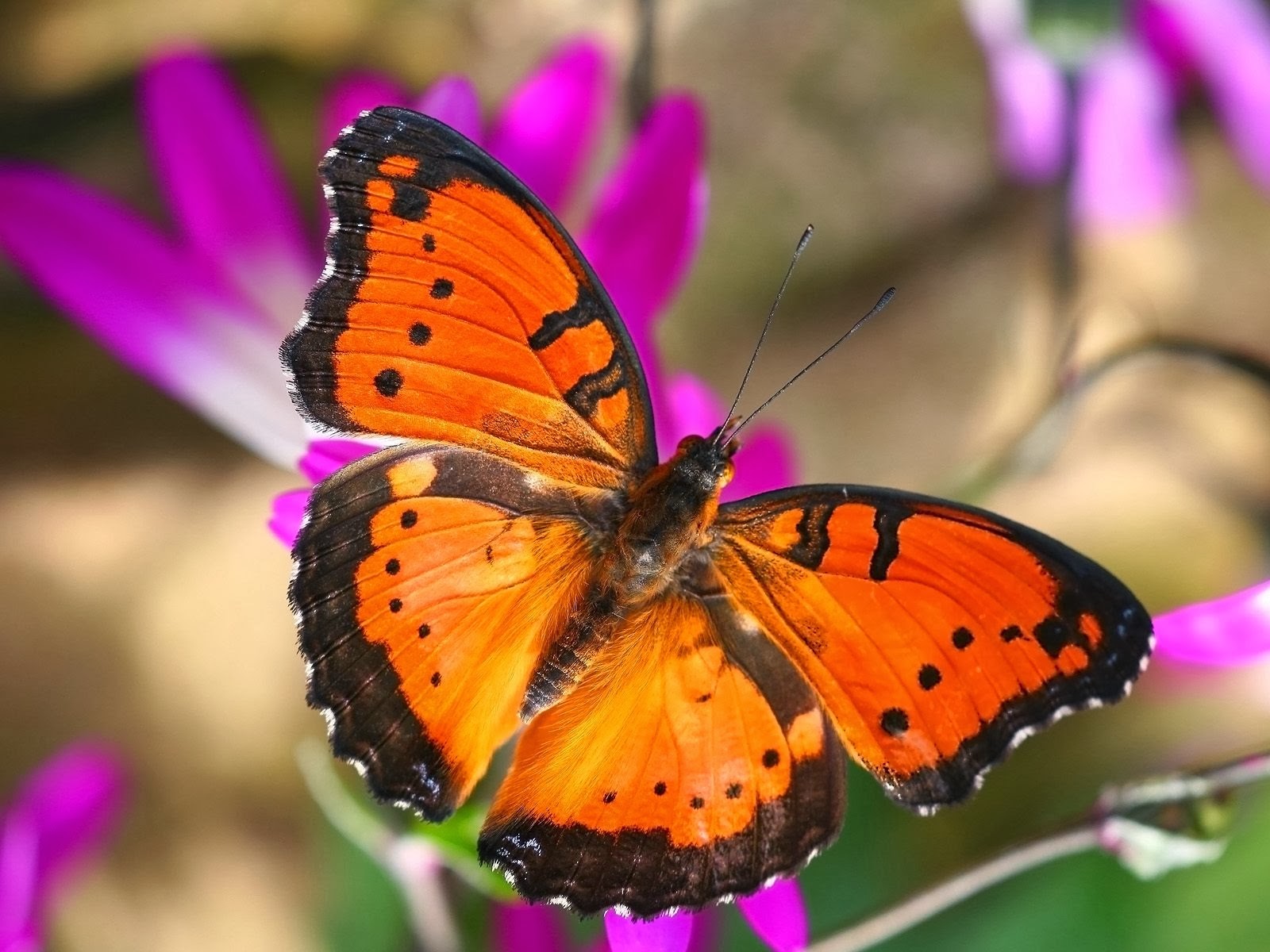
The Indian red admiral, V. indica, is found in the Canary Islands as well as India and is distinguished by black at the apex, with subapical white spots and a discal red band. Hindwing dark brown, unmarked, except for the black-spotted red margin. Wings have a golden and bronze sheen, especially near the bases. Underside: dark brown with fine grey, greenish, brown and black markings, which aid in camouflage. READ MORE
read more "Indian Red Admiral"
Showing posts with label Butterfly. Show all posts
Saturday, July 25, 2015
Friday, May 8, 2015
10 Admirably Beautiful Insects
We would never usually associate insects and creepy crawlies with beauty. In fact, many of us find them more annoying creatures with painful bites or stings. However, if we take the time to really look at them, they do have a few physical features that make them beautiful.
Here are 10 insects that you might not mind admiring.
Stick Insect
At times, beauty isn’t measured with gorgeous colors. With stick insects, you can find their appeal in how they are shaped. They have top rating in camouflage since they look exactly like a stick and are almost impossible to spot when mixed with twigs and leaves.
Christmas Beetle
Imagine a bug that comes in all the colors of the rainbow. The Christmas Beetle’s shell has a shimmering, metallic quality to it that makes it shine and reflect different colors. They may not look the prettiest, but they are the most colorful.
Honey Bee
Something about their stripes and furry bodies make them a favorite subject for photos. Honey Bee are very well loved by gardeners since they help pollenate plants, plus they produce honey, which can make any baked good taste so much more awesome.
Signature Spider
Although most of us hate spiders because they just look scary, signature spiders come in different lovely colors that you’d forget that they make your skin crawl. These are found all over Asia and are generally harmless.
Grasshopper
You might think of these insects as boring because they are commonly seen in either green or brown, but some species of grasshoppers are actually quite colorful. They’re a visual surprise when seen in a group.
Caterpillars
Most prefer to wait for these bugs to turn to butterflies before calling them beautiful, but caterpillars can be a stunning surprise to see on a leaf. They come in all different colors and patterns, some even having textured bodies that just add to their appeal.
Ladybugs
Also known as ladybirds, these insects are probably one of the first things we think of seeing in gardens filled with flowers. They come in vivid yellow, orange, and the most common, red. Although they’re tiny, a closer look on their glossy colorful shells and black spots will make you appreciate them more.
Dragonfly
Delicate and colorful, anyone can say that a dragonfly is beautiful when they spot one. You can see iridescent greens and blues on their wings and thin, long bodies. But since they’re very fast and small, you get to see their full beauty when they’re resting.
Praying Mantis
It sound crazy to call a praying mantis beautiful, but some species come in an array of wild, colorful wings that look amazing when they flutter them. These insects are strangely beautiful.
Butterfly
You can argue that butterflies are the most spectacular insects on the planet. From something that looked more like a worm, to a hard shell that hung from a twig, they emerge with wings that have vivid and outstanding colors and patterns. There’s something calmingly beautiful abut butterflies which makes them even more welcomed in gardens.
Wednesday, January 14, 2015
Butterfly Atlas
Butterfly Atlas is a large saturniid moth found in the tropical and subtropical forests of Southeast Asia, and is common across the Malay archipelago.
read more "Butterfly Atlas"
Tuesday, March 18, 2014
Wednesday, September 18, 2013
Amazonian Butterflies Drink Turtle Tears
The sight of butterflies flocking onto the heads of yellow-spotted river turtles in the western Amazon rain forest is not uncommon, at least if one is able to sneak up on the skittish reptiles. But the reason why butterflies congregate onto the turtles may be stranger than you think: to drink their tears.
The butterflies are likely attracted to the turtles' tears because the liquid drops contain salt, specifically sodium, an important mineral that is scant in the western Amazon, said Phil Torres, a scientist who does much of his research at the Tambopata Research Center in Peru and is associated with Rice University.
Source: Here
read more "Amazonian Butterflies Drink Turtle Tears"
The butterflies are likely attracted to the turtles' tears because the liquid drops contain salt, specifically sodium, an important mineral that is scant in the western Amazon, said Phil Torres, a scientist who does much of his research at the Tambopata Research Center in Peru and is associated with Rice University.
Source: Here
Wednesday, September 11, 2013
Logging threatens Monarch butterflies in Mexico
MEXICO CITY (AP) - A new study of the Monarch butterflies' winter nesting grounds in central Mexico says small-scale logging is worse than previously thought and may be contributing to threats facing the Monarch's singular migration pattern.
The reserve's 33,482-acre (13,550-hectare) core zone lost 41 acres (16.6 hectares) of pine and fir trees so far in 2013, about half of that because of illegal logging, said the study by Omar Vidal, head of Mexico's chapter of the World Wildlife Fund, the WWF, and other authors. The rest of the loss was due to drought or disease-control removal of trees.
Source: Here
read more "Logging threatens Monarch butterflies in Mexico"
The reserve's 33,482-acre (13,550-hectare) core zone lost 41 acres (16.6 hectares) of pine and fir trees so far in 2013, about half of that because of illegal logging, said the study by Omar Vidal, head of Mexico's chapter of the World Wildlife Fund, the WWF, and other authors. The rest of the loss was due to drought or disease-control removal of trees.
Source: Here
Wednesday, September 4, 2013
Vital Information about Monarch Butterflies
Cindy Dunn, a teacher and naturalist, provided vital information about monarch butterflies. An informational session was organized in which it was unveiled that people in Mexico have celebrations when monarch butterflies arrive.
It was unveiled in 1970s that monarch butterflies live in central Mexico's mountains during winters. Dunn said they travel about a 2,000-mile journey during winters to find mountains in the fir forests in Central Mexico.
Source: Here
read more "Vital Information about Monarch Butterflies"
It was unveiled in 1970s that monarch butterflies live in central Mexico's mountains during winters. Dunn said they travel about a 2,000-mile journey during winters to find mountains in the fir forests in Central Mexico.
Source: Here
Thursday, August 8, 2013
University of Minnesota butterfly expert confronts monarch decline
Every time a monarch butterfly emerges from its chrysalis and unfurls its delicate wings, Karen Oberhauser stops to watch.
For Oberhauser, a University of Minnesota conservation biologist, an insect that weighs no more than a paper clip but flies to the mountains of central Mexico is a symbol of resiliency.
Source: Here
read more "University of Minnesota butterfly expert confronts monarch decline"
For Oberhauser, a University of Minnesota conservation biologist, an insect that weighs no more than a paper clip but flies to the mountains of central Mexico is a symbol of resiliency.
Source: Here
Saturday, July 20, 2013
Tuesday, July 9, 2013
Butterfly decline a worrying portent
Butterflies are the essence of cool in the insect world, a favorite muse for poets and songwriters who hold them up as symbols of love, beauty, transformation and good fortune.
But providing good fortune apparently goes only one way. As humans rip apart woods and meadows for housing developments and insecticide-soaked lawns, butterflies across the US are disappearing.
Source: Here
read more "Butterfly decline a worrying portent"
But providing good fortune apparently goes only one way. As humans rip apart woods and meadows for housing developments and insecticide-soaked lawns, butterflies across the US are disappearing.
Source: Here
Wednesday, January 16, 2013
Subscribe to:
Posts (Atom)