Fun Animals Wiki,Videos,Picture,Stories
Showing posts with label Endangered animals. Show all posts

Thursday, January 4, 2018

Photographer’s quest to document animals which could soon be extinct


In the not too distant future, photographs like these could be the only way we have to see these animals.

Each of the beautiful creatures pictured is threatened with extinction.

Photographer Tim Flach travelled around the world to document them, hoping that by doing so he could prompt people to take action before it’s too late.

He’s basically a modern day Noah, only instead of an ark he has a camera.

All these photos, plus many more, are collected in his book Endangered.

Polar bear

Photographer's quest to document animals which could soon be extinct
(Picture: Tim Flach)

Native range: Arctic Circle

Conservation status: Vulnerable

Yellow Eyed Tree Frog Eggs


Photographer's quest to document animals which could soon be extinct
(Picture: Tim Flach)

Conservation status: Endangered

Philippine eagle
Photographer's quest to document animals which could soon be extinct
(Picture: Tim Flach)

Conservation status: Critically endangered

Native range: eastern Luzon, Samar, Leyte, and Mindanao (all islands in the Philippines).

Hippopotamus
Photographer's quest to document animals which could soon be extinct

Conservation status: Vulnerable

Native range: sub-Saharan Africa

Yunnan Snub Nosed Monkey


 Photographer's quest to document animals which could soon be extinct
(Picture: Tim Flach)

Conservation status: Endangered

Native range: China

Snow Leopard


Photographer's quest to document animals which could soon be extinct
(Picture: Tim Flach)

Conservation status: Vulnerable

Native range: mountain ranges of Central and South Asia

Ploughshare Tortoises
Photographer's quest to document animals which could soon be extinct
(Picture: Tim Flach)

Conservation status: Critically endangered (they are the rarest tortoise in the world)

Native range: Madagascar

Iberian Lynx
Photographer's quest to document animals which could soon be extinct
(Picture: Tim Flach)

Conservation status: Endangered

Native range: Iberian Peninsula in Spain

Tiger
 Photographer's quest to document animals which could soon be extinct
(Picture: Tim Flach)

Conservation status: Endangered

Native range: India to Bangladesh, Bhutan, Nepal, Myanmar, Thailand, Cambodia, Laos, Vietnam, China, Malaysia, Indonesia, North Korea and Russia. However, their population is fragmented and seriously reduced over the last century
read more "Photographer’s quest to document animals which could soon be extinct"

Tuesday, February 21, 2017

11 Wild Animal Species You Never Knew Were Endangered


Orangutans

01_Wild_animals_species 
There are two species of orangutans: Bornean, ones that prefer the ground over the trees, and Sumatran, which have longer facial hair and develop closer bonds with each other. A century ago, their global population was more than 230,000. Now there are between 45,000 and 69,000 Bornean (endangered status) and only 7,500 Sumatran (critically endangered status).

Ground squirrels

02_Wild_animals_species
That’s right, even squirrels are endangered, specifically the San Joaquin antelope ground squirrel. Native to California, these guys have been disappearing since 1979 on account of the construction and human developments going through their habitat. Their total population is unknown, but it could be anywhere between 124,000 and 413,000.

Tigers

03_Wild_animals_species
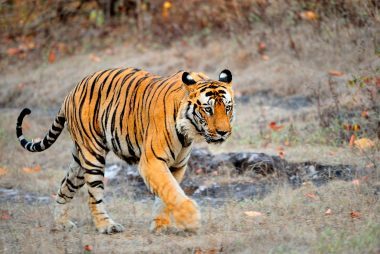
All six tiger species are endangered, with Sumatran and South China tigers at a critically endangered status. The main reasons for their population decline are poaching and destroyed habitats, as humans clear forests to gather timber and build roadways. Only about 3,890 tigers currently live in the wild.

Giraffes

04_Wild_animals_species 
The International Union for the Conservation of Nature recently put giraffes at a vulnerable status, the level just before endangered. The giraffe population has declined a drastic 40 percent in the last 30 years, primarily due to loss of habitat and poaching. Some giraffes are killed just for their tails, which are considered status symbols in Africa.

Hummingbirds

05_Wild_animals_species 
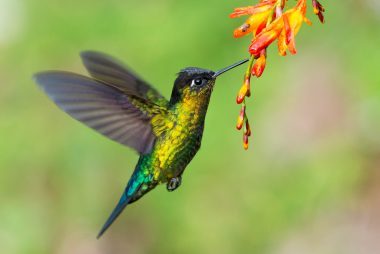
Seven hummingbird species are endangered, all found in the Americas, primarily because of deforestation. The chestnut-bellied hummingbird has fewer than 1,700 mature individuals, and there are less than 400 sapphire-bellied hummingbirds left.

Black rhinos

06_Wild_animals_species 
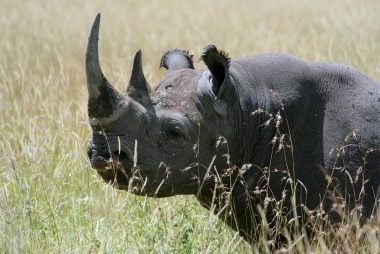
Black rhinos are critically endangered, with fewer than 5,000 left in the world. The rest have succumbed primarily to poaching and illegal trading for their horns. Between 1970 and 1992, hunters killed 96 percent of Africa’s black rhinos. 

Bonobos

07_Wild_animals_species 
War hurts more than just humans. Civil unrest in the Democratic Republic of the Congo has made bonobos more vulnerable to poachers and continues to destroy their forest homes. It’s unclear how many bonobos there are—probably 10,000-50,000—but scientists believe their population will continue to decline over the next 50 years.

Whales

08_Wild_animals_species 
As few as 300 North Atlantic right whales remain in the wild, and the populations among the other seven species range between 10,000 and 90,000. Pollution is a major threat for these aquatic giants, but according to the World Wildlife Fund, more than 1,000 whales are killed every year for commercial purposes.

Asian elephants

09_Wild_animals_species 
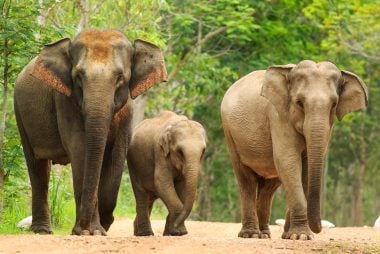
The main threat to Asian elephants, one of the most intelligent animals, is their shrinking habitat. As the human population grows, people invade their land to build roads and railway tracks. Elephants in Myanmar are at an especially high risk for being captured and traded or used illegally in the tourist industry. Fewer than 50,000 are left on the entire continent. 

Chimpanzees

010_Wild_animals_species 
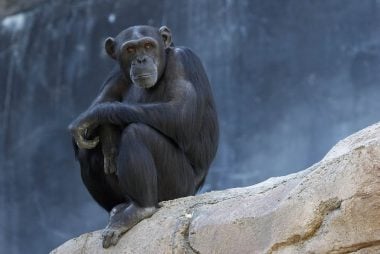
Game meat from chimps, called bushmeat, has become a delicacy for wealthy African residents, which makes them a prime target for poaching. Additionally, baby chimpanzees are taken from their natural habitats and sold as pets in nearby cities. Their current population is somewhere between 173,000 and 300,000.

Sea lions

011_Wild_animals_species 
ImagingSea lions native to Australia, New Zealand, and the Galapagos Islands are all on the endangered species list. Their main threat is bycatch, which occurs when they are accidentally caught in fishing equipment while commercial fishers are trying to catch other fish. New Zealand sea lions are predicted to be extinct in five generations, about 50 years.
read more "11 Wild Animal Species You Never Knew Were Endangered"

Thursday, September 17, 2015

9 “Ugly” Animals Going Extinct That Need Love Too

The Ugly Animal Conservation Society uses comedy to shine a light on ugly endangered species often not spoken about.


Biologist, science communicator and comedian Simon Watt founded the society because he was bored of people always asking questions about the same more aesthetically pleasing endangered species, like pandas and tigers. “I do a lot of lectures about biology and spreading the word about conservation as a whole,” he told BuzzFeed Science. “I got very bored of people always asking the same questions about the same species.”

1. Proboscis Monkey (Nasalis larvatus)

Proboscis Monkey (Nasalis larvatus)
Bjørn Christian Tørrissen / Wikipedia Commons / Via commons.wikimedia.org
IUCN Red List Status: Endangered
There’s a very good reason male proboscis monkeys have huge, fleshy noses: because the female proboscis monkeys can’t get enough of it. Sadly, over the last 40 years, the numbers of proboscis monkeys have decreased rapidly.

2. Purple Pig-Nosed Frog (Nasikabatrachus sahyadrensis)

Purple Pig-Nosed Frog (Nasikabatrachus sahyadrensis)
Karthickbala / Wikipedia Commons / Via commons.wikimedia.org
IUCN Red List Status: Endangered
The purple pig-nosed frog is extremely rare, and its existence was unknown to humans until about 13 years ago.

3. Aye-Aye (Daubentonia madagascariensis)

Aye-Aye (Daubentonia madagascariensis)
Tom Junek / Wikipedia Commons / Via commons.wikimedia.org
IUCN Red List Status: Endangered
Aye-ayes are nocturnal creatures unique to the island of Madagascar. Many native Madagascans consider the aye-aye to be an omen of bad luck, which is why it is often hunted and killed.

4. Bald-headed Uakari (Cacajao calvus)

Bald-headed Uakari (Cacajao calvus)
Giovanni Mari / Flickr / Via Flickr: giovannimari
IUCN Red List Status: Vulnerable
Bald-headed uakari are social, intelligent creatures. However, they currently face extinction since their habitat is threatened by the timber industry, and they are often hunted by indigenous peoples for food.

5. Pig-nosed Turtle (Carettochelys insculpta)

Pig-nosed Turtle (Carettochelys insculpta)
Ryantwood / Wikipedia Commons / Via commons.wikimedia.org
IUCN Red List Status: Vulnerable
Pig-nosed turtles are very large freshwater turtles. They can be found in northern Australia and southern New Guinea. Their noses resemble a pigs snout, which is where they get their name.

6. Aquatic Scrotum Frog (Telmatobius culeus)

Aquatic Scrotum Frog (Telmatobius culeus)
Hostdy / YouTube / Via youtube.com
IUCN Red List Status: Critically Endangered
The Titicaca water frog is nicknamed the “scrotum frog” because of the extremely loose skin that hangs from its body. Its population has rapidly declined over the past 20 years, mostly due to over-harvesting for human consumption.

7. Axolotl (Ambystoma mexicanum)

Axolotl (Ambystoma mexicanum)
Wheel Cosmic / Flickr / Via Flickr: wheelcosmic
IUCN Red List Status: Critically Endangered
Axolotl are unique to Xochimilco, near Mexico City. They also live permanently in water, which is not the case for other types of salamander.

8. The Yangtze Giant Softshell Turtle (Rafetus swinhoei)

The Yangtze Giant Softshell Turtle (Rafetus swinhoei)
Phó Nháy / Wikipedia Commons / Via commons.wikimedia.org
IUCN Red List Status: Critically Endangered
The yangtze giant softshell turtle is the most critically endangered species in the world, with only four known turtles remaining.

9. Greater Adjutant (Leptoptilos dubius)

Greater Adjutant (Leptoptilos dubius)
Ali Arsh / Flickr / Via Flickr: ali_arsh
IUCN Red List Status: Endangered
The greater adjutant has a slow gait resembling a military officer’s, which is where it gets its name. They have a very small population, declining rapidly.

Watt’s favourite ugly animal is the blue-grey taildropper slug. “If you scare it, its bum falls off” he said. “It’s a very cool way of avoiding predators. If something grabs hold of you, you can just lose your tail.”

Simon Watt

The society focuses on animals that are locally or globally endangered.


They hold events including comedy tours where six comedians each champion a different endangered species. At the end the audience votes and the winner becomes the “Ugly Animal Mascot” for that city or town.
Earlier this year, Dublin voted for the lesser horseshoe bat to be the city’s ugly animal mascot. “I don’t think it’s globally endangered but it’s locally endangered there,” Watt said. “[It] meant that the people in the audience could go out and do something a bit more hands-on.”

“We think it’s possible that maybe 200 or so species are becoming extinct every single day,” Watt said.


“The crisis is as bad as that. We’re trying to get more people talking about conservation as a whole. Using comedy to talk about it is as good a way as any.”

You can find out more about the society on their website, or find them on Twitter.

read more "9 “Ugly” Animals Going Extinct That Need Love Too"

Thursday, January 1, 2015

Arakan Forest Turtle

Arakan Forest Turtle is so rare that it can only be found in the Arakan hills of western Myanmar. Many believed that it went extinct in 1908 until it was rediscovered in 1994 although it has been determined that there are less than a hundred left in the wild.


read more "Arakan Forest Turtle"

Friday, August 29, 2014

15 Rarest & Critically Endangered Animals on Earth


 *The red wolf It is generally, morphologically, an intermediate between the coyote and gray wolf, and is of a reddish, tawny color.
*A golden tiger, golden tabby tiger or strawberry tiger is a tiger with a color variation caused by a recessive gene. The coloration is a result of captive breeding and does not occur in the wild.
 *The Pinta Island tortoise was a subspecies of Galápagos tortoise native to Ecuador's Pinta Island.

Video

Youtube | Danger Dolan
read more "15 Rarest & Critically Endangered Animals on Earth"

Thursday, August 28, 2014

Beautiful 100 Endangered Animals in the World

This video shows the top 100 most endangered animals. I think when watching this video people should try and feel just how much damage we as a collective whole do to our environment and the animals and species within it.


Video

Youtube | Hugh Armstrong
read more "Beautiful 100 Endangered Animals in the World"

Thursday, April 10, 2014

Freeman voices concerns about endangered lemurs in documentary

In ‘Island of Lemurs: Madagascar’, Academy Award winner Morgan Freeman tells the story of the oldest surviving primates, the lemurs.

Shot with IMAX 3D cameras, the film follows conservationist Dr. Patricia Wright as she studies Madagascar’s lemur population and attempts to protect the endangered primates from deforestation.
“We have an extraordinary animal called the Indri. That’s the largest of all the lemurs that are alive today and it is an incredible singer-like, operatic,” says lemur expert Dr. Patricia Wright.

“The Sifakas are what we would call the Dancing Lemurs. They’re the ones that… they can go on the ground and do the elegant dance, or they can be in the trees going from tree to tree… huge leaps, wonderful, wonderful animals!,” says Dr. Wright.

“All these lemurs have one thing in common – from the little one to the very largest one – they all have female dominance. The females are the leaders. The females are the ones that make the choices of where they go and what foods they eat and where they’re going to sit,” says Dr. Wright.

‘Island of Lemurs: Madagascar’ is open now in IMAX theatres across the United States.

Source: Here
read more "Freeman voices concerns about endangered lemurs in documentary"

Monday, September 16, 2013

Listing white rhinos as endangered could save all rhinos, conservationists say

The measure will put under the act’s protection the last remaining unprotected species of rhinoceros, a move that the organization says could help protect the other four highly endangered species of rhinos – black, Sumatran, Indian, and Javan – from poaching.
rhino
The southern white rhino is not as close to extinction as its four cousins, with about 20,000 white rhinos in protected areas and private game reserves in four countries: South Africa, Namibia, Zimbabwe, and Kenya. (The southern white rhino is actually a subspecies of white rhino; its northern counterpart is believed extinct in the wild.)

Source: Here
read more "Listing white rhinos as endangered could save all rhinos, conservationists say"

Tuesday, August 20, 2013

Endangered Species List Updated for 1st Time in 17 Years

The Department of Natural Resources is updating its endangered species list for the first time since 1996.
bald eagle
Some animals, including the bald eagle, were taken off the list. Other animals like the purple martin were added.

Source: Here
read more "Endangered Species List Updated for 1st Time in 17 Years "

Tuesday, July 9, 2013

Endangered animals give birth in Sipahijala Zoo

AGARTALA: The Sipahijala Wildlife Sanctuary in Tripura is now a proud host to new-borns of three endangered animals - clouded leopard, pig-tailed macaque and spectacle monkey.
The Sipahijala Wildlife Sanctuary, one of 42 national breeding centres in the country and situated roughly 18 km from here, was assigned by the Central Zoo Authority of India to breed four animals prone to extinction.

Source: Here
read more "Endangered animals give birth in Sipahijala Zoo"