Fun Animals Wiki,Videos,Picture,Stories
Showing posts with label tigers. Show all posts

Tuesday, February 21, 2017

11 Wild Animal Species You Never Knew Were Endangered


Orangutans

01_Wild_animals_species 
There are two species of orangutans: Bornean, ones that prefer the ground over the trees, and Sumatran, which have longer facial hair and develop closer bonds with each other. A century ago, their global population was more than 230,000. Now there are between 45,000 and 69,000 Bornean (endangered status) and only 7,500 Sumatran (critically endangered status).

Ground squirrels

02_Wild_animals_species
That’s right, even squirrels are endangered, specifically the San Joaquin antelope ground squirrel. Native to California, these guys have been disappearing since 1979 on account of the construction and human developments going through their habitat. Their total population is unknown, but it could be anywhere between 124,000 and 413,000.

Tigers
03_Wild_animals_species
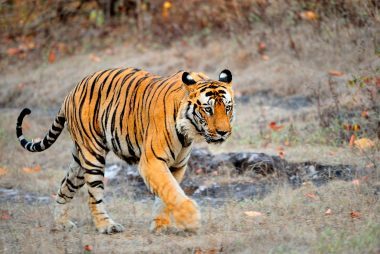
All six tiger species are endangered, with Sumatran and South China tigers at a critically endangered status. The main reasons for their population decline are poaching and destroyed habitats, as humans clear forests to gather timber and build roadways. Only about 3,890 tigers currently live in the wild.

Giraffes

04_Wild_animals_species 
The International Union for the Conservation of Nature recently put giraffes at a vulnerable status, the level just before endangered. The giraffe population has declined a drastic 40 percent in the last 30 years, primarily due to loss of habitat and poaching. Some giraffes are killed just for their tails, which are considered status symbols in Africa.

Hummingbirds

05_Wild_animals_species 
Seven hummingbird species are endangered, all found in the Americas, primarily because of deforestation. The chestnut-bellied hummingbird has fewer than 1,700 mature individuals, and there are less than 400 sapphire-bellied hummingbirds left.

Black rhinos
06_Wild_animals_species 
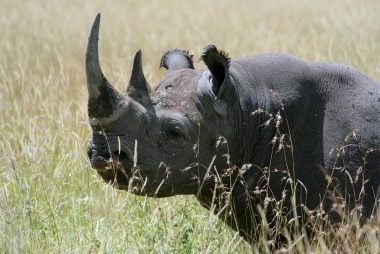
Black rhinos are critically endangered, with fewer than 5,000 left in the world. The rest have succumbed primarily to poaching and illegal trading for their horns. Between 1970 and 1992, hunters killed 96 percent of Africa’s black rhinos. 

Bonobos

07_Wild_animals_species 
War hurts more than just humans. Civil unrest in the Democratic Republic of the Congo has made bonobos more vulnerable to poachers and continues to destroy their forest homes. It’s unclear how many bonobos there are—probably 10,000-50,000—but scientists believe their population will continue to decline over the next 50 years.

Whales

08_Wild_animals_species 
As few as 300 North Atlantic right whales remain in the wild, and the populations among the other seven species range between 10,000 and 90,000. Pollution is a major threat for these aquatic giants, but according to the World Wildlife Fund, more than 1,000 whales are killed every year for commercial purposes.

Asian elephants
09_Wild_animals_species 
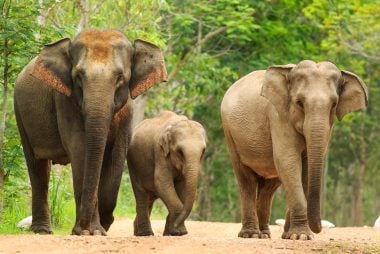
The main threat to Asian elephants, one of the most intelligent animals, is their shrinking habitat. As the human population grows, people invade their land to build roads and railway tracks. Elephants in Myanmar are at an especially high risk for being captured and traded or used illegally in the tourist industry. Fewer than 50,000 are left on the entire continent. 

Chimpanzees
010_Wild_animals_species 
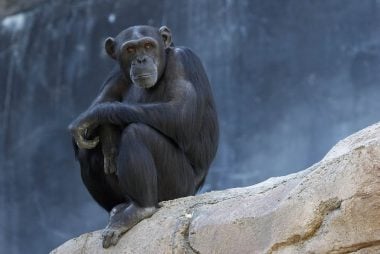
Game meat from chimps, called bushmeat, has become a delicacy for wealthy African residents, which makes them a prime target for poaching. Additionally, baby chimpanzees are taken from their natural habitats and sold as pets in nearby cities. Their current population is somewhere between 173,000 and 300,000.

Sea lions

011_Wild_animals_species 
ImagingSea lions native to Australia, New Zealand, and the Galapagos Islands are all on the endangered species list. Their main threat is bycatch, which occurs when they are accidentally caught in fishing equipment while commercial fishers are trying to catch other fish. New Zealand sea lions are predicted to be extinct in five generations, about 50 years.
read more "11 Wild Animal Species You Never Knew Were Endangered"

Monday, February 9, 2015

The Businessman who Ate Tiger Penises and Drank Tiger Blood as Wine


Here’s a wildlife conservationist’s worst nightmare: a businessman who eats tiger penises as an aphrodisiac and makes wine out of tiger blood perhaps in a bid to add years to his life. Fortunately, the long arm of the law has caught up with this notorious Chinese and has placed him behind bars, 13  years to be exact.

Still his deeds would haunt many nature lover for years to come. It is reported he slaughtered three animals and the worst part is he killed one by electric shock. Topping all that, he handed out tiger steaks to close friends, China’s state news agency reported.

Cruelty to Animals
A Chinese businessman has been sentenced 13 years behind bars for the act of buying and subsequently eating endangered tigers, making home-brew wine out of their blood.

Identified as a wealthy businessman named Xu, the man reportedly traveled to the southern province of Guangdong last year with the sold purpose of buying tigers. He took the animals to his abode in the region of Guangxi, according to the Xinhua state news agency.

Xu and his colleagues oversaw the killing of three tigers, each slaughtered in separate deals, with one receiving the death by electrocution, the report detailed.

Eating the Prohibited
After having the animals slaughtered, Xu reportedly ate the tigers’ penises and perhaps as bragging rights gave pieces of the meat to his friends with a warning saying: “If anyone asks, say it is beef, horse or big cat meat”.

Xu’s arrest was brought about when one of his deals was put on record by a concerned citizen who made the right choice and reported it to the authorities.

Where the tigers came was not mentioned in the report, only that they may have been smuggled into the vast country.

A Bad History of Aphrodisiacs

Although banned in China, many Chinese believe that the tiger penis is an aphrodisiac. It is said to exhibit important therapeutic properties. However, no direct scientific proofs have been propelled forward to prove the validity of this claim.

What is certain though is the largely unproven notion of tiger penis as aphrodisiacs has only served to endanger the status of the tiger as many enterprising businessman cater to the growing demand over the years. And though many Asian countries, mainly in China and Southeast Asia, most Westerners view the act of killing a tiger to enhance one’s virility largely condemnable – if not bordering in the utter disgusting.

Many parts of Southeast Asia assume the belief that the penis of the tiger can even cure erectile dysfunction. It is for this very reason that it has been sold in China on the black market.

Thanks to Viagra and the advances of modern medicine, less and less people rely on the male tiger’s assets to get their desired result. A study conducted by the leading scholars at the University of South Wales and the University of Alaska found out that Chinese men are also modernizing and look at scientifically-studied cures to their erectile dysfunction. Although many are still clinging unto traditional methods to treat their ailments (e.g., arthritis, indigestion, gout), many are turning their eye towards Western medicine.

Prized Possession

Because of the myth handed down through the generations, many enterprising restaurants all over Asia, including those in China, have reportedly served tiger penis, deer penis, turtle penis or bull penis as a soup delicacy. People seeking their supposed health prowess, have been known to pay up to $5700 on a rare tiger penis dish, a concoction that has to be ordered months in advance to be provided. Also, in places in Singapore and Taiwan, dried tiger penis could fetch the price of $2500 per serving. And as resourceful as businessmen are, it is reported that in the Mekong River Delta, tiger penis complete with testicles still attached are soaked into a bottle of French cognac or Chinese wine to make it all the more palatable. The buyer then take nightly sips to enhance his sexual prowess.

As for Xu, our Chinese businessman who embodied what conservationist fear the most, he was originally sentenced in April last year but made an appeal. His appeal was rejected by the court early this year, according to Xinhua.

read more "The Businessman who Ate Tiger Penises and Drank Tiger Blood as Wine"

Friday, December 5, 2014

South China Tiger

South China Tiger their coat is lighter and more yellowish; the stripes are narrower, more numerous and more sharp-edged. South China Tiger are critically endangered species.


read more "South China Tiger"

Friday, August 29, 2014

Amazing Animals - Moments, Compilation 2013 March

Lions, tigers, bears, wolves, crocodiles as well as other animals, fighting for survival, beautiful and powerful variety of amazing moments.

Video

Youtube | wittydud
read more "Amazing Animals - Moments, Compilation 2013 March"

Nature & Animals 2 (1080p HD)

Amazing animal video made perfectly. especially the polar bear part.


Video

Youtube | wittydud
read more "Nature & Animals 2 (1080p HD)"

Saturday, April 12, 2014

Animals forever

The Wildlife Taxidermy Centre, which started operations from a garage at the Sanjay Gandhi National Park in 2009, has been instrumental in doing the taxidermy of more than 100 animals, birds and reptiles. Now forest departments and private institutions from across the country are approaching the centre to preserve wild animals after their death for scientific and educational purposes
Stuffed animals adorning the walls of villains were common in Hindi movies in the 1960s and 1970s. Though they are no longer seen in today’s films, but the Wildlife Taxidermy Centre (WTC) at the Sanjay Gandhi National Park in Borivli has been steadily working towards preparing, stuffing, and mounting the skins of dead animals.

Source: Here
read more "Animals forever"

Sunday, September 22, 2013

Tiger Genome Sequenced, Shows Big Cats Evolved to Kill

The first sequenced tiger genome shows that big cats evolved to kill.

Genes for strong muscle fibers and for meat-eating appear narrowly shared, researchers reported, among species as distinct as the African lion and Asia's snow leopard.
Tiger
Scientists mapped the genes of the endangered Siberian tiger (or Amur tiger), both to understand the genes that make big cat species distinct from one another and to aid efforts to preserve genetic diversity in wild tiger populations. (Also see "Isolated Tigers Travel Surprising Lands to Find Mates.")

Source: Here
read more "Tiger Genome Sequenced, Shows Big Cats Evolved to Kill"

Tuesday, December 18, 2012

Tigers


Tigers are known for being the biggest of the world’s big cats, bearing their trademark orange tabby-like patterns, as well as for its “albino” or white tiger variants.

The subject of the 2004 released film entitled Two Brothers, the movie starred Guy Pearce and it focused on the lifecycle of two tigers, two brothers, depicting the different life challenges tigers are subjected to in this day and age.
Tigers
The movie did well in relating the harsh realities tigers are exposed to, a reality that is imposed on them by how human societies are getting more and more close to the tiger’s natural habitats.

Being the largest of the big cats, tigers are known to grow a large as 11 feet in total body length, with some weighing as much as 670 pounds, making them one of the top three largest land carnivore in the world, a status which follows after the Polar Bear and the Brown Bear.

Highly Endangered, the tigers were once considered as a “prize catch” among poachers, often hunted for their coats, along with different interests delving into the use of tiger body parts for medicinal purposes or for the creation of certain medicines.

In modern times, there are three known extinct tiger species which had met their end within the previous century. The Bali Tiger went extinct in 1937, while the Turan Tiger (also known as the Hyrcanian and Caspian Tiger) went extinct sometime in the 1970’s.

The Javan Tiger is also considered as an extinct tiger species, given the fact that the last of its kind was documented in 1979 with no other leads indicating that they are still around.

As large as tigers are, the threats which run their risk for extinction is far larger than them, thus the emphasis on keeping them protected from poaching and other illegal animal trade practices.
Tiger image

Tigers

Tigers picture

Tiger images
 Tiger Cub Video
 
read more "Tigers"

Friday, October 12, 2012

Can You Actually Swim with a Tiger?


Watching a huge cat in the wild is a sight to behold. Looking into an enclosure with a powerful tiger is a
bit frightening. Holding on to a big jeep in a Safari Ride with a ferocious creature standing-by is a scary
but memorable experience. How about practically swimming with a tiger?

Believe it or Not, a private zoo in Dade City, Florida is now providing once-in-a-lifetime chance to swim
with a Siberian Tiger Cub. This is no joke! According to a most current article in Yahoo News, it takes
$200 to swim with the tiger for 30 minutes plus an opportunity to cuddle and bottle feed a 6-week old
cub named Tony the Tiger.
Swim with a Tiger
Swimming with dolphins is an exhilarating experience. These mammals are smart, naturally friendly
and social. Have you entertained the idea of swimming with a tiger? Although still a cub, Tony the
Tiger is still the tiger that we all fear the most together with lions, leopard and all the carnivores in the
wild. Despite the slimmest idea of being able to swim with a tiger, this time, it is most sought-after, as
more and more customers, line up each day to take part in the awesome swim! While it may sound
threatening and dangerous, it has been a resounding success! It is something that not all people can
do given the limited time and opportunity because this is not a permanent thing. When the tiger grows
more than 50 pounds, it would already be difficult to interact with these cats. If the scales reach to
1,000 pounds or more, it would be kind of impossible already.

The article goes on to say, "It's kind of a limited time that we can do it in Florida. You can only interact
with the tiger until they're 40 pounds," said Randy Stearns, head animal trainer and president of Wild
Things.

Although this has been an in-thing lately, this is potentially hazardous to everyone resulting to an
outpour from animal rights activists and other private entities.

Can you actually swim with a tiger? Most definitely yes, but it is better to stay out of the water and
watch these huge cats in action from a distance!
Swim with a Tiger

Swim with a Tiger

Swim with a Tiger
 Swim with a Tiger Video
 
read more "Can You Actually Swim with a Tiger?"

Thursday, August 2, 2012

Bengal Tiger


We Bought a Zoo, released in 2011, is a comedy drama film based on the memoir of the same name by Benjamin Mee, the film’s central character. Cameron Crowe directs the movie, with Matt Damon starring as the main character. The movie tells the story of how widowed Benjamin Mee and his kids decide to move in into a new home, which just so happens to come with a broken down zoo. In an effort to keep the zoo from closing permanently and the animals having to be sent away and put down, the Mee family along with the zoo staff work hand in hand to prepare the zoo for public viewing and learn about taking care of the animals along the way.
Bengal Tiger

One of the most notable animals living in the zoo is a tiger named Spar, an aging big cat who Benjamin desperately tries to save from being euthanized.
Tigers are actually the largest cats in the animal kingdom—a distinction many think belongs to the lion. A certain subspecies, the Bengal tiger, is known for its size and weight. Bengal tigers are Bangladesh’s and India’s national animal and have become a symbol of these countries. These tigers are natives of the Bengal areas in South Asia. There are more Bengal tigers alive, in captivity and in the wild, compared to other subspecies. They have an estimated population of 1,550 to 1,909 in India, about 124 to 229 in Nepal, 67 to 81 in Bhutan, and 440 in Bangladesh.

In 2010, the Bengal tiger has been marked by the IUCN as one of the most rapidly disappearing endangered species in the world. In an effort to preserve the species, numerous nature reserves and conservation centers have been supporting the breeding of these animals. These cats come in an orange-yellow coat with black stipe markings, but are also known to have white coat and black stripes. This is a gene mutation, resulting in white tigers that not only look different, but are larger than normal-colored tigers.
Bengal tigers are of course, carnivorous animals that prefer to wander off alone and hunt alone. They can be social when around other tigers, but they do not travel in groups. They prefer to hunt and live unaccompanied.
Bengal Tiger

Bengal Tiger

Bengal Tiger

Bengal Tiger

Bengal Tiger picture

Bengal Tiger image
 Bengal Tiger Video
 
read more "Bengal Tiger"