Fun Animals Wiki,Videos,Picture,Stories
Showing posts with label Rats. Show all posts

Sunday, October 2, 2016

Keeping Chinchillas As Pets


If you’re looking for a cute, perky, little pet, a chinchilla may be the perfect companion for you. Chinchillas are crepuscular rodents, slightly bigger than the common ground squirrels. They are native to the Andes mountains in South America and have become a popular pet over the past few years. These little furballs have a number of characteristics which make them great pets. However, chinchillas are not for everyone. Below are a few things you should know about chinchillas.
Chinchilla
Where do they come from?

Chinchillas originated from the Andes mountains and are named after the Chincha people of the Andes who use to hunt them for their dense, velvet-like fur. There are two species, Chinchilla lanigera and Chinchilla chinchilla. Domesticated chinchillas are thought to have come from the C. lanigera species since these animal are actually considered Critically Endangered on the  the IUCN Red List. so if you ever do get a chinchilla, make sure they come from a reputable breeder and not from the wild. 
Chinchilla
Pros and Cons

Chinchillas are covered with soft fur and are naturally curious. They make very little noise and are low-maintenance pets. They’re perfect for a small home, like an apartment or a condo, since they really don’t need a lot of space, as long as you give them enough exercise. On the down side, they can be high-strung, and they have relatively short attention spans. They also can’t tolerate places with hot weather or high humidity well, so you need to keep them cool if you’re living in a warm place.
Chinchilla
Buying A Chinchilla

Most pet stores often times sell chinchillas that are not well-bred and are unhealthy. And since these animals are considered critically endangered in the wild, you need to be very careful about where you get the chinchilla. Your best bet is to find a reputable breeder in or close to your area, such as those that are members of The Chinchilla Club. Never hesitate to ask questions about what type of chinchilla it is and ask for reference to previous clients. If possible, check both the parents and the youngster for any health problems before you buy the Chinchilla. Be watchful of pasty or watery eyes, drooling (which indicates tooth alignment problems), wool pulling or missing areas of fur. Common problems see in pet store purchased chinchillas are wool pulling due to boredom and stress and malocclusion due to improper diet and genetics.

Chinchilla Personalities and Characteristics

These cute animals have their own personalities, much like cats and dogs. Since they live in groups in the wild, they’re naturally social creatures. They go along well with other animals, as long as they are socialized at a young age. You need to handle them and pet them regularly so they’ll get used to you, or they’ll end up becoming aggressive and skittish. An ideal age to purchase your chinchilla is 10 weeks of age. Adult female chinchillas weight about a pound-and-a-half and are a bit bigger than males. Chinchillas can live 12 to 20 years, which is an exceptionally long lifespan for a rodent. They have an exceptionally long pregnancy which last about 111 days. Babies come out covered in fur with eyes already open, like their distant cousins the guinea pigs.

Do's for maintenance
Keep a chinchilla in a mesh cage that’s pretty spacious for their size. To help keep it clean, a dripping pan should be inserted under the cage to catch the chinchilla’s poo and pee. As much as possible, you don’t want your chinchilla to run free since they could end up chewing on furniture, as well as be exposed to household toxins. Chinchillas love cardboard boxes to hide in, as well as ledge shelves to bask on. They also love dust bathing so give them a shallow dish or crock with cornstarch or cornmeal.

Place shavings on the bottom of their cage. They don't need a special bedding. The usual hamster or gerbil bedding you find in most pet stores will do. Their cage needs to be cleaned regularly. You can use baking soda and sprinkle it on the corner where the chinchilla eliminates to help reduce odor, but compared to other pet rodents, chinchillas are not that smelly. Place your cage out of drafts and strong direct sunlight. But keep in mind that you have to keep the chinchillas in a cool place since they don’t do well in heat.

They should have a food bowl (avoid plastic) and water bottle with a ball bearing sipper tube. Placing a metal shielding for plastic water bottles is advisable as chinchillas quickly chew through the bottles. Adding toys and an activity wheel helps keep your chinchilla happy. Chewing blocks help keep their jaws healthy and their teeth worn down. You can also give theme vegetables like carrots or fruits like apples to chew  and gnaw on.
read more "Keeping Chinchillas As Pets "

Sunday, April 10, 2016

Taxidermied Animals Come Back to Life


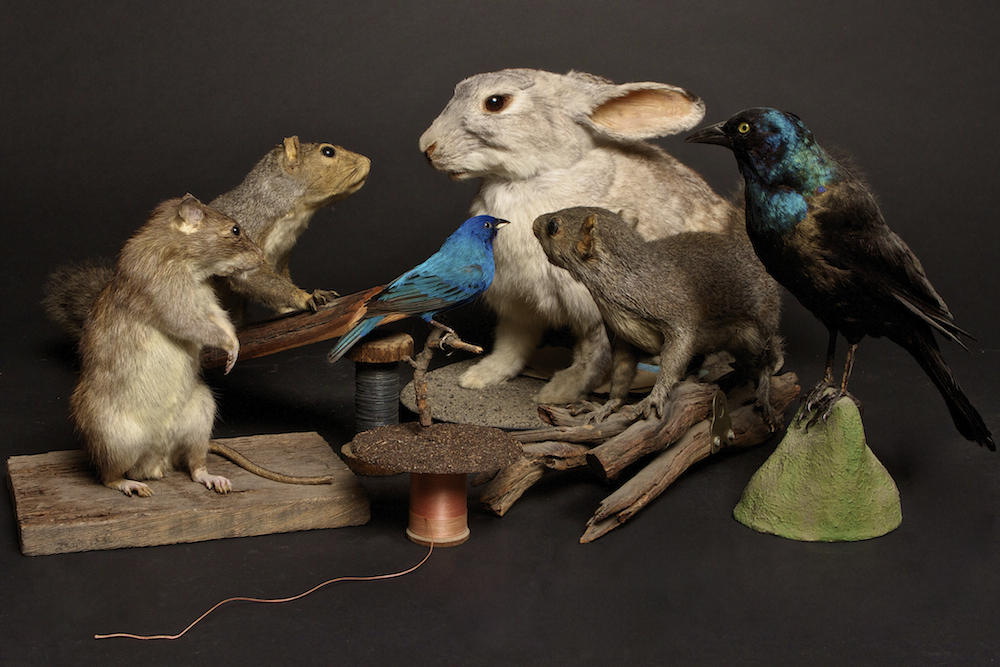
Taxidermy had not held much interest for Lynn Savarese, until she signed on as a volunteer photographer for New York City's American Museum of Natural History (AMNH). Though she was simultaneously working on numerous projects in travel, interior, and portrait photography, and as well as works featuring abstracted flowers in decay, her experience with the AMNH made her enamored of the world of dead animals.
“I grew mesmerized by this art form when photographing bird mounts for the AMNH’s archival digitization project,” Savarese tells The Creators Project. “Overwhelmed by the heartbreaking charm of these figures and their disquieting embodiment of both life and death, I sought to understand the medium better. I hadn’t known, for instance, that John James Audubon’s masterful rendering of birds depended on his proficiency as a taxidermist, or that Charles Darwin’s taxidermy skills were essential to his scientific pursuits.”
 
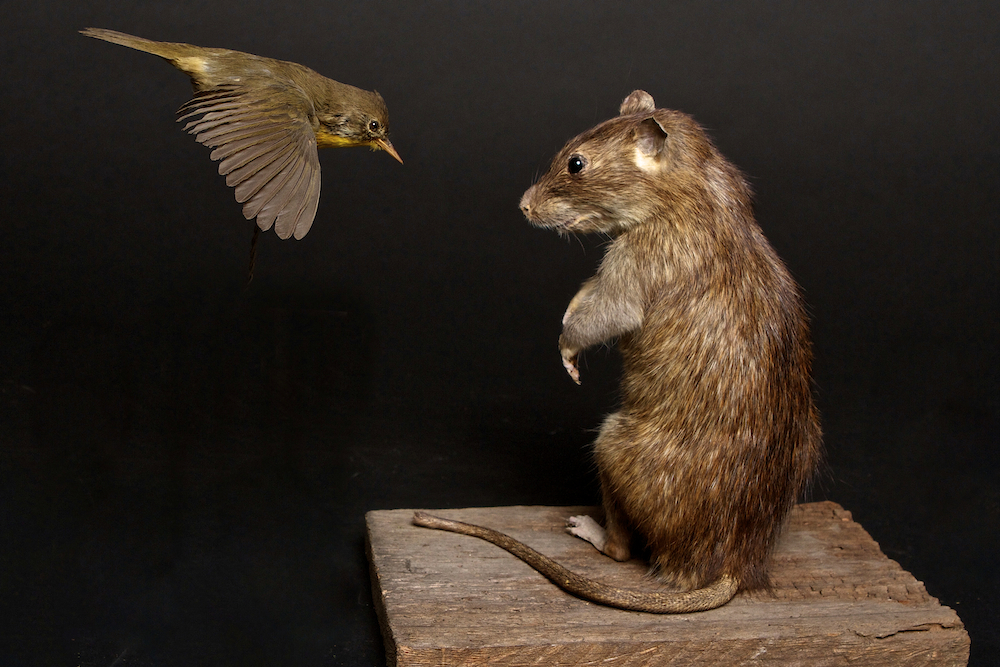
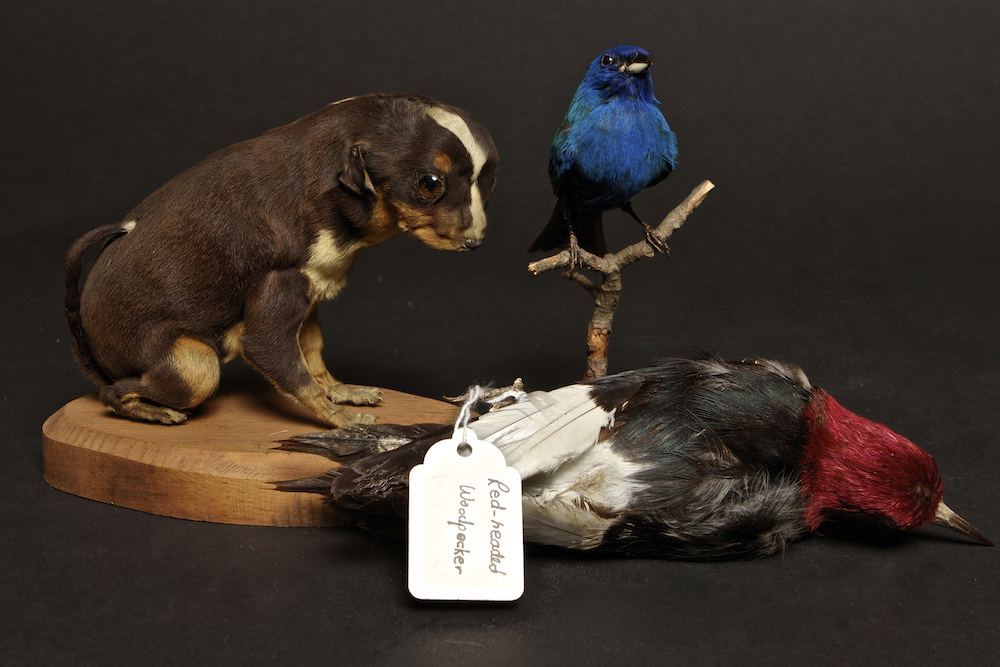
Rat and Bunting 14
During her time as a volunteer, Savarese began to see a narrative among the animals that displayed how life could be carried over into still form. “Through scientific knowledge and acute observation, precise sculptural artistry and theatrical intuition, the taxidermist aims to achieve the illusion of life through the remains of death.” Savarese explains. “Rarely are life and death portrayed simultaneously with such quiet force and wonder.”
 
Rat and Bunting 3
“While enthralled by the enigmatic beauty and character of these specimens, I never lose sight of man’s hubris in turning animals into replicas of themselves and the inherent irony in attempting to achieve immortality for them through killing them. Doubly ironic, however, is that I've never felt more deeply the wonder and beauty of our animal kin than in my close-up encounters with these mounted creatures.”
 
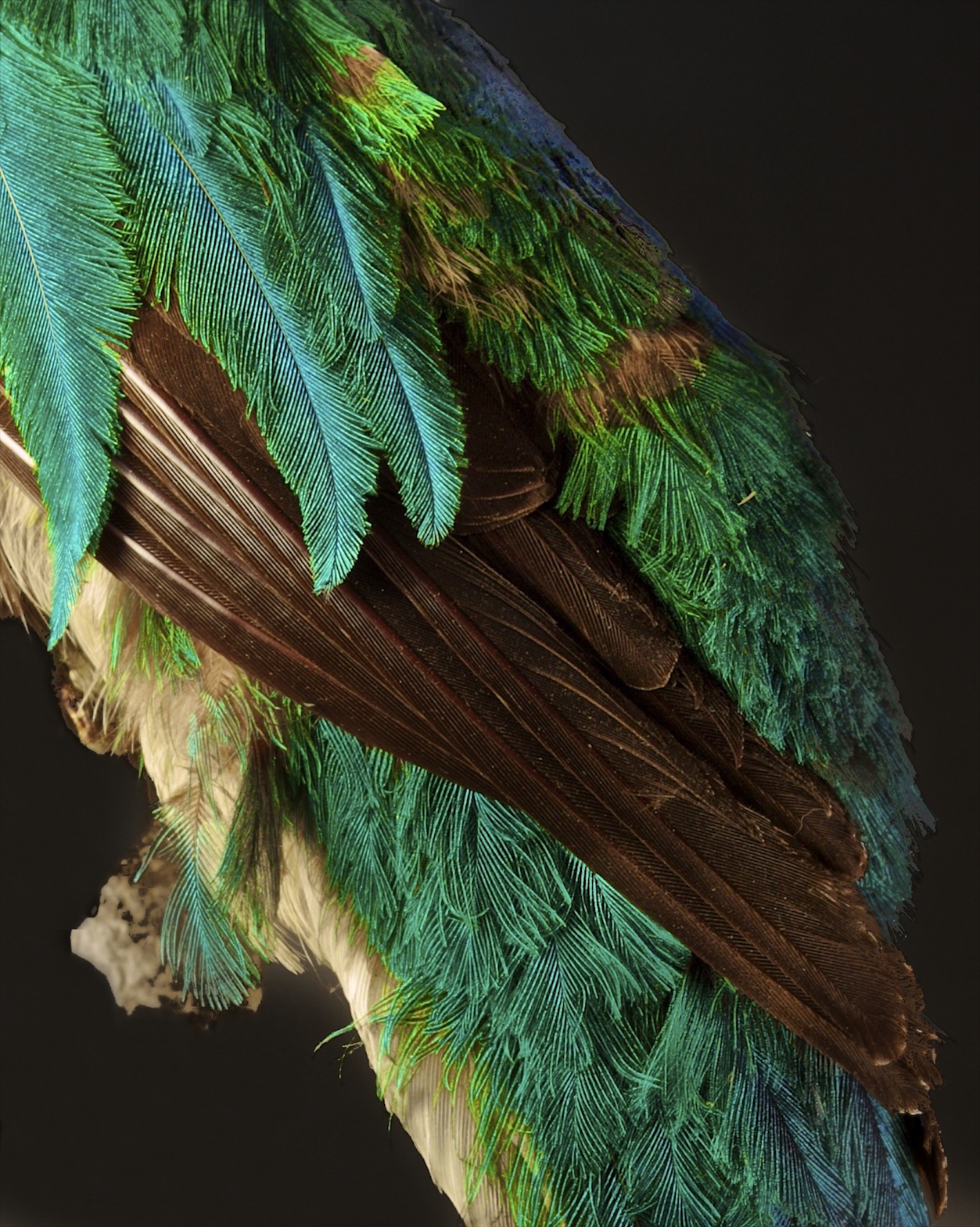
Plumis Zmaragdus
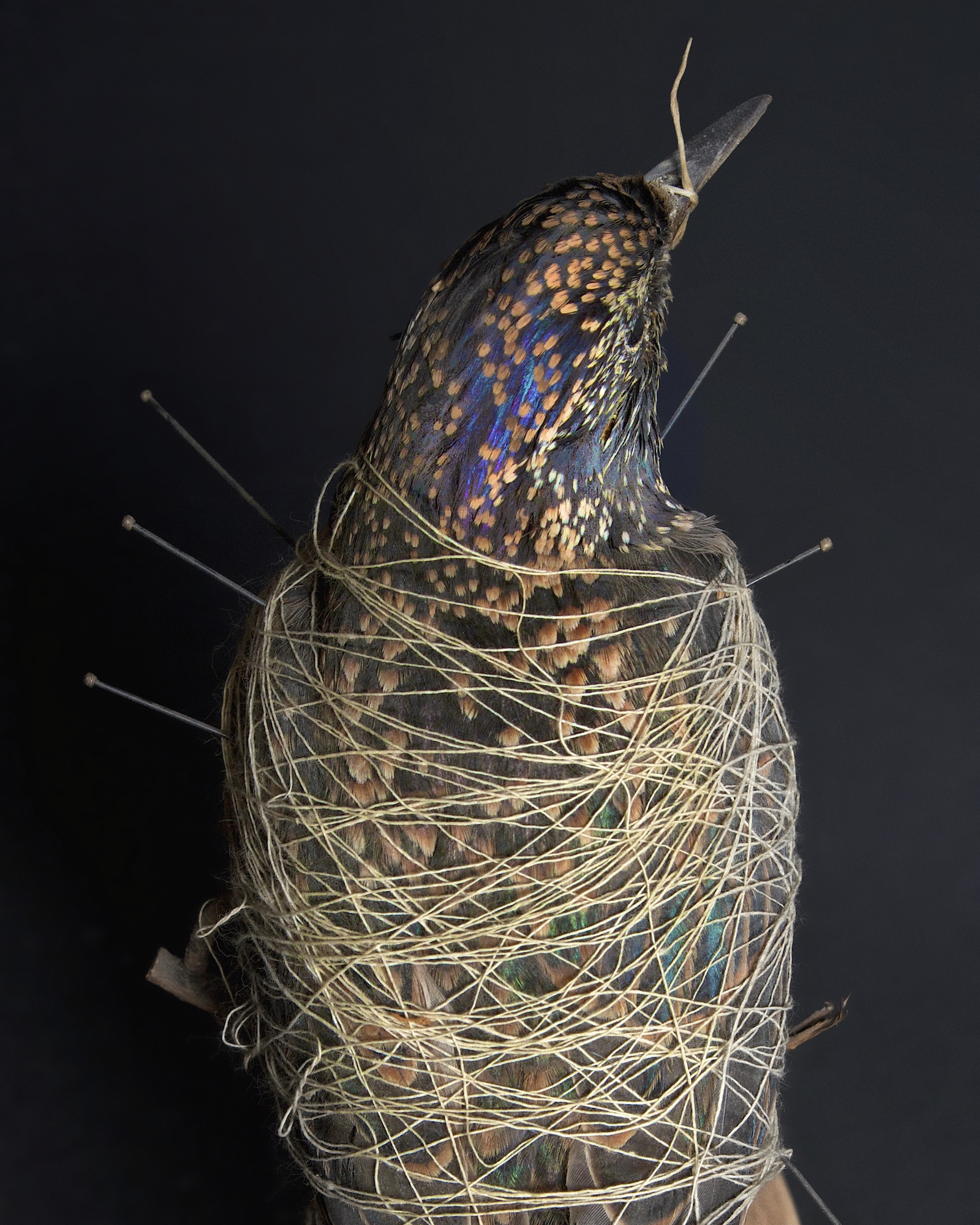
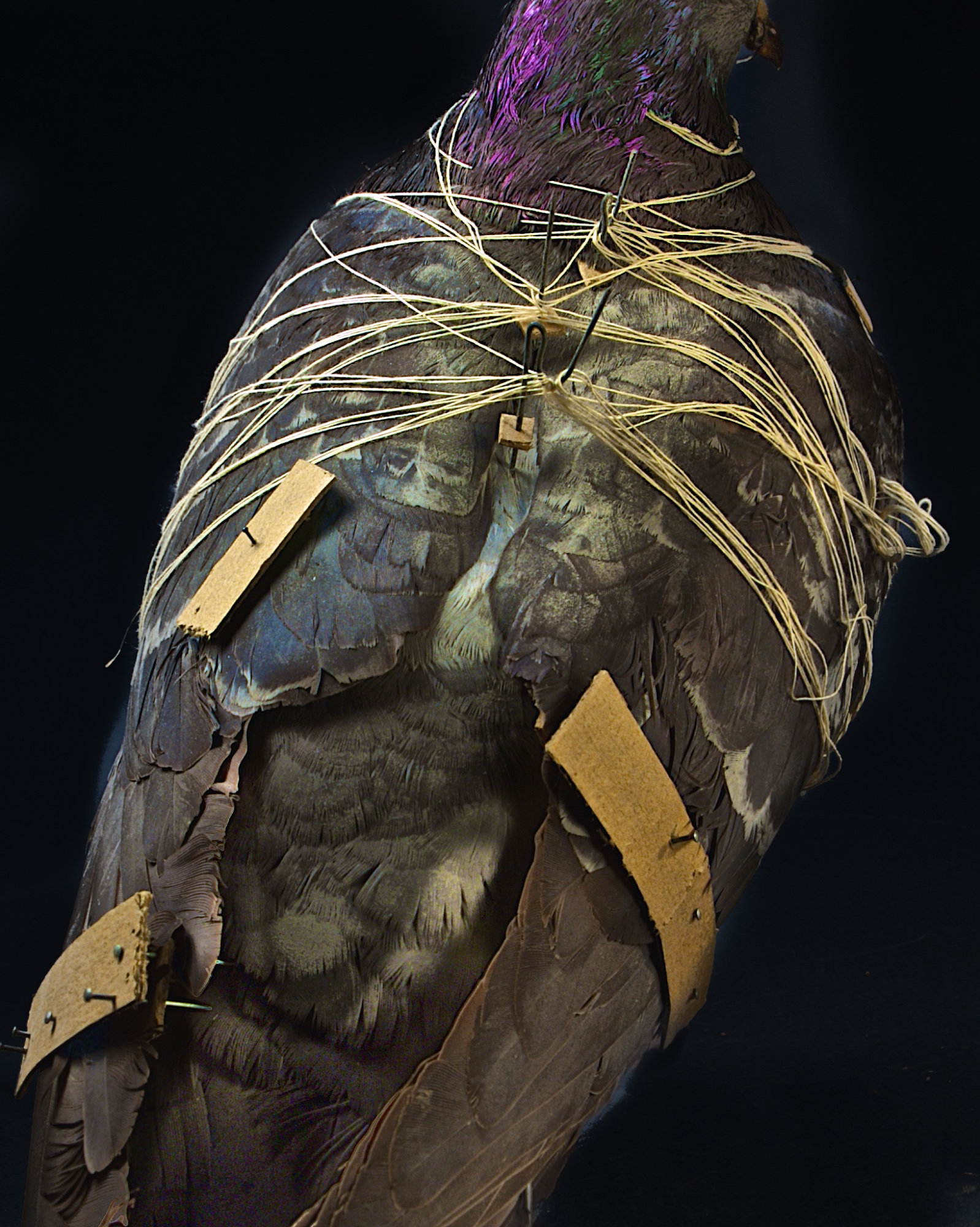
In her first taxidermy series, My Still Life Aviary, Savarese focused on the fate of mounted birds in limbo. “These specimens were too old and tattered to be put on public display, but federal and state law forbids the sale of any that are endangered species to any other party who might have an interest in preserving and protecting them," she tells us. In her second series, The Death and Life Adventures of Rat and Indigo Bunting, she was inspired by E.B. White's masterful portrayal of anthropomorphized animals. Recently, Savarese has started work on a more abstract series called Plumigeri, in which she examines the extraordinarily intricate patterns appearing on the feathered backs of mounted birds.
“In My Still Life Aviary series, my aim was to capture not only the haunting charisma of the mounted birds but also the ethical challenges they present, as well as their power to convey the endangerment and threat of extinction many bird species face today. Paying them tribute through photography became, for me, an almost reverential mission,” says Savarese. “In the future, I would like to experiment with different environments, and draw upon a greater variety of mounted animals.”
“I am excited to be revisiting mounted birds from a new perspective, and enjoying the much more abstract images that emerge when my focus is exclusively on their feathers.”
 
Prometheus Vinctus
 
Afigo
 
Rat and Bunting 9
read more "Taxidermied Animals Come Back to Life"

Tuesday, August 26, 2014

6 Unexpectedly Intelligent Animals

Intelligence was once thought to only be present in humans. However studies on animal behavior shows that animals too have what we call intelligence. Although it’s not as administering an IQ test on a dog, animal intelligence can be observed. Animals have their own form of intelligence, and some species are smarter compared to others.

Here are some of the smartest animals.

Rats
Rats
Rats have long been used for a number of cognitive experiments to measure animal intelligence. They’re great at finding escape routes, shortcuts and loopholes. In the Chinese culture, rats are known for their resourcefulness and cunning.

Octopus
Octopus
Never underestimate these eight-legged creatures. Octopus can actually get themselves out of a jar with a lid on it. They’re known to solve problems, play, navigate mazes and even have a pretty good short-term memory. These animals are very misunderstood, but researchers and scientist are now discovering more and more about their cognitive abilities.

Pigeons
Pigeons
A lot of people think that these birds are the “rats of the sky” because they’ve been known to spread illnesses, but these birds have done more than just spread diseases. Like rats, pigeons have also been used as subject of a number of scientific experiments. These birds can actually recognize a wide variety of images, even when a long time as passed. They identify themselves around mirrors and they can be trained to do a sequence of different actions.

Squirrel
Persistent with a good memory, squirrels have the ability to adapt to living amongst humans easily. Most squirrels show an impressive lineup of strategies and tricks that help them endure. These cleaver animals have learned that they can live off food from bird-feeders, garden plants, and whatever they can get their tiny paws on. 

Pig
Pig
You might think that these animals are just lazy and dirty, but they’re actually one of the most intelligent animals around. Both wide and domestic pigs have to ability to live and adapt to different ecological settings. You can also train them like dogs and cats. Certain pig species have also become common pets in a number of countries because of their flexibility.

Crow
Crow
Although these birds are considered a bad sign, they’re the smartest birds around. They’re very innovative, in fact some crows would even place nuts in the middle of the road so cars would run them over and break them out of their shells. Like parrots, you can also teach a crow how to mimic human language.
read more "6 Unexpectedly Intelligent Animals "

Sunday, August 3, 2014

Rats Use Whiskers to Map Out Area

Animals, like humans, have their own way with communication with their species. It was long thought that rats used their whiskers to communicate, but a research from the University of Sheffield discovered that their whiskers might actually be more than just a means of communication.
The research found that rats actually deliberately change their whisker’s movement and position, depending on a number of factors like familiarity of the place and the chance of bumping into an object. They use their whiskers like humans use their fingers. This means that they purposefully use their whiskers to pick up information from their environment.
rats noses
Vibrissae are think, long hairs that are found on a number of mammals, except on humans. These are specialized for touch or tactile sensing. Vibrissae are actually found all over the body, however facial vibrissae or whiskers are to most obvious and frequently studied. Small mammals like rats commonly used their whiskers when exploring the surrounding. This is called “whisking” and is assumed to carry sensory advantages for them. While whisking lets the animal locate an interesting stimulus, researchers weren’t sure about how the animal was actually able to control the movements of their whiskers.

During the research, the rats were “blinded” for a few days and made to run mazes for food. The researchers noticed how their whiskers moved and changed direction depending on what was available in the environment.
When the rats were new in the environment, they’d use their whiskers to scan though the area and once they became more familiar to it, they made smaller whisker movements.
read more "Rats Use Whiskers to Map Out Area "

Wednesday, January 15, 2014

Rodent empathy is environmental and not genetic, study shows

Rats, like humans, will show kindness to strangers, but only if the rats in distress are of a familiar type, a new study has found.
rat
Neurobiologists from the University of Chicago have discovered that rats display empathy-like behavior toward other rats, but the basis of that empathy is environmental, rather than genetic. The creatures aren’t born with an innate motivation to help rats of their own kind, but instead those with whom they are socially familiar.

Source: Here
read more "Rodent empathy is environmental and not genetic, study shows"

Sunday, September 22, 2013

New rat genus discovered in the birthplace of the theory of evolution

New rat genus A prominent tuft of spiny hair on the back, a white tail tip and three pairs of teats represent the unique set of characteristics describing a new genus of rat which has been discovered in the Moluccan province of Indonesia. This region had a profound influence on the British Naturalist Alfred Russell Wallace who independently developed the theory of evolution alongside Charles Darwin. The international team of zoologists was led by the Museum Zoologicum Bogoriense in Indonesia and the Center for Macroecology, Evolution and Climate at the University of Copenhagen
Rat
One hundred years after the death of Sir Alfred Russel Wallace, an international team of zoologists has discovered a new genus of mammal in the Halmahera Island in Indonesia. It is located in Wallacea, an Eastern Indonesian region named after the British Naturalist himself. The team was surprised to find the new endemic rodent close to the locality of Boki Mekot, a mountainous area under severe ecological threat due to mining and deforestation.

Source: Here
read more "New rat genus discovered in the birthplace of the theory of evolution"

Tuesday, December 18, 2012

Rare Rat Breeds?


When it comes to pet rats, rat breeds tend to be a confusing subject, with a number of exotic pet owners asking, What’s the rarest rat breed?

In jest, Remy, the gourmand-rat from the 2007 animated hit Ratatouille, would one truly rare pet rat, given Remy’s culinary capacities and capabilities. After all, who wouldn’t welcome a kitchen maestro into his or her home?
gourmand rat
But jokes aside, to determine a “rare rat breed” is not as exactly like determining a rare dog or cat breed. What’s rare, as most exotic pet circles note about rats, is not exactly the “breed” of a rat, but rather its “type”.

A “show worthy” Siamese Rat, for example, is considered to be quite highly valued, even though Siamese Rats are considered to be commonly found in pet stores. As rats, a Siamese Rat is defined by a cream-hued coat with blue points or seal-hued points, generally looking just like how Siamese Cats look like.

Also, apart from bearing a Siamese Cat-like coat, Siamese Rats are known to have distinct eye colors, typically in shades of red or pink. When talking about rare Siamese Rats, black-eyed Siamese Rats are generally considered to be quite rare and hard to find, and when matched with a perfectly blended coat, they would be the perfect rat candidates for the “rare rat breed” distinction.

Also, just as black-eyed Siamese Rats are considered to be unique, black-eyed white rats are considered to be rare, with most white rats having red or pink-hued eyes.

Though not exactly breeds, the two types of rats mentioned above are among the few types of known rare rats.
gourmand rat

gourmand rat

gourmand rat

gourmand rat
Gourmand Rat Video
 
read more "Rare Rat Breeds?"

Wednesday, August 22, 2012

Rats


Rats being kept as pets may not fall along the “dogs kept as pets” convention, but as many owners of pet rats have come to share, their companionship as pets is often compared to having a dog around.

Featured as a villainous character in the 1986 animated classic The Great Mouse Detective, Ratigan managed to capture certain rat characteristics, showing the myriad of rat personalities known to be.

Though rats are not exactly “villainous” by nature, their intelligence and tenacity for survival has pegged them as a type of vermin in most parts of the world, but in no way does this mean that they are impossible to keep as pets.

Rats kept as pets in enclosures are relatively easy to take care, requiring only regular bathing, an ample supply of water and food to keep them going. Needless to say, it is advisable to get a pet rat from an accredited specialty pet store, since the rats from these venues are cleared of any diseases, rabies, and other parasites.

With rats being social creatures, it is often advised to keep them in groups, with same sex groups being a healthy group. Male rats are known to get along pretty well with other males, especially when we’re talking about siblings who’ve known each other since birth.

Though challenging, training rats to do tricks is possible to do, though this isn’t as relatively easy as teaching dogs to fetch or roll over or play dead.

Between male and female rats, males tend to be more lax while females tend to be more active, ie more playful. Also, female rats tend to have softer fur when compared to males, and knowing about these rat attributes would greatly help a potential pet rat owner in which type of rat to pick out as a pet.

Smart and generally pleasant company to keep, attention should be given to pet rats, since interaction helps keep their personalities tame and at ease.


 Rats Video
 
read more "Rats"

Monday, June 4, 2012

Rats


Rats, being the titular characters of the 2007 blockbuster Ratatouille, were shone in a different light in the movie, featured as highly intelligent creatures, an attribute which has pegged them as one of the world’s most feared types of vermin.

As the world generally pegs them to be creatures to-do-away with, there are actually a number of folks out there who see rats as interesting creatures, with a number keeping them as exotic pets.
Rat
If you’re among those few who feel that there is more to rats than problems, here’s a quick take over what you need to know before bringing a rat into your life.

Rats – What to know before you keep one as a pet

In terms of life span rates, the average rat lives somewhere between two to three years, which doesn’t really make them great pets when “long term” pet keeping is being talked about. Also, they are nocturnal, which means that if you’re interested in keeping rats expecting them to be active and fun, the timing of their active hours may not fit well with yours.

The nifty thing about rats is that they are sociable animals, and having more than one is actually better than just having one. However, close watch over the activities of male and female rats should be done, since female rats are known to be in heat once in a four to five day cycle.

A population boom just may be ahead if you keep male and female rats in one enclosure.

But apart from their nocturnal and breeding habits, rats are quite entertaining to have as pets, highly intelligent and highly trainable too. They come in many varieties, not just in the traditional smoky grey coat, with certain species even sporting color patches of fur.

In terms of feeding, rats aren’t all that difficult to feed. Generally, any diet-type ideal for mammals fit well with rats, and cleaning their enclosures/cages aren’t all that difficult too.

When talking about where to get rats for petkeeping intentions, going to pet stores are highly advised, since the typical rat found in homes may have rabies and/or are carriers of dangerous diseases.

Other than watching over the possibility of a rat population boom, rats are quite fun to have as exotic pets, though they don’t necessarily have culinary skills that’s bring a food critic to his knees.
Rats Picture
Rats
Rat images
Rat Pictures
Rats
Rats image
Rats image
Rats Wallpapers
Rats Wallpapers
Rats Wallpapers
Rats Wallpapers
Rats Wallpaper
Rats Wallpapers
Rats Wallpaper
Rats Wallpaper
Rats Wallpaper
Rats Wallpaper
Pet Rat Video

read more "Rats"