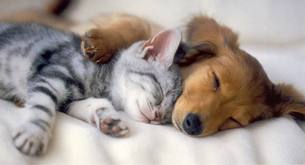
There you have it folks... There are still GENUINELY GOOD people on this planet. There is still hope for the human race. And of course, our animal friends! Share the love people!
Sunday, February 26, 2012
Will YOU Ever Do the Same? A Good Samaritan's Picture Story
There you have it folks... There are still GENUINELY GOOD people on this planet. There is still hope for the human race. And of course, our animal friends! Share the love people!
Friday, February 24, 2012
Singing Donkey - The Real One (Not Shrek's Donkey)
This one right here is for all you music lovers out there! Enjoy the music for the weekend everyone! If you know of any other singing animal friends out there, please share!
Can We Still Keep Ocelots As Pets?
Like most wildcats, ocelots have been known to be kept as exotic pets, and as such, many are curious to know more about ocelots and how different or similar they are compared with domestic cats.
Also known as the dwarf leopards, ocelots are among the most known of wild cats, found in parts of Mexico, South, and Central America. They’re generally the size of your average domestic cat, bearing the fur coat patterns of jaguars or clouded leopards.
At one point, they were considered highly endangered from 1972 to 1996, but they’re now currently rated as a “least concern” in the IUCN Red List of Threatened Species. They are mostly nocturnal and highly territorial wild cats, and in the past, they were among the most prized of exotic pets, with famous pet owners like surrealist, Salvador Dali.
Today, if you’re mulling about getting an ocelot as a pet, you might as well forget all about it because: the whole “ocelot as pets” angle is no longer acceptable by today’s standards, even considered illegal in certain states, like in California.
Because of its beautiful coat, ocelots are priority targets in the fur coat trade. Evidently smaller compared to its bigger cousins, it would take an average of 25 ocelots to make one fur coat, and as such, ocelot furs are often more expensive. At one point, one ocelot fur coat would’ve been more expensive than buying a car.
Though the fur poaching and trade hasn’t been as active as it was 30 years ago, safeguards against their active comeback have been put up. The concept of “ocelot as pets” could be used by would-be poachers as a front, and as such, it is a concept which has led enforcement agencies to set out as “not acceptable”.
Besides, ocelots are wild cats, and there’s a reason for them being named that.
Given what’s written above, would you still want to own one?
Thursday, February 23, 2012
Cats and Dogs – The Pros and Cons
Call it the result of natural selection, or term it as a by-product of genetic conditioning, cats and dogs just can’t stand each other, and has even left two types of pet owners trying to win one over the other: cat-lovers and dog-lovers.
Pointing out the natural traits of their preferred pets, cat-lovers and dog-lovers have long debated over which is better; cats or dogs?
Here are some well known points, some cat and dog pros and cons.
Cats – Cleanliness is perhaps the most well known attribute of cats, keen on keeping their coats clean and tidy. Even strays are known to have a measured sense of cleanliness. This attribute extends to a cat’s toilet-sense, instinctively going for litterboxes when they have to do their business. They are also “low maintenance”, in the sense that cat-owners don’t necessarily have to pay constant attention to them. In terms of food consumption, their intake is generally lesser compared to dogs, and in terms of “chores”, they are great mousers, keeping vermin and certain pests out of the house.
However, cats are nearly impossible to train, unlike dogs. They aren’t as affectionate as dogs too, operating on an “if I don’t feel like it, then I won’t do it” mentality. They are also great climbers, and, at times they tend to get into tight spots because of it.
Dogs – Dogs are loyal pets, always out to please masters regardless if the master in question is a criminal or a priest. They are highly trainable and intelligent, and with enhanced senses, they’re great aids for people with disabilities. They are known for their instincts, and are highly wary with unwanted strangers. They are also known to be of great help in certain industries.
But as intelligent and trainable dogs are, dog owners have to regularly give them baths. Toilet training dogs is possible, but most dogs don’t really know how to use a litterbox when they see one. Also, studies have shown that regular interaction between masters and dogs is crucial, since chaining them or putting them in kennels for extended durations leads them to become rabid. In terms of food consumption, they eat bigger portions compared to cats.
Both cats and dogs are prone to medical conditions, and as such, most cat-dog debates veer away from that topic.
So what do you say? Are dogs better, or should you just go for cats?
Post your comments and speak your mind. Let’s see which of the two is better to have at home.
Wednesday, February 22, 2012
Solid Black Colored German Shepherds?
German Shepherds are among the most recognized dog breeds in the world, physically characterized to have bushy tails, upright ears, long black colored muzzles, black colored masks and black colored body markings over tan or reddish hued coats.
Known for their intelligence, agility, stamina and loyalty, they have somewhat become the ideal dog for just about anyone, from family households, visually impaired persons, sanctioned enforcement agencies, and police force units.
Emphasis on the breed’s popularity seems to be moot at this point, since - for sure - you know what German Shepherds are, how smart they are, and how they generally look like.
But what if someone tells you that he got a new German Shepherd, showing you a solid black colored dog that bears all the physical qualities of the breed minus its typical color pattern?
Would you tell him that he got his dog’s breed wrong since German Shepherds don’t come in solid black coats?
If by any chance you would, you’d be in the wrong since there are actually solid black colored German Shepherds in existence. In fact, there are even all-white, liver-hued, sable, and blue-hued German Shepherds.
Considered to be a rare variety, solid black German Shepherds are known to have the personality and physical attributes of the breed, only that it is all black in color.
All-black and sable-hued German Shepherds are generally accepted by most breeder and kennel standards, while not all standards accept liver-colored and blue-hued German Shepherds, being very critical about breeding faults. All-white German Shepherds are often automatically disqualified as German Shepherds by breeding/kennel standards.
The popularity of the German Shepherd comes from its innate intelligence, keen on respecting owners but wary when it comes to strangers. Originally bred to keep watch over sheep pens, the breed is so popular, yet not everyone is aware of that they come in different colors, other than the well-known black on tan/reddish coat.
So when you do meet someone showing off some black colored do which bears a lot of German Shepherd qualities, you’ll know that he isn’t pulling your leg when he says it’s a German Shepherd.
Tuesday, February 21, 2012
Kitler’s Second Chance
The reason: she bears an uncanny resemblance to Nazi Dictator, Adolf Hitler.
Found on a Bedfordshire roadside and then put up for adoption in the Wood Green Animal Shelter in Godmanchester, Cambs., staff members of the Wood Green Animal Shelter were in a rut last year, challenged and tested in finding a home for the then six-week-old kitten.
Her Hitler-like markings appeared to be a huge turn off for many would-be pet owners, but it did not sway online media outfits from picking up and featuring “Kitler’s” story, which is actually unique considering the givens of her situation.
Roughly a week after “Kitler’s” story went viral online, the Wood Green Animal Shelter was overwhelmed with messages from people who raised interest in giving “Kitler” a new home, with over 500 telephone calls and emails from different parts of the world.
Now with a new family of her own, “Kitler’s” new moniker is Luminus, a happy ending that is fitting for a once-victim of preferential treatment over looks.
A number of animal shelters based in the United States and United Kingdom reveal that black and white colored kittens are often overlooked, with most people opting for more colorful kittens. To say that this was once Luminus’ plight would be apt, given that Luminus is well within the black and white colored bounds.
To date, there are still a number of puppies and kittens out there waiting for adoption in countless animal shelters based all over the United States, and one of these just might be your Luminus.
If it happens that some puppy or kitten bears resemblance to mass murderers or ousted dictators, just remember that animal shelter kennels and pens aren't jailhouses, no matter how similar they appear to be.
The Rare Calicoes Male (or A Hard Man To Find)

Calicoes are not a breed but are a type, defined by black, orange and white colored fur patches which are random and scattered in their distribution over a cat’s coat. Also known as tricolor or tortoiseshell-and-white cats, calicoes are easily identified as cats which have three different colors swashed and splattered all over their body.
They can be found just about anywhere where domestic cats can be found, and for sure, you’ve seen one or two or three walking around, here or there.
They are very common, and their occurrence is known to prevail in different breeds.
But as common as they are, one type of calico has proven itself to be extremely rare, with many cat breeders even deeming them as one of the rarest types of cat in the world. This elusive specimen would be the male calico, a really hard man to find.
Because of the sex chromosome and coat color connection which defines the overall gender and color patterns of cats, the prevalence of male calicoes is very rare, with estimates at one male calico born from every 3000 female calicoes.
Last year, the Atlantic County Animal Shelter had a male calico kitten (approximately 8 months old during the time of announcement) for adoption, and it found a spot in many animal and pet-related online news outfits, including short features in AOL News and Yahoo News.
Male calicoes are often dubbed as “genetic anomalies”, given that they are sterile, a condition which results from having one Y chromosome and two X chromosomes in their genetic makeup. For humans, this condition is known as Klinefelter’s Syndrome.
As rare as male calicoes are, they truly put new dimension in the whole “hard to find a man” aspect. Don't you think?
More Male Calicoes Pictures:
Sunday, February 19, 2012
Love Jeremy Lin? Then Adopt Him!
You read it right folks! Jeremy Lin of New York himself is up for adaption and if you want to land this extremely popular star, then you are better off heading to the Animal Care & Control in New York City than continue reading this!
Yes again! You figured it right! This Jeremy Lin loves his basketball and is looking for a new place to call home and anybody, including a regular Joe like YOU have a chance to take him in.
You probably know by now already huh? Yup! This Jeremy Lin is a D-O-G! A DOG. Specifically, a pitbull mixed with a shepherd breed of sorts and is as lovable as his NBA star namesake. He weighs 38 lbs and stands 13.5” tall.
He was named after the New York Knicks star after he was dropped at the center on the 14th of February (Valentine’s Day!) by the caretakers who were no doubt hyped by the star that came out of nowhere that is Jeremy Lin. And of course, this pooch does love chasing loose balls per caretakers at the center.
So what are you waiting for? This is your chance to take home a Jeremy Lin! Move your behinds now!
Subscribe to:
Posts (Atom)