Fun Animals Wiki,Videos,Picture,Stories

Monday, February 20, 2017

Man Drives Hours Every Day In Drought To Bring Water To Wild Animals


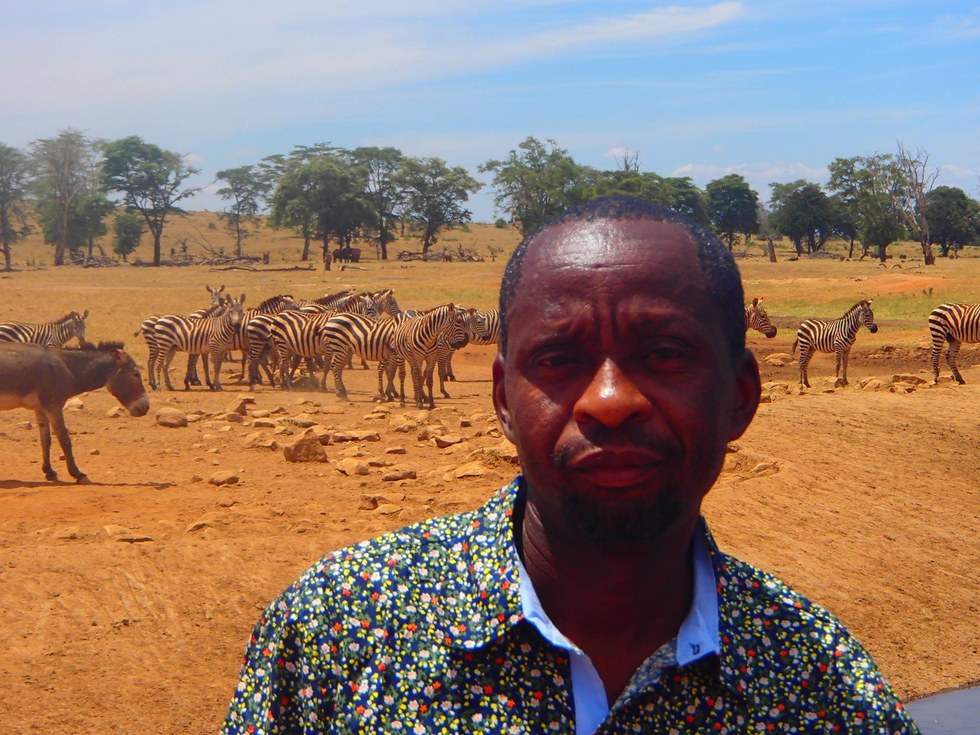
In a land as parched as Kenya's Tsavo West National Park, no visitor arrives with more fanfare than the water man.

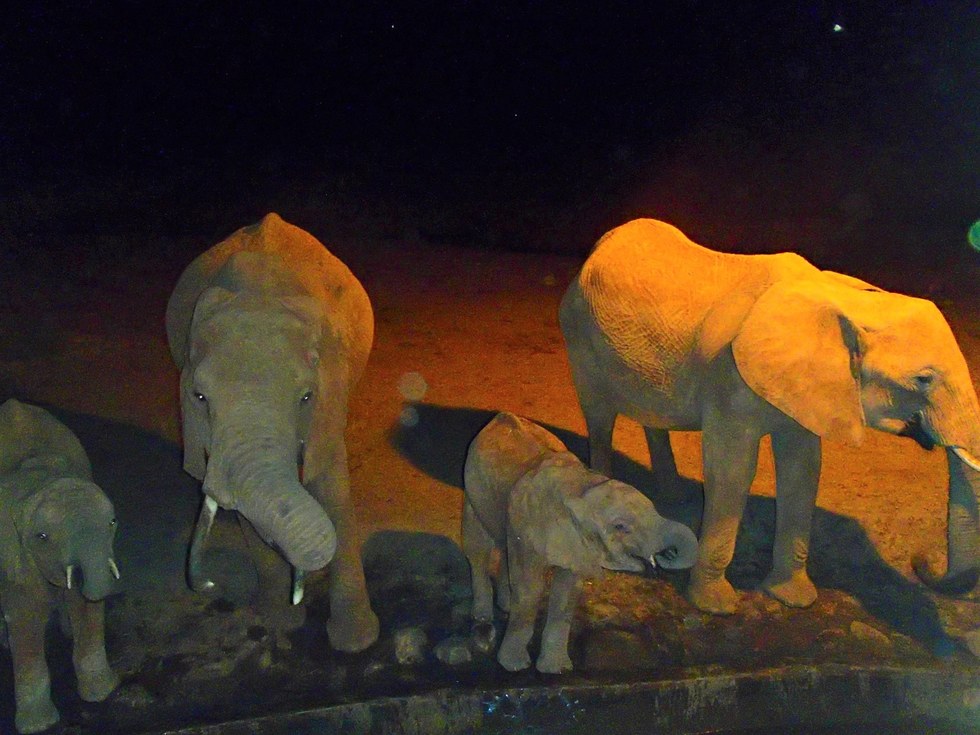
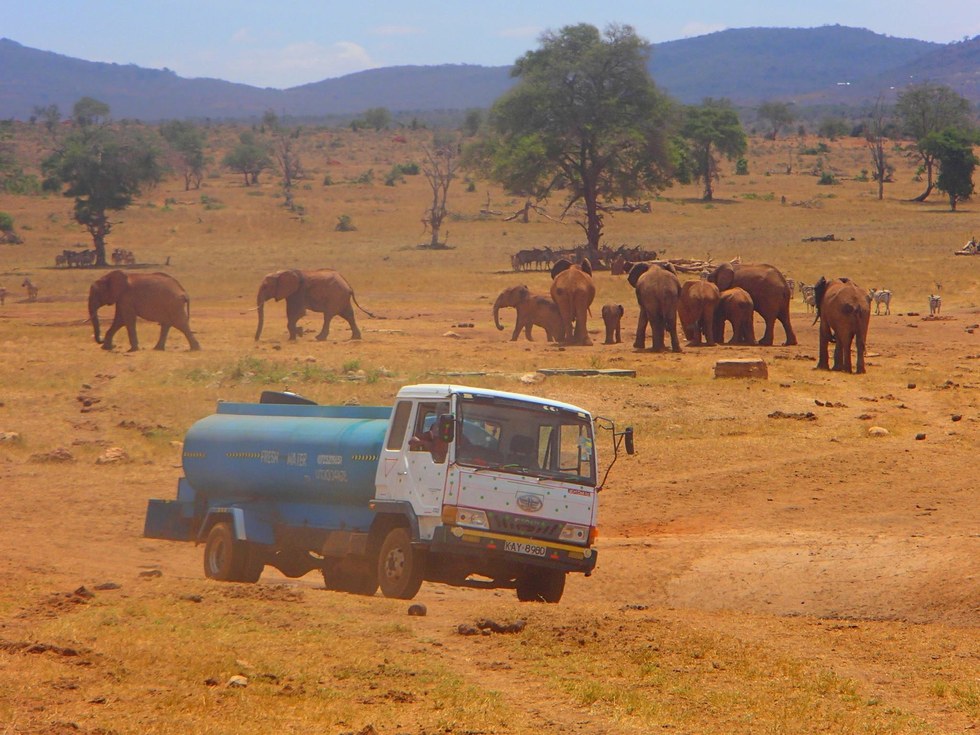
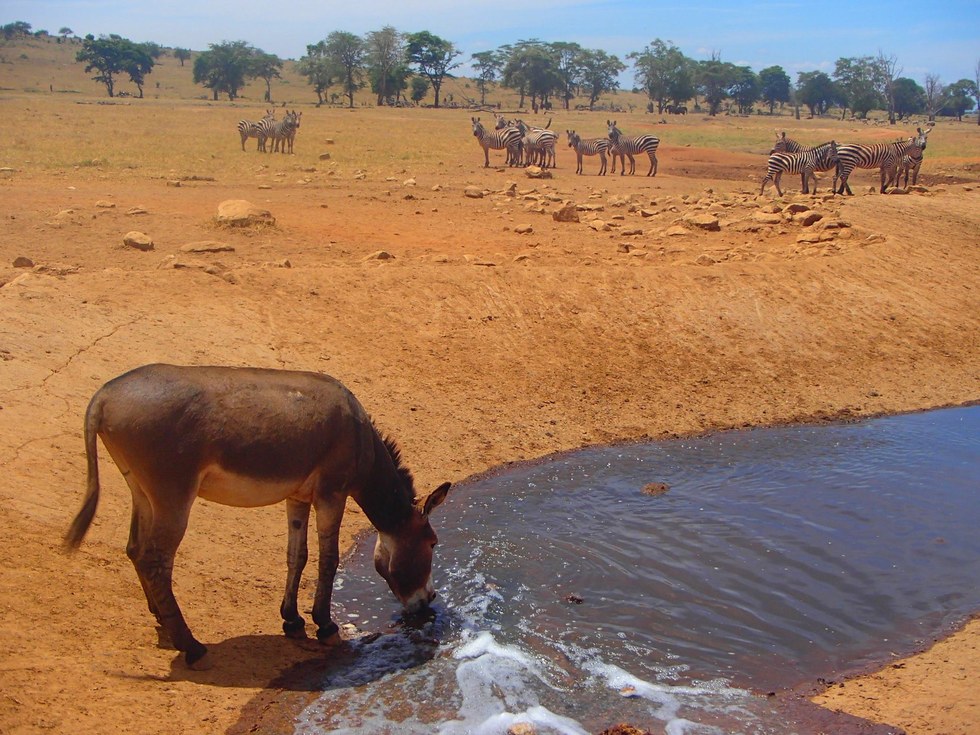
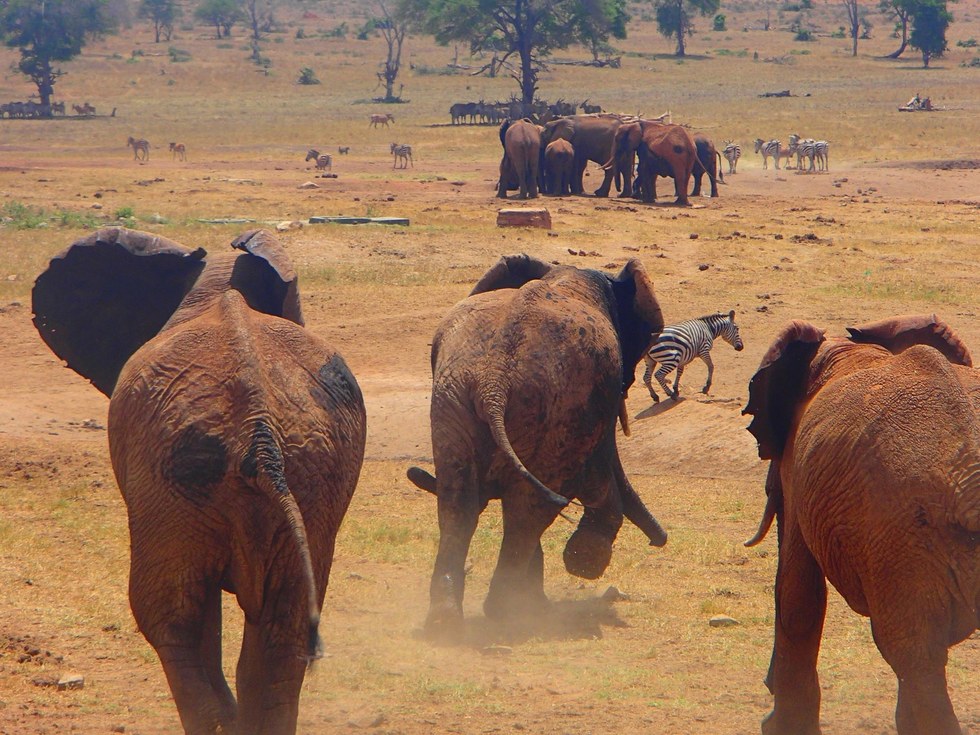
That would be Patrick Kilonzo Mwalua. And when he rumbles down the dusty road bearing some 3,000 gallons of fresh water, the elephants, buffalo, antelope and zebras come running.

They've come to know the water man by the rumble of his engine. And his lifesaving cargo.

"There is completely no water, so the animals are depending on humans," Mwalua tells The Dodo. "If we don't help them, they will die."

Patrick Kilonzo Mwalua
Mwalua fills the bone-dry watering holes in the region, driving for hours on end every day to haul water to where it's most desperately needed.

The holes themselves, lined with concrete, often need cleaning — Mwalua blames it on buffalo droppings — and sometimes, he will just hose down an area of cracked earth for the grateful animals.

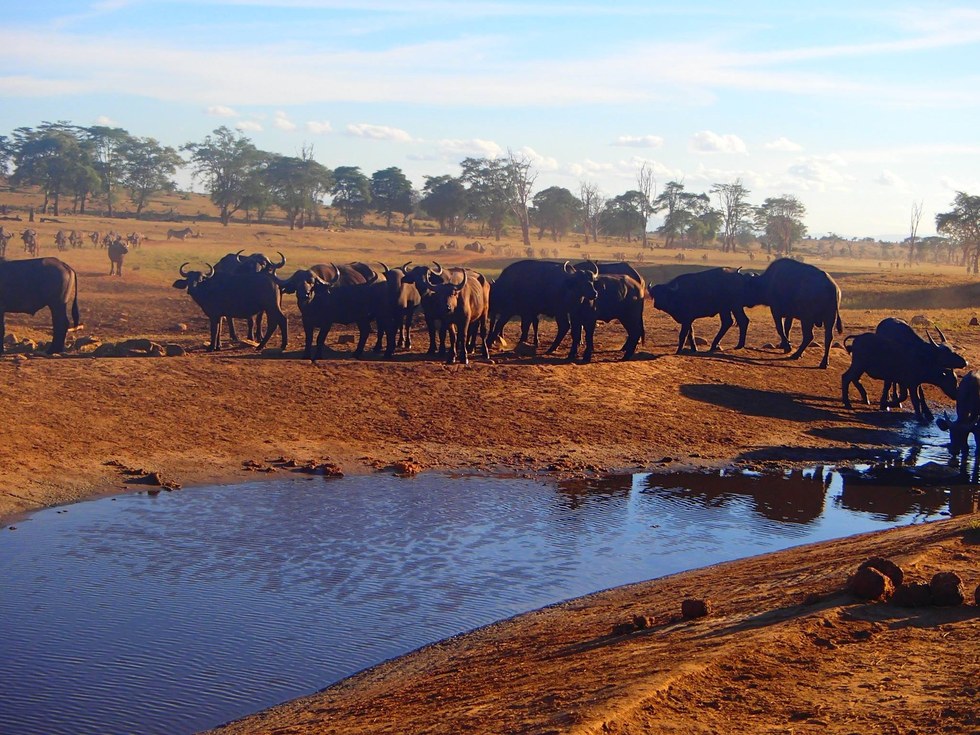
"The buffalo roll in the mud so they suffocate the fleas and ticks," he says.
water truck in tsavo kenya 
Patrick Kilonzo Mwalua
Many animals don't even wait that long, fearlessly crowding the truck as Mwalua cranks the tap.

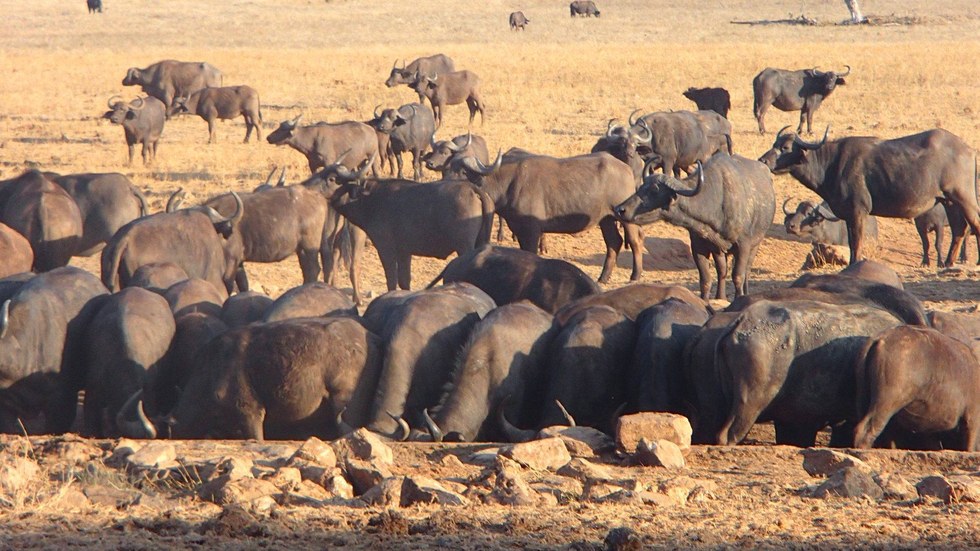
"Last night, I found 500 buffalo waiting at the water hole," he says. "When I arrived they could smell the water. The buffalo were so keen and coming close to us.

"They started drinking water while I was standing there. They get so excited."
Patrick Kilonzo Mwalua
Mwalua, who is a pea farmer in his local village, came up with the idea after seeing firsthand the grim toll climate change has taken in his native land. In the last year especially, he says, the area has seen precious little precipitation, leaving animals to die of thirst in these cracked lands.

"We aren't really receiving rain the way we used to," he says. "From last year, from June, there was no rain completely. So I started giving animals water because I thought, 'If I don't do that, they will die.'"
Patrick Kilonzo Mwalua
Between road trips, Mwalua runs a conservation project called Tsavo Volunteers. The 41-year-old also visits local schools to talk to children about the wildlife that is their legacy.

"I was born around here and grew up with wildlife and got a lot of passion about wildlife," he says. "I decided to bring awareness to this so when they grow up they can protect their wildlife."

 
Patrick Kilonzo Mwalua
Last year, Mwalua started renting a truck and driving water to several locations in Tsavo West. His mission would extend to several trucks, keeping him on the road for hours every day as he drives dozens of hard miles between stops.

"The truck is heavy and doesn't go very fast," he says. "We have to be very patient and go deliver water."
Patrick Kilonzo Mwalua
But his lifeline has also extended from that hose in Tsavo West all the way to the United States — where three women, who have never met him or each other, help him keep the taps flowing.

Patrick Kilonzo Mwalua
"I visited Kenya December of 2015, though I didn't know Patrick at the time or meet him," Angie Brown, who lives in Connecticut, tells The Dodo. But the country, and especially the plight of its animals, haunted her.

When she heard about the most recent drought, Brown connected on Facebook with Cher Callaway and Tami Calliope. The trio — Callaway lives in Utah and Calliope in Vermont — decided to help.
Patrick Kilonzo Mwalua
Callaway, who has worked with Mwalua on several projects — including fundraisers for beehives and night patrols to gently scare elephants away from villages — says Kenya's water delivery man is keeping animals alive during the current drought.

"His commitment to the wildlife and his heritage is unmeasurable," she tells The Dodo. "Even risking his own life in the middle of the night to deliver water to a dry water hole."
buffalo in kenya 
Patrick Kilonzo Mwalua
Callaway set up a GoFundMe page that has so far collected more than $18,000 from people around the world — all of it going toward Mwalua's water delivery service.
Patrick Kilonzo Mwalua
"We have all spent a lot of time getting the word out about the animals Patrick is helping and the GoFundMe has been a real success," Brown says. "He needs so much more money though."
In fact, they're hoping to soon buy him his own truck.

Patrick Kilonzo Mwalua
But one way or another, Mwalua will keep rumbling down those dusty roads. Many miles to go. And many more thirsty mouths.

Want to help? Consider making a contribution here.
read more "Man Drives Hours Every Day In Drought To Bring Water To Wild Animals "

Sunday, February 19, 2017

Here’s why viral photos of these obese tigers are not funny or cute


Plump furry animals can seem cute but are they healthy? This is the debate that has gripped people online. Pictures of really obese tigers rolling on the floor have gone viral on social media and it has raised some serious concerns about animals’ health conditions.
fat tiger
The viral pictures of the obese tigers at the Siberian Tiger Park in Harbin City, northeastern China have amused Netizens and received strong criticism from animal welfare groups. The big cats have reportedly been overfed by their carers and the visitors coming to the park. According to reports, visitors are able to purchase “live chickens and strips of beef” which they can directly feed to the tigers.

People on Chinese social media also joked that the tigers ate too much during the Spring Festival holiday.

Park workers claim there is nothing to worry about – alleging that it is common for tigers to put on weight over the winter months as they are treated well to combat harsh winter conditions. But assured that over the spring, the wild cats shed weight.

However, the Born Free Foundation, one of the world’s leading conservation organisations has strongly lashed upon the zookeepers, saying the “tigers are ill.”

“These tigers appear very obese, indicative of a wholly inappropriate and unnatural diet, woefully inadequate opportunities for natural behaviour and exercise, and the constants of captivity. In my view, this is not funny or “cute”. These animals are ill,” Will Travers OBE, President of the Born Free Foundation said in a press release.

The foundation argued that tigers are naturally agile hunters, with naturally large home ranges and obesity would simply not be seen in wild tigers.
read more "Here’s why viral photos of these obese tigers are not funny or cute"

Saturday, February 18, 2017

Why your dog never forgets


Scientists have long wondered whether what underlies 'smart' behaviour in animals is cognitive processes – in other words, thinking, an expression of some kind of intelligence.

Researchers started by studying non-human primates and have since demonstrated remarkable cognitive abilities in other mammals, including dogs.
dog
They have shown that dogs have significant capacity to remember associations between commands, situations and behaviour.

Recent research even showed that dogs can actually remember specific events, just like humans and other primates can.

In the early 2000s, a series of studies began to show unequivocally that dogs have sophisticated abstract abilities.

For example, they can follow pointing gestures, something that was previously thought to be a uniquely human capacity. 

A later study showed that dogs could do this even though chimpanzees, often thought of as one of the smartest animals, can't.

Dogs have also been shown to have numerical abilities, another skill previously thought to exist only in humans.

A 2002 study investigated the ability of 11 pet dogs to count by performing simple calculations in front of them using treats.

The researcher would place a number of treats behind a screen one by one and then reveal how many there were in total.

But sometimes the experimenter would manipulate the outcome so that the total of treats revealed at the end wasn't the same number the dog had seen placed there. For example 1+1=3 instead of 1+1=2.

The dogs spent significantly longer looking at the outcome of the manipulated calculations, as if the answer was not what they had been expecting.

This suggested that not only did the dogs anticipate the results of the calculations, but also that they held representations of numbers in their memory.


read more "Why your dog never forgets"

Friday, February 17, 2017

Cute animals with troubling political positions


We are all so used to seeing pictures of cute animals and assuming they are harmless and friendly creatures, full of love and peace. But it's not so, according to comedian Alice Frasier. Here are some adorable animals with terrible political positions.

We’ve always just accepted that cute animals probably have cute thoughts. If we’ve thought about it at all (I have). Most memes, like the ‘I can haz cheeseburger’ phenomenon, indicate that the cuter the animal, the littler and cuter its little cute brain must be and the fluffier and more adorable its thoughts. But with recent advances in cute-animal mind-reading technology, we’ve been able to interview a few adorable little beasties, and we’ve found that appearances can be deceiving.

Here are 5 animals with troubling political positions.
This adorable little sloth likes to eat buds, tender shoots, and leaves, mainly of Cecropia trees, to be gently petted with just a fingertip while it clings to something, and to rage against the lax morals of a post-modern ethical framework. “In my opinion, Putin”, sloth declares, “is the only leader who dares raise the banner and openly, without excuses, declare that he will defend traditional values.” He yawns. “The debauched modern culture makes a mockery of what god and nature has dictated, and I for one am sick of it.”

You’re not quite sure what he means by traditional values, or what god and nature’s dictates, but you don’t want to ask. And he is pretty adorable.
This kitty is so cute she doesn’t even know which side’s right side up! But she does know how she feels about asylum seekers! Aside from chasing after laser pointers on the walls, kitty feels that the left are focusing too much on the problems of “queue jumping illegals” when “we have thousands of homeless people in Australia already”.
This tiny blissful piglet likes ice-cream and posing for photographs, and hates that feminists are dominating popular discourse at the cost of men. Why do women always complain about being excluded from traditionally masculine power-positions like boardrooms and politics when they’re not fighting to do the traditionally masculine dirty and dangerous work as well? Where are the women fighting to get into mining or garbage collection? You’re right piggy. It’s a double standard. Soothe your troubled heart with some ice-cream.
These baby platypuses are velvety smooth and wrinkly-grumpy. Their little hands are probably cool and damp but their bellies are warm. They think that hysterical libtard lefties are trying to shut down free speech, and spend their spare time on 4Chan, fighting for the right to complain about ‘the jews’.
This happy puffer fish looks up at you with trusting eyes, believing in the beauty of god’s creation and that abstinence only education is the best way to keep your children from sin. Sex education just shows children a range of options for depravity, and teaching them about contraception will only lead to reckless underage fucking. Keep their minds clean, and remember your girls’ best protection from the sexual lusts of men is to maintain her modesty.
This angry birdy wants to let the invisible hand of the free market have free reign. She believes taxation is just a euphemism for theft by an aggressive state, and that an unregulated market will allocate our increasingly scarce resources more efficiently.

So there you have some very cute animals with some very troubling political opinions. This is what happens when you eat a banana and go to sleep while trying to contemplate the essential quality of the Internet.
read more "Cute animals with troubling political positions "

Thursday, February 16, 2017

If Anything Can Make You Feel Better, It’s This Istanbul Street-Cat Documentary


Torun jokingly calls Kedi “uplifting terrorism” when we meet to chat about her charming feline flick. But the film is more than just a cute cat video blown up to feature length; it’s a slice-of-life portrait of Istanbul, which is crawling with the creatures that have become the heartbeat of the city’s daily rhythm. She profiles seven camera-ready cats, all of whom have distinct personalities and nicknames: the Hustler, the Lover, the Psycho, the Social Butterfly, the Hunter, the Gentleman, and the Player. A good director knows the importance of a good cast, and Torun’s got one hell of an ensemble.
cats
Torun gets her camera low to the ground to stay eye level with her feline stars, but she also makes sure to give some screen time to the human citizens who take care of these strays, people who speak of their fish-loving visitors as good friends and equals. Cats have always been highly regarded in Istanbul, and folklore says a cat once saved the Prophet Muhammad from a poisonous snake. There’s even a popular saying in Turkey that goes: “If you’ve killed a cat, you need to build a mosque to be forgiven by God.” (Don’t worry: No cats die in this film.)

There’s something very feel-good about Kedi, but Torun admits the film’s lack of conflict was hardly intentional. “Initially the idea was to get every side of the story,” she says. “There are, of course, people who are openly anti-cats, but they also happen to be people who are anti-people. We had a really hard time trying to get people to talk to us if they didn’t like cats.” It’s a point the movie drives home: Loving cats may make you a lovelier person.

For a film that feels like a response to troubled times, there’s very little politics in the film — no mention of terror attacks or Erdogan. “[The relationship between humans and cats] is a very timeless relationship and it would be an injustice to the cats and to the people who love them to suggest otherwise,” Torun says. “It’s bigger than the politics; it’s bigger than small-minded politicians in our lives that come and go.” The film was shot the summer following the Gezi Park protests — a series of rallies against the closing of a public park that evolved into massive demonstrations against government crackdowns on free speech and secularism — and yet they’re only mentioned by one of the interview subjects, briefly. “I didn’t want to include anything pessimistic; it’s not an activist film,” Torun says. “But it was a way to highlight our shared humanity, and an appreciation of an aspect of life that goes beyond language, beyond religion, beyond anything.”

Kedi is at its best when it show a connection that runs deeper than passing petting. In one section, a woman says that cats — who move in a playful, feminine manner — are like surrogates for female expression under traditional Turkish norms. “Although Turkey is still one of the most advanced in terms of women’s rights, culturally, it’s still a little bit backwards,” Torun says. “If you do express your femininity, then you’re seen as a ‘loose’ woman. If you don’t express your femininity, then you’re seen as frigid. Whereas with cats, no one judges them. No one says, ‘Oh, what a slut’ to a cat.”

“You also see so many men in the film who tend to these cats, and have this opportunity to be affectionate with a feminine being without it being misinterpreted,” she explains. “Male-female relationships in Turkey are stunted, and they can express these kinds of emotions in a healthy way — you know, with other creatures like cats.”

There’s also a sense of camaraderie and community that’s built from each neighborhood taking care of its cats together. In one scene, people chip in to pay a street cat’s vet fees, an act of instinctive generosity that’s hard not to imagine seeping into interpersonal connections. It’s a healthy reminder of the things that are worth holding onto. And yes, the cats are cute, too.
read more "If Anything Can Make You Feel Better, It’s This Istanbul Street-Cat Documentary"

Thursday, February 2, 2017

12 Facts About Chinese Zodiac Animals


Chinese New year is a celebration of the first day of the first month in the Chinese lunisolar calendar. The tradition, believed to have started as early as 2300 BC, is based on a 12-year-long cycle, with each year in the cycle corresponding to a particular zodiac animal sign: rat, ox, tiger, rabbit, dragon, snake, horse, sheep, monkey, rooster, dog or pig. This year is the Year of the Rooster.

Many legends surround the origins of the Chinese zodiac animals. The most commonly told story involves the Jade Emperor. He decreed that the first 12 animals in the universe to complete a race would be chosen as calendar signs, and the order in which they finished the race would determine the order of the zodiac. The rat, who placed first, is believed to have won the race by hitching a ride on the ox’s back.

In honor of Chinese New Year, here are 12 facts about the Chinese zodiac animals:

1. Sumatran bamboo rats can weigh as much as a domestic cat.

2. To protect their young, muskoxen form rings around them, with their horns facing out towards predators.

3. Tigers are the world’s largest wild feline, weighing up to 363 kilograms and measuring up to 3.3 metres.

4. A snowshoe hare’s (rabbit’s) white winter fur turns brown as the snow melts each spring.

5. A Komodo dragon bite can kill an animal within 24 hours. Their toxic saliva contains more than 50 bacterial strains.

6. Common garter snakes, Canada’s most widespread snake, give birth to live young.

7. The only truly wild horse is Przewalski’s horse, a species not descended from domesticated horses.

8. At 14 kilograms, the horns of a male Rocky Mountain bighorn sheep are heavier than the combined mass of its bones.

9. Golden snub-nosed monkeys inhabit higher altitudes than any other primate species, besides humans.
10. To attract mates, roosters do a dance called “tidbitting,” which involves making noises and moving their heads up and down.

11. The hunting success rate of the African wild dog is higher than a lion’s.

12. Female wild boars (pigs) can have two litters per year, with six or more offspring per litter.

This post was written by Adam Hunter and originally appeared on the Nature Conservancy of Canada’s blog Land Lines.
read more "12 Facts About Chinese Zodiac Animals"

Tuesday, January 31, 2017

Animals are much smarter than people realize, scientist says


What is the smartest species in the world? You might think it's humans by a long shot, but the reality is a lot more complicated.
Frans de Waal, a primatologist at Emory University, has a new book out called "Are We Smart Enough to Know How Smart Animals Are?" and in it he gives hundreds of examples of surprising intelligence from non-human species, including many instances where other animals appear to be smarter than we are.

Chimpanzees, for instance, can easily beat humans at recalling a set of numbers that was displayed for a fraction of a second.

Octopuses can learn to open pill bottles protected by childproof caps, which many humans can't figure out on their own.

Dogs and horses, among many species that spend time around humans, are able to recognize body language cues that are lost on us.

Many species can do stuff we can't even imagine: bats that map out space with echolocation; birds that figure out the complex mechanics of flight and landing; and ticks that identify passing mammals by the smell of butyric acid.

In fact, every species' operating system is finely tuned to do what it needs to do, which makes intelligence comparisons across species rather pointless.

"It seems highly unfair to ask if a squirrel can count to ten if counting is not really what a squirrel's life is about," de Waal writes. "The squirrel is very good at retrieving nuts, though, and some birds are absolute experts .... That we can't compete with squirrels and nutcrackers on this task — I even forget where I parked my car — is irrelevant, since our species does not need this kind of memory for survival the way forest animals braving a freezing winter do."
Take chimpanzees, which share 99% of their DNA with humans. De Waal describes a female chimp named Kuif who learned to feed an adopted baby chimp with a bottle and knew to withdraw the bottle when the baby needed to burp. Still more impressive was how Kuif, every time she was called into a separate area for feeding, would first take the time to visit the alpha male, the alpha female, and several friends, waking them up if they were sleeping, and giving them a farewell kiss.

Dandy, a young male chimp described by de Waal, was smart enough not to reveal finding some buried grapefruits while in the company of larger males. Hours later he ran back unaccompanied to eat them alone.

Grande, another chimp, would sit quietly when unable to reach a banana hung from the ceiling, until in moments of inspiration she would spring up and try a new technique for reaching the banana: connecting sticks to create a longer tool or stacking boxes to climb higher.

Chimps show almost human levels of cognitive complexity in these actions. And again there are areas where chimp thinking surpasses human thinking — among them short-term recall and perhaps some kinds of social awareness.
read more "Animals are much smarter than people realize, scientist says"

Sunday, October 2, 2016

Keeping Chinchillas As Pets


If you’re looking for a cute, perky, little pet, a chinchilla may be the perfect companion for you. Chinchillas are crepuscular rodents, slightly bigger than the common ground squirrels. They are native to the Andes mountains in South America and have become a popular pet over the past few years. These little furballs have a number of characteristics which make them great pets. However, chinchillas are not for everyone. Below are a few things you should know about chinchillas.
Chinchilla
Where do they come from?

Chinchillas originated from the Andes mountains and are named after the Chincha people of the Andes who use to hunt them for their dense, velvet-like fur. There are two species, Chinchilla lanigera and Chinchilla chinchilla. Domesticated chinchillas are thought to have come from the C. lanigera species since these animal are actually considered Critically Endangered on the  the IUCN Red List. so if you ever do get a chinchilla, make sure they come from a reputable breeder and not from the wild. 
Chinchilla
Pros and Cons

Chinchillas are covered with soft fur and are naturally curious. They make very little noise and are low-maintenance pets. They’re perfect for a small home, like an apartment or a condo, since they really don’t need a lot of space, as long as you give them enough exercise. On the down side, they can be high-strung, and they have relatively short attention spans. They also can’t tolerate places with hot weather or high humidity well, so you need to keep them cool if you’re living in a warm place.
Chinchilla
Buying A Chinchilla

Most pet stores often times sell chinchillas that are not well-bred and are unhealthy. And since these animals are considered critically endangered in the wild, you need to be very careful about where you get the chinchilla. Your best bet is to find a reputable breeder in or close to your area, such as those that are members of The Chinchilla Club. Never hesitate to ask questions about what type of chinchilla it is and ask for reference to previous clients. If possible, check both the parents and the youngster for any health problems before you buy the Chinchilla. Be watchful of pasty or watery eyes, drooling (which indicates tooth alignment problems), wool pulling or missing areas of fur. Common problems see in pet store purchased chinchillas are wool pulling due to boredom and stress and malocclusion due to improper diet and genetics.

Chinchilla Personalities and Characteristics

These cute animals have their own personalities, much like cats and dogs. Since they live in groups in the wild, they’re naturally social creatures. They go along well with other animals, as long as they are socialized at a young age. You need to handle them and pet them regularly so they’ll get used to you, or they’ll end up becoming aggressive and skittish. An ideal age to purchase your chinchilla is 10 weeks of age. Adult female chinchillas weight about a pound-and-a-half and are a bit bigger than males. Chinchillas can live 12 to 20 years, which is an exceptionally long lifespan for a rodent. They have an exceptionally long pregnancy which last about 111 days. Babies come out covered in fur with eyes already open, like their distant cousins the guinea pigs.

Do's for maintenance
Keep a chinchilla in a mesh cage that’s pretty spacious for their size. To help keep it clean, a dripping pan should be inserted under the cage to catch the chinchilla’s poo and pee. As much as possible, you don’t want your chinchilla to run free since they could end up chewing on furniture, as well as be exposed to household toxins. Chinchillas love cardboard boxes to hide in, as well as ledge shelves to bask on. They also love dust bathing so give them a shallow dish or crock with cornstarch or cornmeal.

Place shavings on the bottom of their cage. They don't need a special bedding. The usual hamster or gerbil bedding you find in most pet stores will do. Their cage needs to be cleaned regularly. You can use baking soda and sprinkle it on the corner where the chinchilla eliminates to help reduce odor, but compared to other pet rodents, chinchillas are not that smelly. Place your cage out of drafts and strong direct sunlight. But keep in mind that you have to keep the chinchillas in a cool place since they don’t do well in heat.

They should have a food bowl (avoid plastic) and water bottle with a ball bearing sipper tube. Placing a metal shielding for plastic water bottles is advisable as chinchillas quickly chew through the bottles. Adding toys and an activity wheel helps keep your chinchilla happy. Chewing blocks help keep their jaws healthy and their teeth worn down. You can also give theme vegetables like carrots or fruits like apples to chew  and gnaw on.
read more "Keeping Chinchillas As Pets "

Saturday, October 1, 2016

10 Human Foods That You Can Give To Your Cat


Tired of giving your cat the same can of cat food? Or do you want to give kitty something else to give them a better diet? Cats, like dogs, can also be given human food to help provide them with better nourishment, and to stop them from getting sick of the same thing.  If you’re looking for a healthy snack for your cat, you don’t have to look any further than your own pantry. Here are 10 expert recommended, cat-friendly human foods the you can try to feed to snowball.

Keep in mind that you have to limit their intake of these food items as treats or as meals to 20 calories  (of a single food or of a mixture of food) per pound of their weight a day to avoid over-feeding them. For example, If your indoor cat weighs 10 pounds, then they should only be eating approximately 200 calories per day, so mind the portions you give them.
Salmon

Salmon is a great source of omega-3 fatty acids and protein. It’s a common ingredient in commercial canned cat food, but serving it fresh assures you that your cat is getting all the vital vitamins and minerals found in the fish. You might think serving salmon raw is the best way to feed it to your cat, but it’s best to cook it. Just to make sure there are not parasites in the fish that could cause health problems.
Spinach

Make your cat’s regular meals more nutritious by adding some spinach to it. This leafy green vegetable is packed with vitamins A, C and K, iron and calcium. Chop up some spinach leaves and cook it for a few minutes to wilt it down. Mix it into their usual can of cat food and you’re good to go. However, if your cat has history of calcium oxalate bladder stones, you should avoid giving them spinach.
Fish Oils

Many vets actually advice cat, as well as dog, owners to give their pets fish oil. This can be bought in most pharmacies and health-food stores. There are many different types of fish oil, including salmon and cod liver oil. The omega 3s found in fish oil can help prevent your pet’s skin from getting dry during the colder months and keep their coat healthy throughout the year.
Eggs

Eggs are another good source of B vitamins and protein. Believe it or not, eggs are a common ingredient found in cat food and are safe for cats to eat. To prevent the risk of any food-borne diseases, be sure to cook any eggs you feed your cat. You can boil them or scramble them and cook them in a pan without any oil or salt.
Chicken

Since cats are  obligate carnivores, they require a diet that mostly contains meat (unlike dogs which are omnivores and can live off different foods). Their bodies are not built to digest foods that are fibrous, so they need very little of this in their diet. However, any type of meat, like chicken, is right up their alley. Since chicken is a good source of lean protein, it’s a great choice for your cat’s diet. It needs to be cooked thoroughly and the skin removed to get rid of excess fat.
Turkey

Like chicken, turkey can be a great source of protein for your cat’s diet. Cooked turkey breast or even sliced deli meat are cat-friendly snacks. Boil or steam some turkey breast, cut them up into little cubes, and give them to your cat as a treat.
Cantaloupe

Giving fruit to your cat? Sure, why not? Cantaloupe is one of several cat-safe fruits.
Cantaloupes are high in High in antioxidants and beta-carotene, which helps maintain healthy skin and eye health.
Bananas

These fruits are high in potassium (which is very difficult to integrate to any pet’s diet) and soluble fiber. This sweet fruit makes a great snack or a healthy treat. You can mash it up or give them to your cat in chunk.
Blueberries

Blueberries are a great source of vitamin A and C. some commercial cat food use blueberries as an ingredient, but you can definitely give them fresh blueberries for a treat. Frozen Blueberries can be given as a treat to keep them cool during those hot days. Keep in mind that you’ll want to limit the amount of treats you give your cat each day, even if they’re healthy.
Apples

These contain a good amount of vitamin C and fiber. Give your cat fresh apples cut into small chunks. Remember, it should be fresh apples, not apple pie filling or preserved apples. These might contain seasonings and your cat may experience digestive problems because of these. 

Keep your feline friends healthy and strong with these everyday food items.  Got any pet questions you want us to answer? Leave us a comment or a suggestion. Don’t forget to share this article to fellow cat lovers.
read more "10 Human Foods That You Can Give To Your Cat "

Hispaniolan Solenodon - Giant Shrews


Deep in the heart of the island of Hispaniola is a weird, but cute, animal called the Hispaniolan solenodon, also known as the Dominican solenodon. You most likely have never heard of this animal before. It was first described by Johann Friedrich von Brandt, a German naturalist, in 1833. A similar but smaller species, Marcano's solenodon (S. marcanoi), had once lived on the island, but was wiped out after European colonization. In a nutshell, the Hispaniolan solenodon looks like giant shrew. This short article is about this strange animal and how it lives in the wild.
Description

With its elongated snout, many would mistake the hispaniolan solenodon for a shew. However, it’s actually a totally different mammal. They do, however, belong to the same order (Eulipotyphla). Unlike most animals, female and male hispaniolan solenodon grow to be about the same size. Adults can measure up to an average of 49 to 72 cm (19 to 28 in) in total length, including a tail 20 to 25 cm (7.9 to 9.8 in), and weigh about 800 g (28 oz). Although they vary in color, they usually come in a dusky brown all over their body, with a pale underside and brick red to reddish brown fur on the sides of their heads, upper chest, and throat. Their legs, tails, snout, and eyelids are hairless.

Their forelegs are stronger and are noticeably more developed compared to their hind legs, but they use both for digging. Its head ratio is bigger than its body, with tiny eyes and ears that are partially hidden under their fur and a long rostrum. Their shout has around a dozen long whiskers and their nostrils open to the side. One of the unique features that this animal has is the os proboscidis, which is a bone extending forward from the nasal opening to support the snout cartilage. The hispaniolan solenodon is one of the few mammals that are actually venomous. Venomous saliva is secreted by their submaxillary gland and flows through a thin tube their second lower incisor. The venom is quite fatal, but its exact chemical composition is unknown. They also have small apocrine glands on their thighs. The secretion from these glands are used to communication between individuals.
Habitat and Distribution

These specific solenodonas are only found in Hispaniola, an island in the Dominican Republic, as well as in some parts of southern Haiti. These animals live in moist forest and burrow in the right soil. Two subspecies, the Solenodon paradoxus paradoxus (found in the northern Dominican Republic) and the Solenodon paradoxus woodi (found far southern Dominican Republic, Tiburon Peninsula) are recognized. They appear to have a patchy distribution and are found within and outside protected areas.
Behaviour

They are nocturnal animals, spending most of their time hunting and moving around at night. During the day, they hide in their burrows or in small caves and hollowed-out logs and trees, staying out of view. Burrows often contain multiple tunnels and chambers that are usually inhabited by a pair, together with younger family members. When they emerge into the open air, they run on the soles of their feet, following an erratic, zigzag pattern.

Diet

Hispaniolan solenodons mainly feed on arthropods, but they also eat small reptiles, snails, worms, and even mice. They’re also known to eat leaves, grains, and fruits in small amounts. To find food, they use their snouts to sniff out any insects and other small animals under the earth and use their claws to dig or rip open rotten logs. They have also been reported to make echolocation clicks so they could possible use this to locate prey as well.

Communication

Other than their scent gland, the hispaniolan solenodons have been reported to make a number of vocalisations, including a loud defensive "chirp", an aggressive "squeal", a soft "squeak" when encountering familiar conspecifics, and a high-pitched "clic" when encountering strangers and other of its kind.

Reproduction

Mating happens throughout the whole year, although females are only receptive for short periods once every ten days or so. Gestation period last over 84 days and litters consist of one to three young. If there are more than two offsprings, the others usually have a hard time surviving since female hispaniolan solenodons only have one pair of teats. The young are born hairless and blind, completely dependent to their mother’s care. They are carried around by their mother for their first two months, although it is unknown how long it takes for them to be fully weaned. In captivity, hispaniolan solenodons can live up to eleven years.
read more "Hispaniolan Solenodon - Giant Shrews"