Fun Animals Wiki,Videos,Picture,Stories

Wednesday, August 24, 2016

Top 10 questions asked about rabbits


A pet bunny is one of the cutest and easiest animals to take care of. Which is why many parents apt to get their kids rabbits as a first pet. If you’re a new rabbit owner, or if you’re planning to get a pet rabbit, below are the 10 most common questions about caring for your furry little friend.

Will I need a pair or can they live happily solo?
Rabbits are social animals, so it’s better to get them in pairs rather than having a single rabbit. However, solo rabbits might do well in homes with other pets. Keep in mind though that rabbits are territorial creatures so they might get into trouble with their housemates if they get too close to their territory. Some animals, such as Guinea pigs, are susceptible to respiratory disease from bacteria which rabbits carry. Rabbits are also known to bully smaller rodents sharing territory.

Can it live outside?
Rabbits are actually pretty active creatures. They need a good amount of space to run and hop around, so placing them outside may be a great idea. You can create a fenced area with a hutch that your rabbit can use for cover in case of rain and really hot days. Place large pipes that the bunnies can use as a makeshift burrow. If you will be placing the rabbit outside, make sure their pen is protected from any predators like foxes or stray cats. The best place to set up a pen for them is in the shady part of the lawn or backyard. Bunnies don’t like high temperatures, so keep them in a shady area.

What about indoors?

Yes, rabbits actually make good indoor pets. Most people don’t know that rabbits, like dogs, can actually be toilet trained. In the wild, rabbits use latrines, so you can use a cat litter tray lined with news papers and some hay on top will suffice. Rabbits actually like to eat where they poop (sound nasty, i know), so the hay will help encourage them to do their business in the tray. The rabbit should also be given a place where they can run and hide in if they ever feel threatened. A cage is a big help, unless you want your rabbit to roam free, but never keep the rabbit in the cage all the time. They as mentioned, they do need to move around. Bunnies are also notorious when it comes to chewing, so make sure they don’t get access to household plants, electrical cables, and other things that could harm them.

What do they eat?

They’re herbivores so they love to eat everything from fruits, vegetables, grass, and hay. Fiber is important in their diet, so give them food that’s rich in this. They should be given grass and meadow hay, but it’s important that there are no chemicals in them. Mixed vegetables should be added to their diets, but these must be introduced to their daily meals slowly to minimize the chance of an upset stomach. There are high fiber rabbit pellets available in most pet stores, which makes a good, day to day meal for them. However, it’s important that they still be given vegetation to help keep their stomach and teeth healthy. Water bottles are a must since bowls can easily be tipped over and the water spilled. Keep their water supply fresh and clean by changing it every day.

When should I clean their enclosure?

Their enclosure and hutch must be cleaned regularly. Faeces and soiled bedding must be removed and replaced with fresh, cleaned bedding. Their litter box should always be cleaned out and the lining replaced with clean lining and new hay. The hutch can be cleaned using a 5% concentration of diluted water and bleach. Nothing stronger than this though since any residue could harm the rabbit. Cleaning the enclosure and replace the bedding once should be good enough.

Do they need treatments for parasites

Yes, they can acquire parasites like mites and fleas. You might need to talk to your vet about this to know what treatment is the best for your pet. If you’re worried about your rabbit getting these parasites from other animals, like pet dogs and cats in your home, it’s important that they be given treatment as well to avoid these pests from spreading.

Will rabbits need vaccinations?

They should be vaccinated for diseases such as viral haemorrhagic disease (VHD) and myxomatosis. Schedule a session with your vet so you can get your rabbit these vaccinations at the right time. These shots are done annually, so you’ll need to discuss with the vet a vaccination regime that is best suited for your rabbit. Keep a record of their shots with you to ensure they don’t miss it.

Can I have it neutered?

We all know how fast rabbits can reproduce. Rabbits can become sexually mature from the age of six weeks and can successfully reproduce from this age. Neutering your rabbit is a great idea. It can help in preventing territorial, sexual aggression, and unwanted pregnancies. In female rabbits, neutering helps prevent uterine cancer. Call your vet and ask if you can have your rabbit neutered and what are the possible risk associated with the procedure.

Do they need their teeth clipped?

Rabbits have open rooted teeth, which means that their teeth continuously grow. With the right diet, this shouldn't be a problem since their constant chewing should give plenty of abrasion that naturally wears their teeth down. However, if they don’t get to chew enough, their teeth could grow very large, and they might start chewing on things they shouldn’t be chewing on. If your rabbit starts drooling, eats less, starts losing weight, and doesn’t groom itself as often as it use to, these could be signs that their teeth are overgrowing and you’ll need to visit the vet right away.

How should I hold a rabbit?

Rabbits, contrary to how cute and fuzzy they are, are actually not the sweetest creatures in the planet. Most rabbits don’t like to be handled. Those that do, often don’t like it when you handle them for too long. They have very strong hind leg that let them run, kick, and jump. When you hold a rabbit, it’s important that you support its entire body, particularly the hind limbs, by placing one hand under the tummy and the other under the tail while holding them close to your body. They need to feel secure when you hold them, and holding them close will also stop them from kicking themselves free and end up injuring themselves from the fall. Never hold a rabbit by the ears. That’s the last thing it wants you to do. 
read more "Top 10 questions asked about rabbits"

Friday, August 5, 2016

Cute Animal Feature - Popcorn Scented Binturong


What strange but cute animal has a face similar to a cat, the build of a small bear, and a long tail like a monkeys? It’s called a binturong, more commonly known as a bearcat. The binturong has captured the hearts of many people because of their adorable face, and their strange scent that smells very similarly to a favorite human snack. They’re native to the rainforest of Southeast Asia and are rarely seen in the wild since they live high above the canopies and hardly ever come down. They’re robust animals, growing to be 2-3 feet long (double that if you include the tail) and between 25 and 50 pounds.

Below are 10 facts about the binturong to get to know this lovable, exotic creature better.
They’re not cats or bears

Although they’re called binturong s, they’re actually no where near related to cats or bears. The binturong  is categorised under the Viverridae family, which is a classification of an ancient group of small to medium sized mammals that are native to the Old World (eastern hemisphere). binturong s are actually more closely related to genets and civets. They’re taxonomy is also one of the most divers of the carnivores, consisting of 66 species found all over Europe, the Middle East, Africa, India, and Southeast Asia.

Fruit loving carnivores

Although the Binturong is a carnivore, its diet is actually mostly composed of fruits. In the wild, the binturong  lives of a diet based on a variety of food, including fruits (especially the strangler fig), small mammals, birds, fish, small invertebrates, leaves and plant shoots, eggs, and carrion. Those living in captivity are often give food like bananas, apples, tomatoes, yams, carrots, leaves, ground meat, and even dog food (you’d think they’d prefer cat food).

What’s in a name?

Where the animal’s name originated is still unknown. Researchers say that the language where the word “binuturong” comes from is now extinct.  However, it’s most likely from one of the native groups who have lived in the Southeast Asian region. We’re just guessing it means something close to “buttered popcorn”.


Popcorn scent

Speaking of buttered popcorn, for some reason, the binturong  actually smells like buttered popcorn. Like the members of the  Viverridae family, binturong s have scent glands which are found right under their tail. They use their scent to mark their territory, and their tails basically act like a mop that spreads their scent as they make their way around. Although they smell the the movies to us, other binturong s actually pick up this scent as a message that another binturong  already owns this territory. Their scents also help female and male binturong s find each other during mating season.

They’re noisy

These little guys actually make a lot of noise to communicate and express themselves. Happy binturongs would chuckle, however an irritated one would make a growl fiercely or high-pitched wail. When they’re hunting, they would periodically make low grunts and hissing sounds. And when a female  binturong  is looking for a mate, she’d purr like a cat.

Tree dwellers

For an animal that can weigh up to 25 and 50 pounds, the binturong actually prefers to stay on top of trees. They’re skilled climbers and move through the forest canopy, moving from one branch to another. Because of their size, they can’t leap. They use their strong feet and semi-retractable claws to get a good hold on tree branches. Their hind legs can even rotate backwards so their claws still have a good grip when climbing down a tree head-first.  Binturongs even sleep high in tree branches, curling up with their heads tucked under their tails.
They have prehensile tails

binturongs are the only Old World mammal that have a prehensile tail. Their tails grow about the same length of their body and act like a fifth limb when climbing. The tip of their tail has a leathery patch that gives extra traction when they use it to hold on to a branch. Their tail might be its most vital climbing tool. When sleeping, they use their tails like anchors, gripping tightly on a branch to stop them from falling off.

Bear walk

Binturongs, like bears, walk flat-footed. When they walk, such as in instances where they have to come down from the canopy,  in an ambling, side-to-side gait. Think pooh bear as he makes his way into the forest, only with four legs.

Planned pregnancy

Here’s a trait that most women would probably want. Female binturongs are about to mathe throughout the whole year, however, most births happen between January and March. Researchers believe that binturongs are one of the only 100 mammal species that have the ability to delay implantation. This means that they can mate anytime they want, but time the birth of their young to a season with favorable environmental conditions.

Strangler figs

These animals actually have a special relationship with strangler fig. They play a big role in spreading the seed of these fruits in their droppings. They’re one of the only two animals that have digestive enzymes capable of softening the tough outer covering of the fig’s seeds, making the binturongs a very important specie in the rainforest.

Through the years, a vast number of the forest lands in Southeast Asia has become threatened by human activity. The main threats to binturongs are habitat destruction, hunting, and the wildlife trade.
read more "Cute Animal Feature - Popcorn Scented Binturong"

Tuesday, August 2, 2016

Cute Animal Feature - Barn Owls


Barn owls, Tyto alba, is the most common and widely distributed owl species, as well as one of the most widespread bird specie, on earth. These birds are often called the common barn owl, which helps distinguish it from the other species in its family (Tytonidae). The barn owl can be found in almost every part of the world, except from the desert and polar regions, areas north of the Himalayas, majority of Indonesia, and certain Pacific islands.
It’s seen in all continents, except Antarctica. The barn owl’s range covers all of Europe (except Malta and Fennoscandia), most of the area of Africa and parts of the Sahara, the indian subcontinent, Southeast Asia, all of Australia, many of the Pacific islands, and North, Central, and South America. Barn owls are considered to be sedentary, which means that they prefer to stay in one area where they can find food and mate. They would even stay there even when there are better foraging areas nearby. However, their movements seem to vary depending on where they are located. Barn owls in the United States and Europe travel the most distance, averaging at 998 mi. Those in other areas of the world would travel an average distances of 400 mi.

This medium sized bird has pale-colored feathers with long wings and a short, square tail. Sizes vary from subspecies with an average measurement of around 33 to 39 cm (13 to 15 in) in overall length, and a wingspan of 80 to 95 cm (31 to 37 in). They also vary in weight, depending on their location. Some weigh at 260 g (9.2 oz) while other can reach a whooping 555 g (19.6 oz). Researchers have generalised that those who live in smaller islands are smaller and lighter, mainly because of their diet, which is mainly composed of insects.  These birds also need to be lighter to help them stay agile while hunting through the forests.

Barn owls have a very specifically shaped tail what helps distinguish them from other owls while on flight. Other features that make them stand out are their undulating flight pattern and feather-covered legs that they dangle while flying. Their pale, heart-shaped face and black eyes give these birds a distinguishing look, which looks like a flat mask that has oversized, oblique black eye slits. Above their beak, these birds have a ridge of feathers that resembles a nose.

These birds come in a range of color between pale brown and shades of grey. Some of the subspecies that have a more richer brown color have small black and white speckles all over their body, but these are not as visible on their main wing feathers. Their heart-shaped face is commonly a bright white, however some have facial feathers in brown. The lower parts of their body, which includes the lower leg feathers, varies from white to reddish and may have little blacking-brown speckles.

Their spots are actually an indicator of how healthy they are. In the case of the female continental European populations of barn owls, female specimen who had more spotting were recorded to be healthier compared to those who had little to no spots. However, this does not apply to males since spotting varies across subspecies. Also, males tend to show fewer spots on the breast and underside and are paler in color compared to females. Their beaks come in a
variety of pale horn to dark buff, and their iris is blackish brown. Like their beaks, talons vary in color, ranging from dark pink to a pinkish-grey to black. 

Contrary to what most people believe, barn owls actually don’t hoot. Hooting is typically done by tawny owls and members of the Strix genus. Barn owls actually make a shrieking/screaming sound which can be ear shattering when you get too close. This long, drawn-out shriek is really more eerie than cute, but their looks compensate for their call. They can make a hissing sound, similar to that of a snake, to scare intruders away. It also makes a range of rasping sounds or clicking snaps when defending itself. During mating, males give out a shrill twitter, which signals the females that they are ready to mate.

Although barn owls are very common, there has been a great decline in their population since the end of the Second World War. this is mainly due to the conversion of their  natural habitats into farmlands, towns, suburbs, and other areas used for human dwelling.
read more "Cute Animal Feature - Barn Owls"

Monday, August 1, 2016

Why Does My Cat Act like A Jerk?


Cat owners would agree that sometimes, pet cats can be total jerks. Yes, they’re soft, cute, and lovable, but in actuality, their personalities kinda suck. Before you start bashing us for that, you know it’s true. They can be really selfish at times, and they act like they just don’t care even when we shower them with love and affection.

Which brings us back to the question. Why do cats act like total jerks?

A number of recent studies actually found that it’s not that your cat is a jerk, it’s actually just their nature why they act they way they do. Do don’t feel bad if you think your cat hates you. It’s just behaving normally.
Cat calling

Call on a dog and it’ll run up happily and jump on your lap. A cat, however, won’t even look at you for a second. Although your cat can hear you when you call its name, and even recognize your voice from a stranger's, that cats just don’t want to respond to you. The research involved observing the behaviour of 20 house cats for a span of 8 months to see how cats recognize and respond to our voices when we call out their name. About 70 percent of cats acknowledged their owner by moving their heads or ears. However, only 10 percent actually gave a response to the call, by moving their tail or meowing. According to researchers from the University of Tokyo, cats don’t take human orders because they have not evolved to become as domesticated enough, unlike dogs. The researchers suggested that cats “domesticated themselves” by living with humans.
Cuddling ticks them off

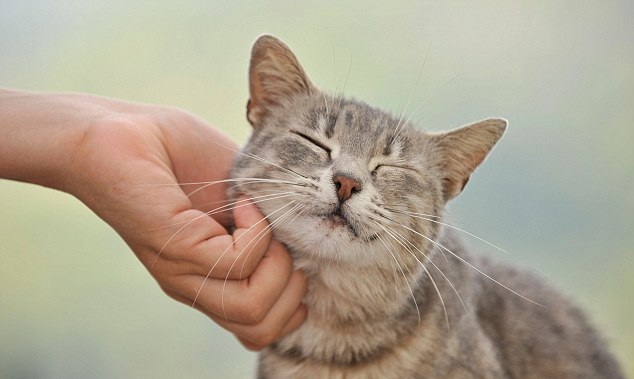
We love to cuddle and pet our cats, but this actually irritates them. According to Daniel Mills, a veterinary behavioral medicine professor at England’s University of Lincoln, some cats actually feel stressed when you pet them. Mills says that cats living in households with other cats are less stressed because they have a lesser chance of getting petted by their owners. Let’s just face it, if Snowball walks away from you when you try to give it physical affection, she just doesn’t want to deal with the stress you give her.
I am the captain now

Just because fluffy is rubbing herself against your leg, it doesn’t mean that it likes you. It might be nice to feel good about yourself when a mean old cat is finally acting nice around you and starts brushing up against you, but what it’s actually trying to say is that it owns you. Physical contact doesn’t automatically translates to “i love you”. Most of the time, it actually means “i own you”. By rubbing itself onto your leg or arm, it’s marking its property by putting his or her scent on you. Like dogs, cats have a heightened sense of smell, and  when a cat rubs against you, it’s informing other cats that you are its territory.

Mr.bigglesworth ain't so smart

A University of Oxford research on animal brains found that dog, because of their very social nature, have developed a bigger brain to adapt better in social settings. Cats, however, are more happy in solitary cultures, so their brains are not as developed to act in social settings. This is why your cat acts like a total stranger and won't come in to greet guests hello. If you’re still not convinced that cats have all the makings of a bad friend, there are countless videos of cats stealing dog beds, or terrorizing other animals so they can't pass through where they usually hang out.
Kitty kissing might lead to scratches

Many believe that a “kitty kiss” or when a cat greets you by slowly staring and blinking at you, is an expression of affection. But you might be surprised why kitty starts acting hostile the moment you reach to pet it. According to animal behavior experts, a long, deep, unblinking stare is a cat’s way of guarding his or her territory, meaning you’re actually not welcome.
Cats won’t hesitate to eat you

No matter how much you love fluffy, that cat is not going to hesitate to eat you if you die at home. According to a forensic pathologist who presented at the American Academy of Forensic Sciences conference, cats would not think twice about eating their owner if they’re left unfeed. When people who live by themselves with pets unexpectedly die, their bodies are usually left inside the house for days without anyone noticing. With their owners dead and no food on the bowls, pets begin to starve. Dogs would go several days without touching their owner’s body, but cats would only wait a day or two. The phenomenon is called “postmortem predation.”

Cat poop is toxic, but it makes you want to have more cats

Cleaning out the litter box is a real hassle, but did you know that i could also be affecting your health and brain? A certain parasite called the Toxoplasma gondii is found in cat poop. In rare occasions, this parasite can actually cause the disease called toxoplasmosis, which starts out with flu-like symptoms and leads to a weakened immune system. The illness has also been linked to a number of serious mental conditions such as anxiety, depression, and schizophrenia. Since the parasite affect people’s mental conditions, some individuals have been recorded to develop a strange and intense, almost obsessive, attraction to cats. Those who have been infected with Toxoplasma are known have a fondness for the smell of cat urine and feces.
Smelly human

And lastly, you might wonder why your cat just loves to keep licking itself. While the activity does give them a calming effect, cats actually lick themselves because they want to get rid of the “human” smell, as well as smooth and groom their fur. so  yes, your cat thinks you stink.

Whether they’re being cute and cuddly or acting like total jerks, we can’t seem to get enough of cats. Like this article? Leave us your comments on why we love cats, and suggestions on future topics. Don’t forget to share this article!
read more "Why Does My Cat Act like A Jerk?"

Monday, July 25, 2016

WARNING! When in a Wildlife Sanctuary, ALWAYS Stay in the Car!

In an open wildlife sanctuary, or any place for that matter where we as humans share space (at least how we think about it but the "wild" animals obviously have stronger instincts like territorial preservation to adhere to), you should never ever take your chances at rubbing elbows with any of place's natural inhabitants. Well, unless of course your Deadpool but we all know that chances of that happening.

This raw video footage shows us exactly why we have to stay in our vehicles. Poor soul of a woman but I doubt we can blame the wild animal on this video since this is his territory after all. What do you think?


read more "WARNING! When in a Wildlife Sanctuary, ALWAYS Stay in the Car!"