Fun Animals Wiki,Videos,Picture,Stories

Sunday, June 1, 2014

An app to help report lionfish invasion in the shores of Florida


The digital age has now allowed ordinary people to partake in watching nature and retain life's balance. One good instance is a phone app that helps track and collect lionfish from the shores of Florida.

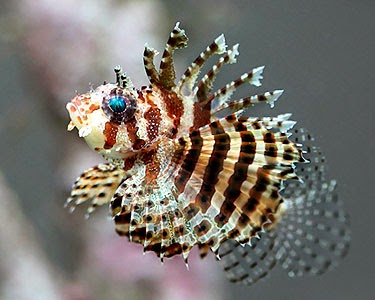
ORLANDO Fla. (Reuters, Barbara Liston) - Florida has a new phone app to help cull the invasion of its waters by the spiked lionfish, a venomous species that is devouring other fish and harming reef ecosystems.
The state is home to more than 500 non-native species, but few as rampant in the wild as the marauding lionfish, which is fast-reproducing and has a voracious appetite. It preys on native fish such as yellowtail snapper, Nassau grouper and banded coral shrimp, and other crustaceans.

"The lionfish has no known natural predators in the Atlantic ... and the ability to spawn year-round," according to the Florida Department of Environmental Protection.

With zebra-like stripes of red, brown and cream, they are native to the tropical waters of the Indian and Pacific oceans. Since their first sighting off Florida's Atlantic coast 25 years ago, the banded lionfish population has increased rapidly, according to the wildlife agency.
Popular aquarium fish, they have spread from Florida to Cape Hatteras, North Carolina, and to the Bahamas.

The Report Florida Lionfish app is designed to help the state collect data and raise awareness of the danger of invasive species, while encouraging people to report sightings so the fish can be removed from the state’s waterways, says Amanda Nalley of the Florida Fish and Wildlife Conservation Commission.
The first 250 successful users of the app will get a free Lionfish Control Team T-shirt with an inter-active logo which, via the free Aurasma app, can display a lionfish video.

Those who have no smart devices can report lionfish at MyFWC.com/fishing. Officials warn the lionfish spikes can deliver a painful, though non-fatal, sting to humans.

State wildlife officials have also invited public participation in the fight against other invasive species. A state-sponsored Burmese python hunt in the Florida Everglades in January 2013 helped collect data, raise awareness and remove some of the giant snakes there.

Click here to download Report Florida Lionfish app for Android.

Click here to download Report Florida Lionfish app for iOS.
read more "An app to help report lionfish invasion in the shores of Florida"

Saturday, May 31, 2014

Rare monkeys died in Oregon Zoo


When one living being dies, it could be an accident. But if six living beings died, can't help but think this is negligence. This is what happened to six rare monkeys at the Oregon Zoo. 

PORTLAND Ore. (Reuters by Shelby Sebens) - Six cotton-top tamarin monkeys died unexpectedly soon after their arrival at the Oregon Zoo, following the death of an orangutan that led to the firing of the zoo's director, officials said on Friday.

They were in a group of nine of the squirrel-like primates that arrived at the zoo on May 22 and were placed in quarantine at its veterinarian center, which is routine procedure, officials said.

Six of those nine monkeys died of unknown causes and their bodies were found by veterinarian staff two days after their arrival, officials said in a statement.

The other three monkeys, including a five-week-old baby, appear to be in good health, officials said

Initial necropsy results were inconclusive and tissue samples have been submitted to a pathologist for analysis, said spokesman Jim Middaugh of Metro, the Portland-area regional government that owns and operates the zoo.

Zoo officials said they hope to receive the results within a few weeks.

Middaugh said Metro is working to understand what happened to the monkeys, which have white hair on their heads and live over 13 years on average. It was unclear how long they had been dead before they were discovered by veterinarian staff.

Middaugh said he could not comment on where the critically endangered monkeys came from. "We’re working through that," he said.

The deaths come on the heels of two zoo officials, including the facility's director, being fired earlier this month following the death of an orangutan.

An investigation into the January death of the 20-year-old animal named Kutai found evidence of mismanagement and poor reporting, according to Metro.

"We're really working hard up at the zoo to ensure that everyone feels empowered to share their concerns openly," Middaugh said.

"We really have a team of professionals up there who focus every day on taking care of the more than 200 species at the zoo. Mistakes happen. They don't happen often at the zoo."
read more "Rare monkeys died in Oregon Zoo"

Friday, May 30, 2014

Monster Squid vs. Giant Squid – Hoax Photo

There have been thousands of photos showing monster size squids getting stranded or washed on beaches all over the world. The most recent one is the 160-foot-long giant squid which made a stir on social media sites. The monster squid apparently ended up in the beaches of Santa Monica in California. The photo even came with a satirical commentary, saying that the animal was the result of radiation. However, this Godzilla-sized squid is not real.
Giant Squid Hoax

Thanks to how the internet works, the photo became viral in just a short amount of time. The certainty behind the photo was revealed by the popular rumor-research site snopes.com. Staff from the website actually went to the said beach where the giant squid was seen and found no truth about it. David Emery, a writer from About.com, also confirmed that the photo was actually an edited version of a 30-foot-long giant squid which was found in the shores of Spain back in 2013.

So how big do these giant squids actually get? The biggest that was ever recorded was around 55 feet long and was found somewhere in New Zealand. Giant squids can grow big enough to fight sperm whales. Another detail that could cause error on the measurements of these giants is the fact that their tentacles are quite stretchy.
Sperm Whale vs Giant Squid Diorama - 


55 feet is still a long way to go from the 160-foot length of the hoax photo. Researchers say that if giant squids were able to grow to more than a hundred feet, they would have seen ones that are close to that size. 
read more "Monster Squid vs. Giant Squid – Hoax Photo"

Thursday, May 29, 2014

Dragons of Indonesia

Many of us find the common house lizard creepy. However, imagine one that’s a thousand times bigger with a lethal bite. You might think that this creature is the stuff of nightmares, but they’re actually real, and they reside in certain islands in Indonesia.


Known for their size, the Komodo dragon is definitely an animal you don’t want to mess with. It’s the biggest living lizard. The biggest ever recorded reached about 3.13 meters long and weighed 366 pounds. That’s about as heavy as two people. But don’t worry about getting chased by one, for they are able to run only for a short time at a speed of 13 mph.


How this giant lizard dominates is through power and stealth. They can lie waiting in a single spot for hours, waiting for a goat, a boar, a deer, or anything that can be seized and good enough to be eaten. They also have a very keen eyesight. Komodo dragons can see things as far as 300 meters away from them.  Not only that, another sense that makes these predators rule is their sense of smell. Like snakes, they use their long forked tongue to “taste” the air and find their prey.

The bacteria found in their saliva is another way to cause damage to their preys. If the prey gets away from the Komodo dragon’s powerful bite, it will slowly become infected and die in a matter of days. Komodos are immune to each other’s bites, thanks to the antibodies in their blood.


These strange and mysterious creatures were successfully hatched in captivity back in 1992. Their offspring are now seen in zoos in different parts of the world. 
read more "Dragons of Indonesia "

Wednesday, May 28, 2014

Dessert Creatures – The Jackrabbit

Also called the Black-tailed Jackrabbit, these furry animals are actually not rabbits. They belong under the genus Lepus and species californicus. Jackrabbits are actually hares because they give birth to babies, called leverets, which are born with eyes wide open and are covered with fur. These creatures line in extreme environments, specifically in chaparrals and deserts where temperatures can really rise up during daytime and drop really low at night. Also, these areas don’t really get much rain, so water is hard to come by.

What makes these hares distinct is their large ears that help regulate body heat. This works by decreasing or increasing blood flow through the ears, so even if they live in areas with harsh temperatures, they can still adopt well. They favor living in wide open areas where predators are clearly seen.


With their long, powerful legs, they can sprint to about 36 mph, fast enough to get away from predators like hawks or wild dogs. The fur covering their soles help cushion their feet and insulate the desert sand’s heat.


Male specimens can weigh at 9 to 11 pounds while females, which are commonly bigger, can reach a good 11 to 13 pounds. They can also grow from 16 to 28 inches and their tails can reach 2-5 inches long. 
Jackrabbits become sexually mature at a year old and can produce a litter with 1 to 6 leverets in every 3 to 4 months. Mother Jackrabbits would usually stay with their leverets for a month, after which will then take care of themselves. 
read more "Dessert Creatures – The Jackrabbit "

Tuesday, May 27, 2014

Gentle Giants – Elephants Today

For something that’s so huge and majestic, it’s strange how secretive elephants are in the wild.  They tend to shy away from humans and keep to themselves. Nowadays, these creatures are being nearly threatened to endangered. If their populations continue to decline, they could end up extinct.

These animals have long been used as symbols and play an important role in the culture of the people living in their natural habitat. For instance, in India, the elephant is considered as a sacred animal. In fact, one of the gods in Hinduism has an elephant head.

There are two species of elephants, African and Asian. Both of these species face a huge threat in habitat loss. Areas where vegetation like grass, bamboo, roots, bark and leaves grow are being destroyed. Some elephants have even gotten into the habit of eating crops like sugarcane and bananas that grow around the area where farmers live.

Like humans, elephants are very social creatures. They build very tight bonds among their herd and are very close to their family members. Herds have a matriarchal system where the group is led by an older and usually bigger female.  Elephants can live in groups of 8 to 100 members, depending on the family size and terrain.


Today, there is an estimate of 35,000 to 40,000 wild Asian elephants, and around 450,000 to 700,000 African elephants. A number of conservation groups are doing their best to save these massive, gentle beasts, but hunters and poachers who kill them for their precious ivory trunks are still rampant.
read more "Gentle Giants – Elephants Today"

Monday, May 26, 2014

Bronx Zoo Introduces Asian Dragons- The Mighty Komodos

Komodo Dragons have landed in New York City; and this has nothing to do with the popular Godzilla movie.

Wildlife Conservation Society’s operated Bronx Zoo has opened what they call “Amazing Monitors” habitat for the dragon, also known as Varanus komodoensis which is the largest living lizard species.
komodo dragon

The zoo is located in the Zoo center building and it is the first time that the zoo has Komodo dragons since the 1950s. The new habitat contains 3 dragons; one male and two females.

The exhibit also features 3 more species of monitors that live in very different ecosystems. Mertens’ water monitors also known as Varanus mertensi, yellow spiny-tailed monitors also known as Varanus acanthurus and lives in rocky terrain and Varanus macraei. Each of the lizards is housed in an exhibit which resembles its natural environment.

Jim Breheny, Director of the Bronx Zoo, said in a news release that komodo dragons are some of the most amazing creatures that nature has and they are the top predators in their environments.

By introducing visitors to Komodo, the zoo management hopes that people will learn the challenges faced by komodo in the wild and hopefully appreciate these unique predators. They hope that their work will inspire the next generation of conservationists who will work in places like Indonesia to help save the vulnerable species.

An adult komodo can weigh up to 360 pounds and can be as long as 9 feet from nose to the tip of its tail. However, the dragons in the exhibits measure about five feet an indication that they are still young.

The komodo’s diet consists of large and small mammals, smaller komodo, birds’ eggs and carrion. A komodo can consume 80 percent of its body mass in one feeding. Its bite inflicts a severe wound in its prey killing it within a short time.

Source: Here
read more "Bronx Zoo Introduces Asian Dragons- The Mighty Komodos"

Sunday, May 25, 2014

Little kiwi, huge extinct elephant bird were birds of a feather

WASHINGTON: They might be the odd couple of the bird world.

Scientists on Thursday identified the closest relative of New Zealand's famed kiwi, a shy chicken-sized flightless bird, as the elephant bird of Madagascar, a flightless giant that was 10 feet (3 meters) tall and went extinct a few centuries ago.

The surprising findings, based on DNA extracted from the bones of two elephant bird species, force a re-evaluation of the ancestry of the group of flightless birds called ratites that reside in the world's southern continents, they added.
kiwi egg
The group, which boasts some of the world's largest birds, includes emus and cassowaries in Australia, rheas in South America, ostriches in Africa and kiwis in New Zealand. Ratites that have disappeared in recent centuries include the moa of New Zealand and the elephant bird.

The researchers compared elephant bird DNA to the other birds and saw a close genetic link to the kiwi despite obvious differences in size, body shape and lifestyle - and the fact they lived about 7,000 miles (11,500 km) apart.

The largest elephant bird species weighed more than 600 pounds (275 kg). Kiwis reach around 11 pounds (5 kg).

There has been a lively debate among bird experts about the origins of the ratites and how they came to live where they do.

The world's first birds arose about 150 million years ago. Over the eons, some species lost the ability to fly but became large and formidable.

Many scientists have thought the ancestors of today's ratites were already flightless when they were isolated in their current locations by the separation and drift of the southern continents over the past 130 million years.

The new findings indicate the continents had already separated before ratite ancestors showed up, meaning the forebears of these flightless birds reached their current homes by flying.

"It does seem a little ironic, but in fact it's the simplest explanation for the facts we observe," said Kieren Mitchell of the University of Adelaide's Australian Centre for Ancient DNA.

Alan Cooper of University of Adelaide said the new data suggest that flying ratite ancestors dispersed around the world right after the mass extinction killed the dinosaurs 65 million years ago and before mammals became dominant.

Mitchell said the researchers had expected to find that the elephant bird and ostrich were the most ancient lineages of ratite because Africa and Madagascar were the first landmasses to separate from what had been an ancient super-continent.

Instead, they found that elephant birds and kiwis arose from a common ancestor around 50 million years ago after even New Zealand had become isolated. Previous research had suggested Australia's ratites as the kiwi's closest relatives.

"If the common ancestor of kiwi and elephant birds lived on Madagascar, then kiwis must have flown to New Zealand. If this ancestor lived on New Zealand, then elephant birds must have flown to Madagascar," Mitchell said. "Or perhaps the common ancestor of both elephant birds and kiwis flew to their final locations from somewhere else entirely."

The study was published in the journal Science.

Source: Here
read more "Little kiwi, huge extinct elephant bird were birds of a feather"

Friday, May 23, 2014

Exotic Pets - Gooty Tree Spider

Although most of us are afraid of spiders, especially the big ones like tarantulas, some people actually admire these insects and even keep them as pets. These bugs come in all colors, and one of them will definitely take you by surprise.

Poecilotheria metallica is not a band, but a beautiful specie of tarantula that reflects a brilliant, shiny, metallic blue color. Just like the other spiders with the same genus, it gives out a complex fractal-like design on its abdomen. These colorful spiders are usually found in the forest of Andra Pradesh, southern India. The P. metallica was initially discovered in Gooty in the Anantapur district, where it took it’s common name, Gooty tree spider. It’s also known as the Gooty sapphire, salepurgu, peacock tarantula, and metallic tarantula.

Another thing that makes this tarantula unique is that it’s only found within that small area of southern India. 
It’s a protected and reserved forest, however it does face threats from the human world. A few surveys have been done to see if the species is found on other nearby forest, but  they didn’t find the spiders there.


These spiders are arboreal. They live in tall trees, spinning webs between tree holes and spend most of their time in the canopy. They mainly prey on small, flying insects that they actually capture while flying and paralyze them. There is a very high demand for these tarantulas, some even pricing at $500 USD for more for an adult specimen. They are currently in the critically endangered classification by IUCN. 
read more "Exotic Pets - Gooty Tree Spider"

Thursday, May 22, 2014

Strange Animals – Mexican Mole Lizard

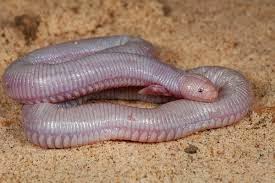
In certain areas of the world, there are actual creatures that look like they came from a medieval legend. They’re usually uncommon and hard to find however some of them can sometimes be see in our own back yard. Take for example the Mexican mole lizard. This animal is probably one of the tiniest things that you can hold which resembles a dragon.

The Mexican mole lizard, also known as the Bipes biporus, is a common amphisbaenian, a kind of long bodied burrowing reptile which has a wormlike appearance. In fact, many people mistake these for worms because of their small size and soft, pink body. Mexican mole lizard are unique among amphisbaenian since they’re the only ones in the genus that have limbs, specifically, small but very well developed front limbs. 

They’re also the only one in the squamate taxon whose forelimbs developed better than their hind limbs.
This animal is commonly found in the Baja, California area. It spends most of its time digging and burrowed under the sandy desert like a mole, hence their names. They prey mainly on small invertebrates, specifically arthropods. They live in self-made tunnels and typically stay close to the soil’s surface, but they rarely emerge from underground.


Since these animals are so small and they spend most of their time underground, we hardly ever see or even notice them. They’re conservation status is tagged as least concerned. Reproduction for their species is biennial and oviparous. The females lay eggs in small clutches. They only produce one to four eggs in every two years. 
read more "Strange Animals – Mexican Mole Lizard"