Fun Animals Wiki,Videos,Picture,Stories

Friday, July 27, 2012

Puppy Care – Helping your Puppy Feel more Comfortable


Getting a new puppy is a very exciting thing, especially for families that have kids. They would want to see the puppy and play with it all day. Although puppies may be naturally full of energy and curious, some puppies have a hard time adjusting to their new environment. This could affect how they sleep and eat and may cause permanent damage to their growth, making them prone to genetic diseases like DM in dogs in the future. It’s best to help it adjust as easily and as fast as it can. Below are some tips to help your puppy feel more at home faster.
Puppy Care
Get the house ready

Before you bring the puppy home, you have to make sure that the house is cleaned and well arranged. The puppy should be given its own space, so get it a mat or even a dog bed where it can rest and sleep. If there are rooms in the house that you don’t want the puppy to go, then place a child fence at the door.

Let it explore

Once the puppy arrives at the house, let it wander around and know its new environment a little better. It might mark its territory so get ready to clean it up and lay down some newspapers. It will be important to toilet train the puppy a few days after taking it home.

House rules

It’s important that you establish house rules as early as the first few days. Your puppy needs to know where it can eat, where it should sleep, which rooms he or she is not allowed in, just to name a few. If your puppy misbehaves, it’s best to take it to a small holding pen, and place it there for a few minutes as a form of punishment.

Treats

Give your puppy a treat each time it does something good, such as going to the bathroom outside or not biting on the table legs. Positive reinforcement and prizes are the best ways of encouraging good behavior in puppies. Give your puppy treats that have vitamins and minerals added to them. This helps keep them in good shape, grow at the right pace and avoid illnesses like DM in dogs when they grow up.

Let it play

Let your puppy play. Let it run around the house as this allows it to familiarize itself with other people and animals that are living with you. If you have kids, let them spend time playing together.
Puppy Care

Puppy Care

Puppy Care

Puppy Care
read more "Puppy Care – Helping your Puppy Feel more Comfortable"

Tibetan Mastiff


Majestic mountain guardian

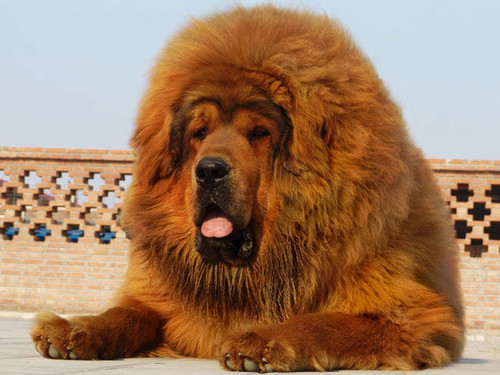
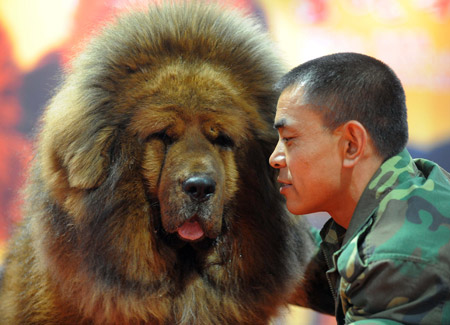
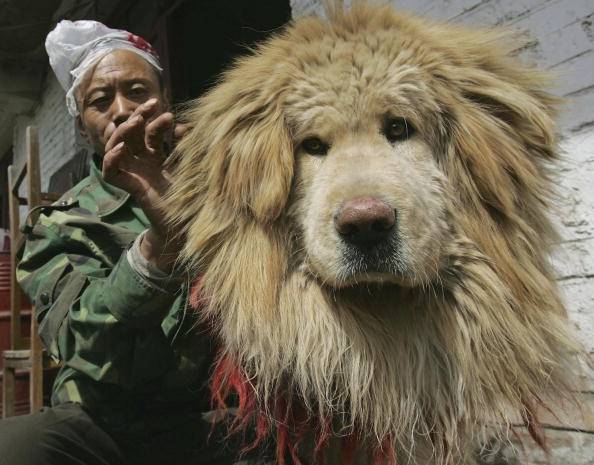
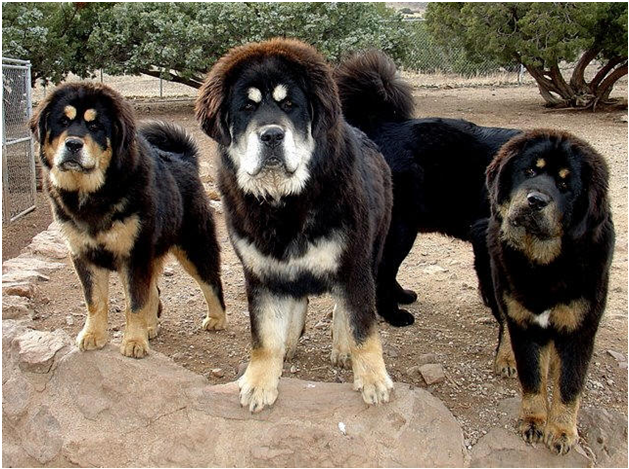
Cross the furry lion-like appearance of a Chow Chow (minus the blue mouth and tongue) and the size of an overgrown Rottweiler and you’ll have an idea how a Tibetan Mastiff looks like. Colors range from Rottweiler-like patterns, to solid black, red, cream, blue (muddy black) and solid white (rare).
Tibetan Mastiff


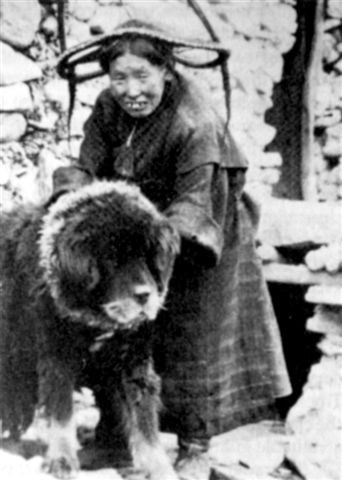
Tibetan Mastiffs are generally famous for their lion-like mane. In their native Tibet (and other places in the Himalayas like Bhutan, Nepal and Northern India), the Tibetan Mastiff (locally known as Do-khyi “”) are used to guard sheep and other livestock, buildings, and even whole villages). They are therefore intelligent, watchful, and stubborn.

 
The Tibetan Mastiff is not considered a true mastiff. Some say it can be more accurately called “Himalayan mountain dog.” Prized in Tibet for its ferocity, it can tackle wolves or leopards. This trait can be seen in the 2011 animated movie “The Tibetan Dog”.

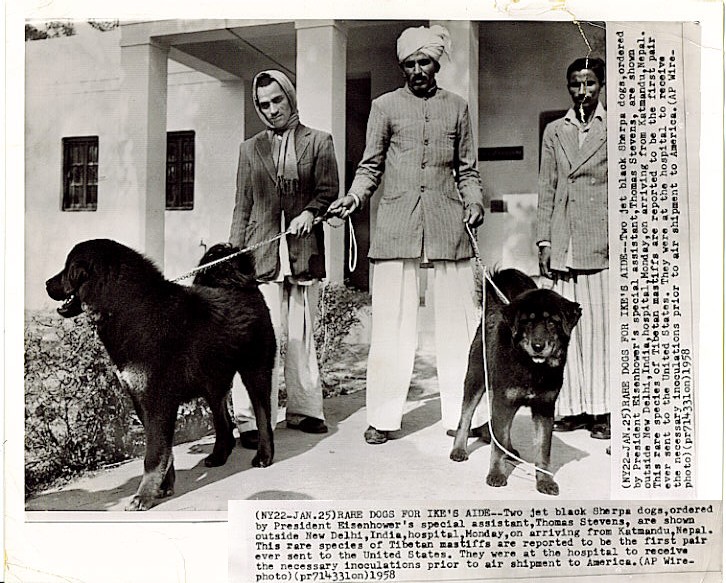
Tibetan mastiffs have been owned by famous people—ranging from the Buddha and Genghis Khan (unverified), to King George IV and US president Eisenhower (dogs pictured below).
 
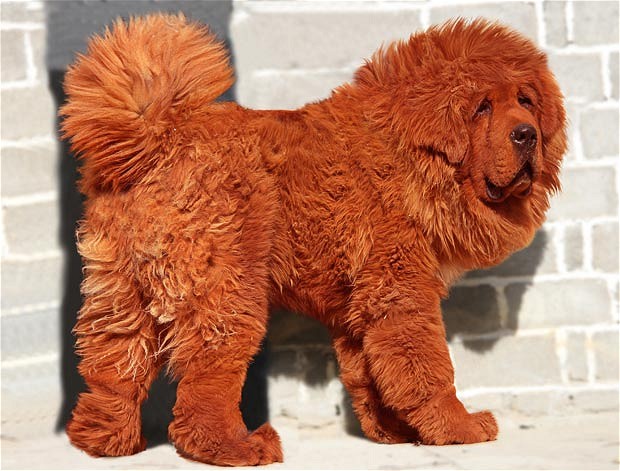
Rarely found outside Tibet, the Tibetan Mastiff has become a highly prized status symbol for China's growing number of rich people. Consequently, The Tibetan Mastiff has become one of the world’s most expensive dog breeds. In 2011, an 11-month red Tibetan Mastiff named Hong Dong (I know what you’re thinking [*snicker*] but it just means “Big Splash” in Chinese)  was sold for 10 million yuan (about $1.5 million).

 
Red is considered lucky by the Chinese so this could be one of the reasons why Big Splash made, well, a big splash.

Tibetan Mastiffs are not for everybody. If you’re lucky to acquire one, make sure to give them the food, climate, space, attention and training they need. And don’t forget to show them who’s boss.


read more "Tibetan Mastiff"

Geese


Geese are among the most commonly kept types of fowl, often found in farms with free range chickens and turkeys. Belonging to the waterfowl class of fowls, geese are often defined to be smaller than swans but bigger than ducks.

Disney’s 2005 animated feature Chicken Little featured a minor antagonist goose character named Goosey Loosey, characterized as a character who doesn’t really speak or say anything, prone to simply honk or squawk as geese are known to.
Flying Geese
Goosey Loosey, in a sense, characterized the typical nature of the goose, given the waterfowl’s notorious tendency to be incredibly noisy, especially when in taking about a group of geese. In fact, this noisy geese characteristic is one reason why many farmers keep then around, standing up as proxies for guard dogs, who are quick to alert farmers when something is amiss in the farm grounds.

Though established to be mainstay farm animals, a number of geese facts are not as popular or well known, like the fact that they can weigh as much as 25 pounds, max. Given their known maximum weight, a number of studies also reveal that they are voracious eaters, capable of eating up to 5 pounds of grass or weeds per day, producing around 2 pounds of waste on a daily basis too.

Geese are migratory birds, and as such, are federally protected by the Migratory Bird Treaty Act, migrating somewhere between October to March of the next year. During this season, a goose could cover a travel distance of 2 to 3 thousand miles, liable to “pond hop” in eventually arriving at their destinations.

Also, like wolves, geese are known to “mate for life”, meaning that once a goose finds a partner, that would be a male or female goose’s partner through and through, until a mate dies or gets killed.

Typically, the place where they were born is where they head to during migration season.

As migratory waterfowl species, geese are often found flying and silhouetting horizons, and have endeared as iconic birds identifiable upon sight.
Flying Geese

Flying Geese

Geese

Geese
Gees Video 
read more "Geese"

Donkeys


Chances are, when you think about the movie Shrek, the first thing that comes to mind won’t be the green ogre the film is named after, but one of its funniest characters, Donkey. Donkey is an unlikely sidekick to Shrek, helping him out of tight spots throughout the entire Shrek series of films and providing the majority of comic relief moments.

Donkeys
The Donkey, more appropriately known as an Ass, first originated from the African Wild Ass, considered today as one of the world’s most endangered animals. Donkeys have deep roots of domestication with man, with evidence suggesting contact with humans as far back as 5,000 years ago.

Donkeys are affectionate animals, greatly enjoying the companionship of people. In fact, donkeys are such social animals that they quickly become depressed when left without any companions. And just as how Donkey in Shrek is portrayed as being stubborn, some donkeys in real life exhibit the same traits. However, this is due to an instinct of self-preservation, rather than stubbornness. A donkey will also show this behavior if it still has a strong prey instinct and spent little time with people.

And one other thing about donkeys. Though Shrek’s version isn’t exactly the brightest crayon in the box, numerous studies have shown that just like its distant cousins the horses, donkeys are also intelligent, friendly, playful and cautious, displaying an ability and interest to learn from their masters.

Another surprising fact about donkeys is how good they can be as guard animals. Indeed, a good donkey will be great at watching over an entire herd of goats, sheep or cattle. Caution however, must be exercised when exposing donkeys to goats, as the two don’t often mix together—donkeys are used to coyotes as their natural predator.
Donkeys

Donkeys picture

Donkeys picture

Donkeys
Donkeys Video
 
read more "Donkeys"

Thursday, July 26, 2012

Apatosaurus


The movie Land Before Time takes us back to when dinosaurs ruled the world and tells the story of a young Apatosaurus named Littlefoot, who is orphaned when his mother is killed by a T-Rex. As he finds his way to the Great Valley to avoid the famine, he is joined by other young dinosaurs, a Triceratops named Cera;, a Saurolophus named Ducky; an aerophobic Pteranodon named Petri; and an orphaned Stegosaurus named Spike. Together, they must find a way to survive the Sharp Tooth, a T-Rex, as they make their journey to the Great Valley and reunite with their families.
Apatosaurus Bone

The Apatosaurus is a gargantuan dinosaur that lived off a plant-based diet. Many know this dinosaur as the Brontosaurus, but this name is actually scientifically redundant.  They are known for their very long necks and tails, as well as for their giant bodies. These dinosaurs lived throughout the Jurassic Period, about 150 to 154 million years ago. These dinosaurs are on the top of the list of the largest animals to have ever existed on land. They usually grew to about 75 feet or 23 meters tall, weighing in at about 25 tons.

Compared to similar dinosaurs, the Apatosaurus had a less elongated body shape and was more heavily built. This means that the Apatosaurus had a tougher body structure which helped it survive its surroundings a little better. Fossil remains of these dinosaurs have been dug up in Wyoming’s Bone Cabin Quarry and Nine Mile Quarry and at Utah, Oklahoma and Colorado.

It was once believed that an Apatosaurus could not support their weight on land because they were too big, so they probably had to live in areas that were partly submerged, such as swamps. However, recent findings about their environments did not support the theory and actually backs up the idea of these animals being terrestrial dwellers.
Apatosaurus

Apatosaurus

Apatosaurus

Apatosaurus picture

Apatosaurus pictures
Apatosaurus Video
 
read more "Apatosaurus"

Wednesday, July 25, 2012

Cat-Carrying Dog Anybody?

I haven't really seen a video that made me laugh for awhile so this one is no doubt worth sharing! Check out this dog who has been trained to bring a cat (supposed arch nemesis) home!


Just proves nothing is impossible if you really put your heart to it ai?
read more "Cat-Carrying Dog Anybody?"

Hippopotamus Facts


Hippopotamuses were once again shone in a brighter light in the Madagascar series of animated features, telling the tale of how a number of African New York-based animals faired well in surviving in the wild.

From the first Madagascar movie, to its 2008 released sequel Madagascar 2: Escape from Africa, the titular portrayal of a hippopotamus as part of the series’ major cast restoked the burning down fascinations once popularly directed at the large African mammal.
Hippopotamus
In tune with the “hippopotamus’ interest” revival, here are some interesting hippopotamus facts which aren’t really all that well known when talking about them.

Hippos are the 3rd Largest Species in the World – following after elephants and rhinos, hippos are the 3rd largest animal known to man, though a species of the hippopotamus isn’t as large as the Hippopotamus amphibius often found in the eastern areas of Africa.

In terms of measurements, hippopotamuses can grow as large as 13 feet wide and 5 feet tall, and can weigh up to 7000 pounds, roughly around 3 and half tons. The pygmy hippo, the second known hippo species measures roughly 5.7 feet wide and can weigh somewhere between 400 to 600 pounds.

Built for the Water - unlike most mammals, hippos don’t have sweat glands, which is the reason why they are often found spending time in water bodies of soft mud, which is their body’s natural means of keeping cool.

Another thing about hippos is that their eyes, ears and noses are positioned on top of their heads, which allows them to easily hear, see and breath even if most of their body is submerged underwater.

Also, when talking about their underwater “design” hippos are actually born underwater, which says a lot about how tuned they are for live in rivers and/or lakes.

Hippo Tusks – hippos, like elephants, have tusks which can be described as canine tusks. Male hippos typically have longer tusks which can grow as long as 1 feet long.

Usually, hippos travel in herds, and when certain domestic disputes within herds or with strangers who come by herds arise, hippo tusks typically take on an important role.

As a species, the hippopotamus is a highly protected one, with enforcement agencies cutting no slack on hippo poachers caught with hippo hides and/or body parts. Though large, hippopotamuses are actually pretty graceful creatures under the water, capable of handing themselves, contrary to most assumptions which link them to be lazy, immobile animals.
Hippopotamus

Hippopotamus

Hippopotamus

Hippopotamus
Hippopotamus Video
 
read more "Hippopotamus Facts"

Bear Sloth


Many children’s stories have been turned into movies by Walt Disney. One such story is the classic compilation of novels by Rudyard Kipling called the Jungle Book. In the animated movie based on the book, a boy named Mowgli grows up in the jungles of India with wolves. Together with a black panther named Bagheera and the bear sloth Baloo, he fights for his life against an evil tiger named Shere Khan.
Bear Sloth
One of the main characters of the movie is the fun loving bear sloth Baloo. Bear sloths are very common in the Indian jungles, going also by the name of labiated bears. They are nocturnal insectivores, meaning they are most active at night and live off insects and other small, similar creatures. Many scientists have traced the bear sloth’s heritage to the brown bear. Unlike the black and brown bears however, a bear sloth has a lankier build. They have long, rough, shaggy coats, which form a mane around their neck. They also have claws that are sickle-shaped, make it easier for them to scoop out bugs, while their lower lips are specially adapted for sucking the insects out of their nets, thus making them very close to sloths.  They feed during early spring through summer time and have their babies during the start of winter.

Bear sloths mostly live off honeybee colonies, fruits and termites. There are very few known bear sloth attacks on humans, but these bears can actually get very aggressive if provoked or if they are protecting their territory or cubs. Unfortunately, the bear sloth’s natural habitats have been drastically reduced by human development. Poachers and hunters have also reduced their population due to excessive hunting for their claws and baculum. Many have also captured these bears and placed them in circus and shows because they are very easy to tame.
Bear Sloth

Bear Sloth picture

Bear Sloth

Bear Sloth pictures
Bear Sloth Video
 
read more "Bear Sloth"

Tuesday, July 24, 2012

Dogs and their Positive Impact in Mental Health


Dogs and their positive effects in the overall mental well being of people has long been looked into by researchers, with studies indicating how valuable human and canine relationships can be.

Though not exactly focused on the effects of a dog-master relationship, the 1997 blockbuster hit As Good As It Gets, starring Jack Nicholson, Helen Hunt and Greg Kinnear, did touch up over how beneficial dogs can be as companions, depicting the effects a toy dog had in soothing the curmudgeon character of Melvin Udall played by Nicholson.
Bair Justice, PhD, author of Who Gets Sick: How Beliefs, Moods and Thoughts Affect Your Health, had once looked into the link between “stressful chemicals” norepinephrine, Cortisol and plaque buildup in arteries, and establishes the positive effect of dopamine and serotonin in keeping “stressful chemicals” in check.

People take drugs like heroin and cocaine to raise serotonin and dopamine, but the healthy way to do it is to pet your dog, or hug your spouse, watch sunsets, or get around something beautiful in nature,” shares Justice, who happens to be a dog owner himself.

A study which involved the blood pressures of stockbrokers – a stressful field in its own – reveals that study participants who had adopted a dog or cat had lower blood pressure readings when compared against those who didn’t.

Also, a number of research touching up on the impact of having dogs in households for people afflicted with Alzheimer’s disease note that those suffering from the condition are liable to encounter fewer anxiety attacks, which is a huge positive in itself.

Studies also note that children who had grown up with household pets tend to be more responsible and more tuned for social situations, well balanced and healthy in their societal outlooks and bearing.

Bottom line, though no in-your-face conclusive facts and figures are set in stone, the positive impact of dogs in the mental well being of persons is one upside in having man’s best friend around.


read more "Dogs and their Positive Impact in Mental Health"

Snakes


Snakes are the stuff of nightmares for a lot of people. Just seeing and holding these creatures can terrify people, so you can only imagine the terror of being trapped with dozens of them in a plane. That’s exactly the kind of sheer terror the move Snakes on A Plane sought to capture. Starring Samuel L. Jackson, the movie revolves around how people inside an airplane fight to survive after hundreds of snakes are placed and released inside. 
Snakes Picture
A snake can be described as a legless lizard. It is a carnivorous reptile from the suborder Serpentes. They do not have external ears or eyelids but they do have very keen senses. Snake sizes vary, with some snakes as small and thin as twigs, while others can grow more than 20 feet long and weigh more than an average person. Their skin is covered by overlapping scales and is described as being supple and nice to the touch. As such, snakes are captured for their skins, which are turned to luxury goods such as shoes and bags. Snakes can be found in all of the continents, save for Antarctica.

Many snake species have skulls that have many joints. This lets them swallow prey much larger than their heads. Most snakes have the ability to dislocate their jaws just so they can swallow their prey whole. They feed of smaller animals such as rodents, lizards, birds, snails and even other snakes. Some snakes are also known to slither up to bird nests and eat their eggs. They change their skin and molt during certain times of the year.

Not all snakes are poisonous, with people even keeping them as pets. If you do get bitten by a snake, keep the bite clean and find out what type of snake it was before going to the hospital. 
Snakes Picture

Snakes Picture

Snakes Picture

Snakes images

Snakes image

Snake Pictures

Snake Pictures
 Snake Video
 
read more "Snakes"