Fun Animals Wiki,Videos,Picture,Stories
Showing posts with label cat. Show all posts

Monday, February 19, 2018

Fluffy felines rule on 'cat island' Tashirojima


ISHINOMAKI, Miyagi -- Here kitty, kitty! Visitors to Tashirojima Island here will have no trouble finding the fluffy winter coats of the feline inhabitants.

Often called "cat island," Tashirojima, whose perimeter is 11 kilometers, is home to some 200 cats who live alongside human residents, and are no stranger to tourists from both inside and outside of Japan. On a day in mid-December last year, this cat-loving reporter made a visit to the island and its furry citizens.
It takes roughly 40 minutes by a daily, locally run ferry to travel the17 kilometers southeast from the port of Ishinomaki, Miyagi Prefecture, to one of the island's entryways, Nitoda port. As soon as you disembark from the ship, you arrive in a residential area. The second you pull a can of cat food brought along for the journey from your bag, five to six cats immediately come to investigate. They are completely unafraid of strangers. There are even some cats who don't mind being held.

According to those who live on the island -- a mere 64 people as of the end of October 2017, according to the Ishinomaki Municipal Government -- black cats or cats with a black and white pattern are the most common. The descendants of the chinchilla longhair variety brought in from off-island in the past also stand out among the felines. They gather in groups at every spot on the island, from the port to the island's residential areas. The groups gathered around the port are said to have a wilder demeanor, while those operating around the houses are gentler. In the past, the island has generated domestic "star cats" such as the timid and loveable "Tare-mimi (droopy eared) Jack" and more.

The cats are burly from their life outdoors but still undeniably cute. During the 2011 earthquake and tsunami disaster, many of the cats reportedly ran to higher ground and survived. The social group "Nyanko Kyouwakoku" (Kitty republic) comprised of local oyster farmers and others takes on the role of looking after their fuzzy neighbors. The group began as a volunteer network in 2011, with seven staff members who set out cans of cat food and other supplies to keep the cats' bellies full. Ayame Ogata, 85, the proprietor of the lodging "Kaihinkan," commented, "There are other remote islands in Japan called 'cat island,' but the cats on Tashirojima island are the most plump and cute, aren't they?"

In September 2016, the cat republic built a space for visitors to interact with the cats at the former site of Tashirojima elementary and junior high school. At the "shima no eki" (island rest stop), visitors can enjoy a light meal as well as purchase original cat merchandise. "Even though opinions are divided in places like the island assembly, if it is for the sake of the cats, no one objects," said deputy director of the group Yutaka Hama. "That's the kind of precious existence they have enjoyed for so long."

After spending an unforgettable two days on the island, where there is even a Shinto shrine devoted to a cat god, an idea tugged at the back of my mind upon setting foot on the ferry back to Ishinomaki:

Even though 2018 is the year of the dog, how about visiting Tashirojima and searching for your favorite cat? (By Hiroshi Endo, Sendai Bureau)
read more "Fluffy felines rule on 'cat island' Tashirojima"

Thursday, January 25, 2018

Meet the street animals that stole scientists’ hearts


Cats and dogs that wander on to field sites can become cherished companions — but their presence isn’t always welcome.
Archaeologist Louise Hitchcock went to Israel in 2017 to look for artefacts from the Iron Age. She also found something else — a large dog who wormed his way into her heart.

The mongrel was skinny and skittish when he appeared at the dig site where Hitchcock, who studies Greek prehistory at the University of Melbourne in Australia, was working. A previous owner had apparently dumped him, and no local family wanted him. “I liked him, and I just couldn’t let him be abandoned again,” Hitchcock says. Apprehensively, she shipped him home.

Today, the 35-kilogram saluki mix, who is named Fred, enjoys a life of walks and belly rubs. Although he was fearful and occasionally aggressive in Israel, he has since become mellow and friendly, Hitchcock says. “He will now go up to strangers and want to have his neck scratched.”

Like Hitchcock, many researchers spend substantial time in the field, where they might confront large numbers of apparently homeless cats and dogs. For some scientists, animals that wander up to a research site provide welcome companionship. But they can also pose a direct threat to scientific projects (see ‘Hounded and harassed’).

PDF version
Stray cat

Peeping tom: a street cat looks on as an archaeologist examines a stone wall in Thasos, Greece. Credit: Chelsea Gardner

Archaeologist Louise Hitchcock went to Israel in 2017 to look for artefacts from the Iron Age. She also found something else — a large dog who wormed his way into her heart.

The mongrel was skinny and skittish when he appeared at the dig site where Hitchcock, who studies Greek prehistory at the University of Melbourne in Australia, was working. A previous owner had apparently dumped him, and no local family wanted him. “I liked him, and I just couldn’t let him be abandoned again,” Hitchcock says. Apprehensively, she shipped him home.

Today, the 35-kilogram saluki mix, who is named Fred, enjoys a life of walks and belly rubs. Although he was fearful and occasionally aggressive in Israel, he has since become mellow and friendly, Hitchcock says. “He will now go up to strangers and want to have his neck scratched.”

Like Hitchcock, many researchers spend substantial time in the field, where they might confront large numbers of apparently homeless cats and dogs. For some scientists, animals that wander up to a research site provide welcome companionship. But they can also pose a direct threat to scientific projects (see ‘Hounded and harassed’).
Hounded and harassed

Free-roaming cats and dogs imperil some native species, complicating the work of scientists who study those creatures. Published studies say that dogs have contributed to the extinction of 11 vertebrate species (T. S. Doherty et al. Biol. Conserv. 210, 56–59; 2017) and cats to the extinction of at least 63 (S. R. Loss and P. P. Marra Front. Ecol. Environ. 15, 502–509; 2017). Dogs and cats not only eat native species; they can also transmit fatal diseases.

When Abi Vanak began studying the interactions of wild carnivores at a nature reserve in India, he set up camera traps to monitor the local jackals, foxes and jungle cats. Instead, dogs were the most frequently photographed carnivore, says Vanak, a conservation scientist at the Ashoka Trust for Research in Ecology and the Environment in Bangalore, India.

Vanak and his colleagues presented authorities with a plan to reduce dogs’ impact, but met with little success. If he could do it again, he would present his team’s ideas to village councils, which would help to win community support, he says.

Bonaventura Majolo, a primatologist at the University of Lincoln, UK, knew of two dog attacks on wild Barbary macaques, Macaca sylvanus, while he was studying the endangered species in Ifrane National Park, Morocco. In each case, the monkey that was bitten soon disappeared — an almost certain sign that it had died.

Conservation biologist Joel Berger acted swiftly when he and his colleagues saw dogs chase a mother and baby takin, Budorcas taxicolor, a threatened goat-like herbivore. After the baby became stranded in the middle of a river at Jigme Dorji National Park in Bhutan, the researchers warmed it and gave it fluids.

But they did not see it again, nor did they see two additional calves that had become separated from their mothers by dogs that year. “We assume that their fates are not positive,” says Berger, of Colorado State University in Fort Collins and the Wildlife Conservation Society in New York City.

In many countries, cultural attitudes rule out the killing of invasive predators to protect wildlife, Berger notes. He urges researchers whose study animals are at risk to work with local conservation groups and government officials. He also recommends that scientists publish studies about the impact of dogs and cats to help motivate governments to act.

Wild rovers

Free-roaming ‘street dogs’ number perhaps 300 million globally, says Andrew Rowan, chief scientific officer at the Humane Society of the United States, based in Washington DC. Studies of ‘street cat’ numbers are limited, but Rowan’s self-described “crude estimate” of the worldwide cat total is 700 million; this includes cats that live in a community setting and those claimed by humans.

Inevitably, some of these street animals are hurt or sick, prompting some scientists to intervene or even to adopt one. Yet helping a suffering creature while in the field is not always easy. Time is often limited, and a step that would be simple at home, such as taking an injured animal to a vet, can be daunting in a region where such services are scarce.

But social media — which provides easy access to information and resources — and a growing global network of voluntary groups have eased the path for scientists who are troubled by the plight of needy animals.

The lives of free-roaming animals — and local attitudes towards them — vary enormously. In parts of the Caribbean, street dogs are well nourished and treated affectionately, says ecologist Ryan Boyko, who heads the canine DNA-testing company Embark Veterinary in Austin, Texas, and has sampled DNA from street dogs in nearly 40 countries. But in other places, such as parts of Africa, street dogs are emaciated, riddled with open sores and covered with parasites.

The dog that ultimately found a home with Hitchcock was, by comparison, in good health. Although thin and tick-ridden, he was neither injured nor sick. His sudden appearance at the dig site, in a remote national park, led Hitchcock to suspect that someone had left him to fend for himself.

Whenever possible, scientists who want to help such animals should first try contacting local groups, says Meredith Ayan, executive director at the Society for the Prevention of Cruelty to Animals International in New York City. Facebook is a good resource for finding local rescue groups. Community members are likely to know which animals that seem to be strays are actually associated with a household and don’t require feeding or care. Animal organizations with an international presence and vets might also be able to help.

Many animal-welfare groups advise caution for scientists in the field when it comes to feeding animals. Indiscriminate handouts, say group representatives, might create friction with local people and disrupt animals’ routines. “Once you leave, these animals don’t have food again,” says Joy Lee, who until the end of 2017 was based in Ahmedabad, India, where she worked for Humane Society International, an animal-protection organization that is active around the world.

Pet predicaments

That fate was exactly what Hitchcock feared for Fred and a second dog that appeared with him. “People were turning them into pets,” she says. “I thought, ‘In three weeks we’re going to leave and they’re just going to be discarded again.’ ” It seemed unlikely that Fred and his canine companion Fi belonged to the closest village, which was five to ten kilometres away.

Besides, Fred was timid, whereas the local sheepdogs were so aggressive that, for her own safety, Hitchcock feared to approach the shepherds to make enquiries. Worried about Fred and Fi’s future, she and others began working to find them homes.

An archaeologist friend helped Hitchcock to contact a local professor of veterinary medicine, who gave the dogs inoculations and tick medication. An Israeli scientist working at the site used the messaging app WhatsApp to find an adoptive family. But Fred’s family decided to give him up, and his only remaining option was a job as a prison guard dog. “That didn’t sound very good to me,” Hitchcock says. “I just had to rescue him.”

Researchers who, like Hitchcock, are troubled by the plight of such animals might want to support local vaccination drives. And many animal-welfare advocates recommend campaigns to sterilize free-roaming animals and return them to the community. But such trap-neuter-return, or TNR, programmes are controversial: modelling suggests that they can curtail populations in suitable areas, yet sustained success requires intense and long-lasting efforts, and few TNR programmes are rigorously monitored (P. S. Miller et al. PLoS ONE 9, e113553; 2014).

Meanwhile, the number of community organizations devoted to animal support is rising. In many parts of the world, the chance of finding a local partner is much higher than it was even five years ago, says conservation biologist John Boone at the Great Basin Bird Observatory in Reno, Nevada, who has studied the population dynamics of street cats.

And scientists who want to do more than donate money to support inoculation and other solutions can help in other ways. On two trips home to Toronto, Canada, from a field site in Greece, archaeologist Chelsea Gardner’s checked luggage included five large kennels, each holding a dog bound for an adoptive or foster family. Non-profit groups, such as Canada’s Paws Across the Water, arranged the placements, often through social media.


The groups also paid the animals’ airfares, which can cost Can$700 (US$550). It was up to Gardner, a faculty member at Mount Allison University in Sackville, to navigate customs with two or three baggage carts stacked with dogs. “We’re definitely a spectacle,” says Gardner. “People say, ‘Are they all yours?’”

A researcher who spends an extended period at one site can help by providing a foster home. Archaeologist Maria Liston of the University of Waterloo in Canada, who does field work in Greece, donates money to Nine Lives Greece, a local group. She also fosters cats in her Athens apartment — so many last year that “I lost track, honestly,” she admits, before guessing that the number was between 15 and 20.

Can’t help falling in love

Then there are the scientists who, like Hitchcock, fall in love with an animal. Among them is Ovee Thorat, a PhD student in conservation science and sustainability studies at the Ashoka Trust for Research in Ecology and the Environment in Bangalore, India. When a scrawny kitten began loitering at Thorat’s field station in Gujarat, about 1,500 kilometres away, the scientist felt compelled to help. She fed the kitten, dewormed her and named her Billo, a Hindi word that translates roughly to ‘beautiful girl’. Billo returned the favour, staying close to Thorat during the weeks and months when no other researchers lived at the field station.

When Thorat finished her fieldwork, she could not take Billo with her to her shared city apartment. So she asked the field-station staff and research crew to take care of her pet. Billo became the darling of the field station, where she is fed and cosseted.

Moving a new pet to a distant country is trickier than passing it on to colleagues. A scientist shipping an animal from India, for example, should set aside US$2,000 at a minimum, Lee advises, though the costs will depend on the destination and airline. Securing permits in India is complicated; the alternative is an Indian pet-shipping company that can handle the red tape.

After deciding to adopt Fred, Hitchcock turned to Terminal4Pets, an Israeli pet-travel agency, to help arrange his journey. The paperwork was minimal, but the costs were not: they came to about Aus$7,000 (US$5,500), most of it for Fred’s flights, his six-month quarantine in an Israeli kennel and a 10-day quarantine in an Australian kennel.

In some places, taking home a furry companion is easier than it was once. A single ‘pet passport’ is accepted by every country in the European Union and applies to dogs, cats and ferrets travelling between member states. The United Kingdom no longer imposes a six-month quarantine on incoming cats and dogs that have EU passports. Dogs imported to the United States are exempt from the federal requirement for a rabies vaccination if departing a country without rabies.

Adopted animals from war-torn countries can experience something akin to post-traumatic stress disorder, Ayan says. “It takes a while for the stress to wear off,” she says, and in a few cases, animals cannot adapt to their new homes. Fred takes anti-anxiety medication, although Hitchcock hopes to end the regimen within a year.

Sometimes intervention leads to a happy outcome. Fred, for example, initially feared car rides, vet visits and lifts, and Hitchcock worried that he’d chew up the house and clash with her little terrier. Now, he is outgrowing his anxieties, he doesn’t chew or bark and he doesn’t attack Hitchcock’s other dog.

Another story that ended well began on Gardner’s excavation site in Greece, when she and a friend started caring for two starving, tick-covered puppies. The closest shelter was far away and overrun with dogs, so the researchers fed the puppies, gave them flea and tick medicine and acclimatized them to humans in the hope that someone would adopt them. Wary of getting attached, the scientists called them only Brown Dog and Black Dog.

When Gardner returned to the site in 2017, she saw Brown Dog again — in a yard, wearing a collar. “That’s exactly what we had hoped for,” she says. “Something came of putting in all that time and effort. It was really a nice, happy ending for at least one of those dogs.”
read more "Meet the street animals that stole scientists’ hearts"

Thursday, January 11, 2018

People Are Sharing Pics Of Their Cats Acting Weird


Have you ever walked into a room, looked at your cat, and thought ‘this creature must be out of this world’? Yup, cats are major weirdos and their behavior is something the simple mind of a mortal human finds difficult to grasp.

Felines sleep in the most awkward positions one can imagine. They make the strangest facial expressions. Sometimes the kitties even decide to do things the way humans do, and that's when things get even more funny and bizarre.

So My Friends Cat Does This
For Some reason my Sister Cat Sits like this Everyday
This is How My Friend Found The Cat in the Bathroom
This is My Friends Cat Eating Dinner
She Saw the Kids Playing On it and Now She Meows Until you Rock Her
Just A Cat Sitting On Some Stairs
How Many Cats Does it take to Change a Light Bulb?
I know Cats Like to Sleep in Weird Positions, But this one is the Winner

read more "People Are Sharing Pics Of Their Cats Acting Weird"

Friday, January 5, 2018

5 diseases we can get from animals


Comforting as it may be, snuggling with your beloved pet may end up making you ill. This is because some common house pets and farm animals can infect you with a zoonotic disease. Zoonotic diseases are diseases passed from animals to humans.

From mild to fatal, zoonotic diseases may have very little impact on animals but lead to death in humans.

1. Cat scratch disease (CSD)
Humans can contract this bacterial infection when an infected cat scratches or bites them. A cat can also transfer the disease if it licks an open wound on a human body.

The disease is caused by a bacterium called Bartonella henselae.

Symptoms of CSD, which include fatigue, headaches, swollen lymph nodes, may only appear 14 days after the initial infection and may result in brain disease or inflammation of the optic nerve.

2. Listeriosis
The disease, which recently led to the death of a pregnant South African woman, is mostly contracted through the ingestion of contaminated food.

The bacterium, Listeria monocytogenes, is occurs in poultry and cattle and can be passed to humans through the ingestion of the meat of an infected animal, or dairy products made from the milk of infected cattle.

Symptoms of the disease range from headaches to confusion and seizures. Listeriosis can be fatal in some cases.

3. Rabies
Perhaps the most commonly known zoonotic disease, rabies causes more than 59 000 worldwide deaths annually. According to the South African National Travel Health Network (SaNTHNet), 95% of deaths as a result of rabies occur in Africa and Asia.

Rabies can be transferred to humans through the bite of an infected animal. In South Africa, many reported cases are a result of dog bites.

Fever, intolerance of bright light, hyperactivity as well as fear of water are some of the symptoms of rabies.

Paralytic rabies, which accounts for 30% of human rabies cases, can result in gradual paralysis and eventually death.

4. Query Fever


Also called Q fever, this bacterial infection can be passed from animals to humans by simply breathing in dust that has been exposed to the faeces, urine or milk of an infected animal.

Likely to be found in goats, sheep and cattle, severe infection can lead to pneumonia and hepatitis.

Infected humans will experience fever, night sweats or chills, stomach pains, nausea and vomiting.

5. Plague

With most cases of the plague occurring in Africa, this zoonotic disease can be fatal if left untreated.

Often passed to humans through the bite of an infected rodent or fleas, symptoms of the plague begin to show within six days of the onset of infection. Infected people will experience chills, chest pain, body aches as well as a sudden fever.

If left untreated, the bacteria could enter the bloodstream and cause septicemic plague. The bacteria can also enter the lungs and result in pneumonic plague – which is fatal if not treated early.
read more "5 diseases we can get from animals"

Tuesday, May 16, 2017

10 Animals With Amazing Hearing


Humans may be king of the animal world when it comes to evolution, but we are flailing down the hearing ranks. Although our hearing isn't as sensitive as some of these guys below (ours is a limited 2 to 5 kiloherz) - the way our brain processes vibrations into sound that then does amazing things to our memory and processing banks, evoking emotions is nothing less than magical. But, how does it all work? For more information on how humans hear, check out www.hiddenhearing.co.uk. However, let's not take away the glory from these hearing heavyweights, here's the top 10 animals with amazing hearing:

1. The greater wax moth
The greater wax moth
This little guy has the hearing crown, with a hearing frequency of up to 300 kiloherz, it can hear 150 times more than us and can even hear 100 herz above a bat (but as the bat is its number one predator it's going to need to outwit it somehow). Dr. Hannah Moir, told The Daily Mail: "Many species of moth have evolved ultrasound-sensitive ears owing to the predation pressure of echo-locating bats - this system is one of the best known examples of an evolutionary 'arms-race' between predator and prey."

2. Elephants
Elephants
It's no surprise really, with ears that big, that the elephant is going to be in the top 10! Their hearing frequency is somewhere in between 16 herz to 12 kiloherz which is a huge range and they can hear at a frequency 20 times lower than us.

3. Bats
Bats
Bats come second only to the moth. They use a biological sonar system called echolocation to find their way around in the pitch black. Their frequency level is around 212 kiloherz.

4. Dolphins
Dolphins
Like bats, dolphins use echolocation, waiting for sound to bounce back, so it's like seeing with sound. Their frequency range is 75 herz to 150 kiloherz.

5. Cats
Cats
Cats have a good frequency range - at 45 herz to 64 kiloherz it's far better than ours, so there's no point trying to sneak up on your cat!

6. Dogs
Dogs
A dog's hearing is similar to a cat, they hear better at a higher pitch and can even differentiate between their owner's footsteps and strangers. People have reported that their dogs know they are coming home before they even get there!

7. Owl

Owl
An owl's frequency range is between 200 herz to 12 kiloherz, and with their excellent eyesight and a head that can nearly turn 360 degrees you really don't want to be its potential prey!

8. Rat

Rat
Our friendly rodent has a better hearing range than the cat, which is just as well for them. At 200 herz to 76 kiloherz they can hear an incy-wincy spider coming down the drain pipe.

9. Horse

Horse
Horses need to have a good hearing as well as they actually have many predators in the wild - they are a flight animal and rely heavily on their hearing, which is much better than their sight. Their frequency range is 55 herz to 33 kiloherz. They can move their ears in the direction of the sound.

10. Pigeons


Pigeons
Pigeons have an incredibly low hearing frequency, something like 0.5 herz! This helps them to hear sound over long distance and to detect storms and helps them to navigate over long distances. According to OneKind they are only one of four animals that can recognize themselves in a mirror which was worth a mention in itself!
read more "10 Animals With Amazing Hearing"

Monday, August 1, 2016

Why Does My Cat Act like A Jerk?


Cat owners would agree that sometimes, pet cats can be total jerks. Yes, they’re soft, cute, and lovable, but in actuality, their personalities kinda suck. Before you start bashing us for that, you know it’s true. They can be really selfish at times, and they act like they just don’t care even when we shower them with love and affection.

Which brings us back to the question. Why do cats act like total jerks?

A number of recent studies actually found that it’s not that your cat is a jerk, it’s actually just their nature why they act they way they do. Do don’t feel bad if you think your cat hates you. It’s just behaving normally.
Cat calling

Call on a dog and it’ll run up happily and jump on your lap. A cat, however, won’t even look at you for a second. Although your cat can hear you when you call its name, and even recognize your voice from a stranger's, that cats just don’t want to respond to you. The research involved observing the behaviour of 20 house cats for a span of 8 months to see how cats recognize and respond to our voices when we call out their name. About 70 percent of cats acknowledged their owner by moving their heads or ears. However, only 10 percent actually gave a response to the call, by moving their tail or meowing. According to researchers from the University of Tokyo, cats don’t take human orders because they have not evolved to become as domesticated enough, unlike dogs. The researchers suggested that cats “domesticated themselves” by living with humans.
Cuddling ticks them off

We love to cuddle and pet our cats, but this actually irritates them. According to Daniel Mills, a veterinary behavioral medicine professor at England’s University of Lincoln, some cats actually feel stressed when you pet them. Mills says that cats living in households with other cats are less stressed because they have a lesser chance of getting petted by their owners. Let’s just face it, if Snowball walks away from you when you try to give it physical affection, she just doesn’t want to deal with the stress you give her.
I am the captain now

Just because fluffy is rubbing herself against your leg, it doesn’t mean that it likes you. It might be nice to feel good about yourself when a mean old cat is finally acting nice around you and starts brushing up against you, but what it’s actually trying to say is that it owns you. Physical contact doesn’t automatically translates to “i love you”. Most of the time, it actually means “i own you”. By rubbing itself onto your leg or arm, it’s marking its property by putting his or her scent on you. Like dogs, cats have a heightened sense of smell, and  when a cat rubs against you, it’s informing other cats that you are its territory.

Mr.bigglesworth ain't so smart

A University of Oxford research on animal brains found that dog, because of their very social nature, have developed a bigger brain to adapt better in social settings. Cats, however, are more happy in solitary cultures, so their brains are not as developed to act in social settings. This is why your cat acts like a total stranger and won't come in to greet guests hello. If you’re still not convinced that cats have all the makings of a bad friend, there are countless videos of cats stealing dog beds, or terrorizing other animals so they can't pass through where they usually hang out.
Kitty kissing might lead to scratches

Many believe that a “kitty kiss” or when a cat greets you by slowly staring and blinking at you, is an expression of affection. But you might be surprised why kitty starts acting hostile the moment you reach to pet it. According to animal behavior experts, a long, deep, unblinking stare is a cat’s way of guarding his or her territory, meaning you’re actually not welcome.
Cats won’t hesitate to eat you

No matter how much you love fluffy, that cat is not going to hesitate to eat you if you die at home. According to a forensic pathologist who presented at the American Academy of Forensic Sciences conference, cats would not think twice about eating their owner if they’re left unfeed. When people who live by themselves with pets unexpectedly die, their bodies are usually left inside the house for days without anyone noticing. With their owners dead and no food on the bowls, pets begin to starve. Dogs would go several days without touching their owner’s body, but cats would only wait a day or two. The phenomenon is called “postmortem predation.”

Cat poop is toxic, but it makes you want to have more cats

Cleaning out the litter box is a real hassle, but did you know that i could also be affecting your health and brain? A certain parasite called the Toxoplasma gondii is found in cat poop. In rare occasions, this parasite can actually cause the disease called toxoplasmosis, which starts out with flu-like symptoms and leads to a weakened immune system. The illness has also been linked to a number of serious mental conditions such as anxiety, depression, and schizophrenia. Since the parasite affect people’s mental conditions, some individuals have been recorded to develop a strange and intense, almost obsessive, attraction to cats. Those who have been infected with Toxoplasma are known have a fondness for the smell of cat urine and feces.
Smelly human

And lastly, you might wonder why your cat just loves to keep licking itself. While the activity does give them a calming effect, cats actually lick themselves because they want to get rid of the “human” smell, as well as smooth and groom their fur. so  yes, your cat thinks you stink.

Whether they’re being cute and cuddly or acting like total jerks, we can’t seem to get enough of cats. Like this article? Leave us your comments on why we love cats, and suggestions on future topics. Don’t forget to share this article!
read more "Why Does My Cat Act like A Jerk?"

Wednesday, April 27, 2016

Amelia the Tropicat


Liz Clark could think of plenty of reasons not to keep a cat onboard her boat. She'd been sailing around the world on her 40-foot sailboat, the Swell, since 2006, and didn't intend to stop anytime soon. That couldn't be much fun for a cat, right? Besides, Clark was often busy with boat maintenance. Then, of course, there was her surfing addiction.

But when Clark stopped in French Polynesia and found a 6-month-old kitten in an abandoned house, everything changed. Clark took the kitten back to the Swell to feed her and give her some love. She didn't intend to keep the kitten — she'd just watch her until she found someone who could take better care of her.
The problem was, Clark couldn't actually find anyone who'd take better care of the kitten than she could herself. So she named the cat Amelia after the trailblazing pilot Amelia Earhart, and decided to see if Amelia could get her sea legs.
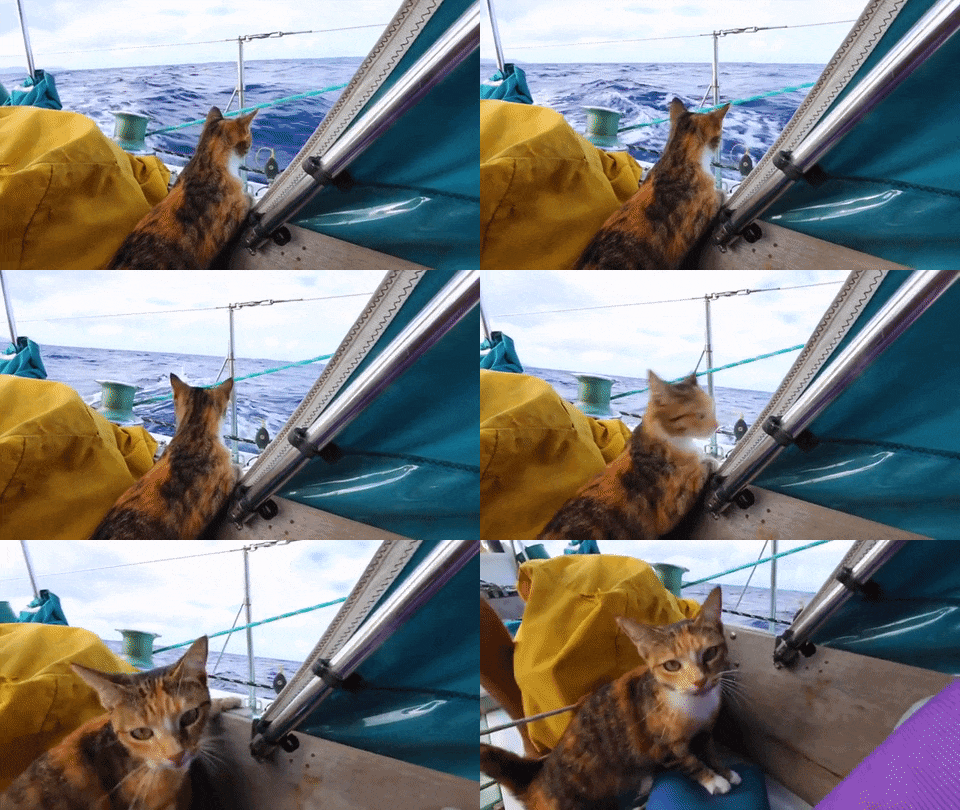
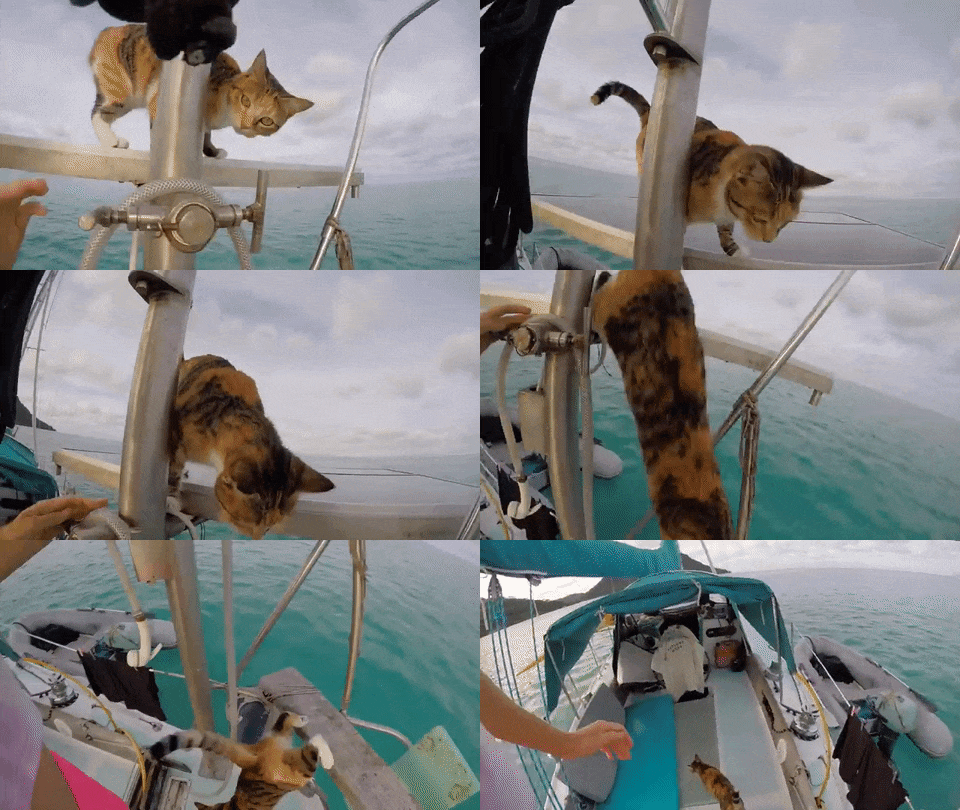
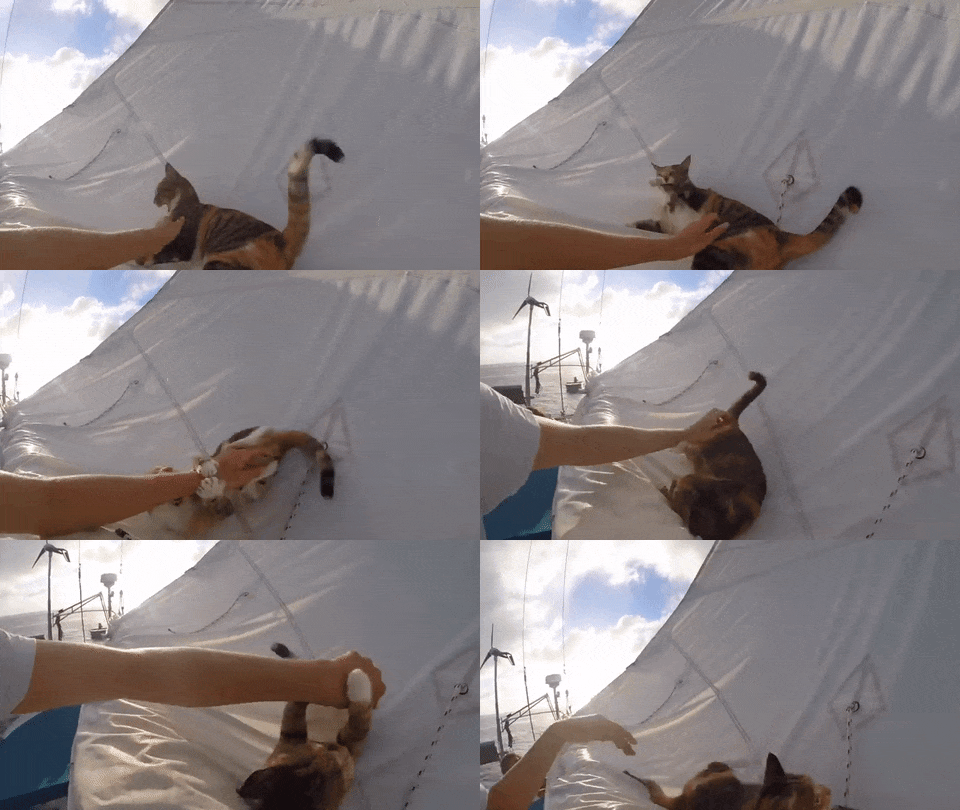
At first, Amelia didn't seem too sure about life onboard. In fact, she seemed to hate the ocean …

… especially when she fell into the water.

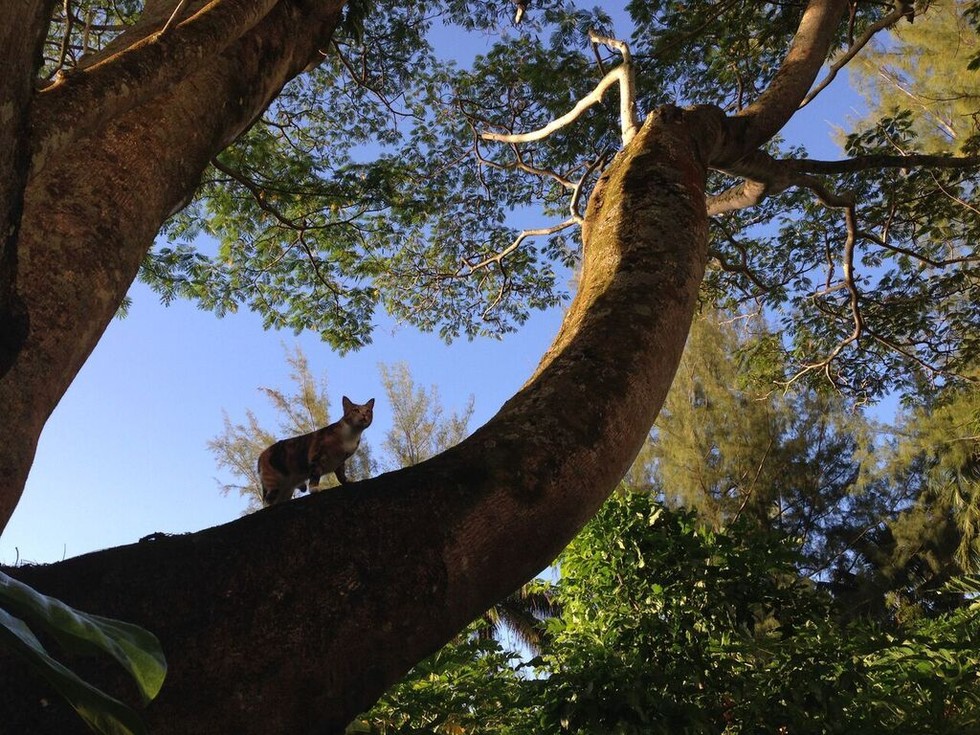
Still unsure about what was best for Amelia, Clark took her kitty companion ashore with her.

"I knew she needed to climb trees and stretch her legs," Clark tells The Dodo. "So I figured I would bring her ashore in a safe place, and if she ran off, then I'd know she was unhappy on the boat and that would be that."

But Amelia didn't run off, and she reboarded the Swell with Clark. From then on, Clark knew Amelia would be OK, as long as she had the opportunity to walk on land sometimes.
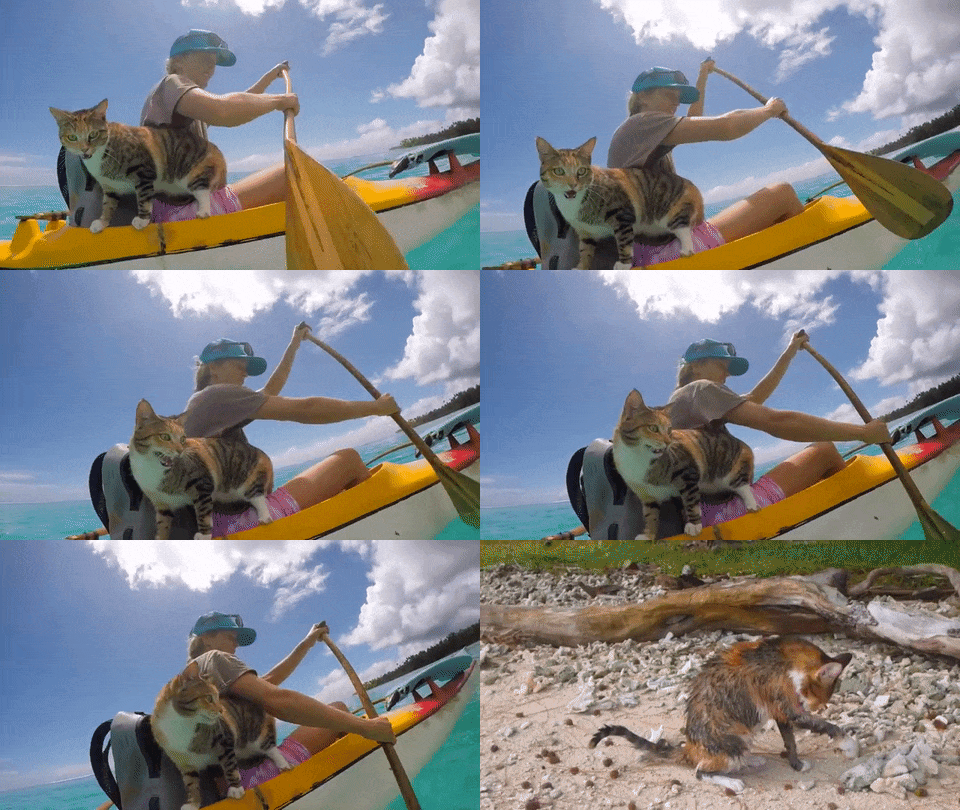
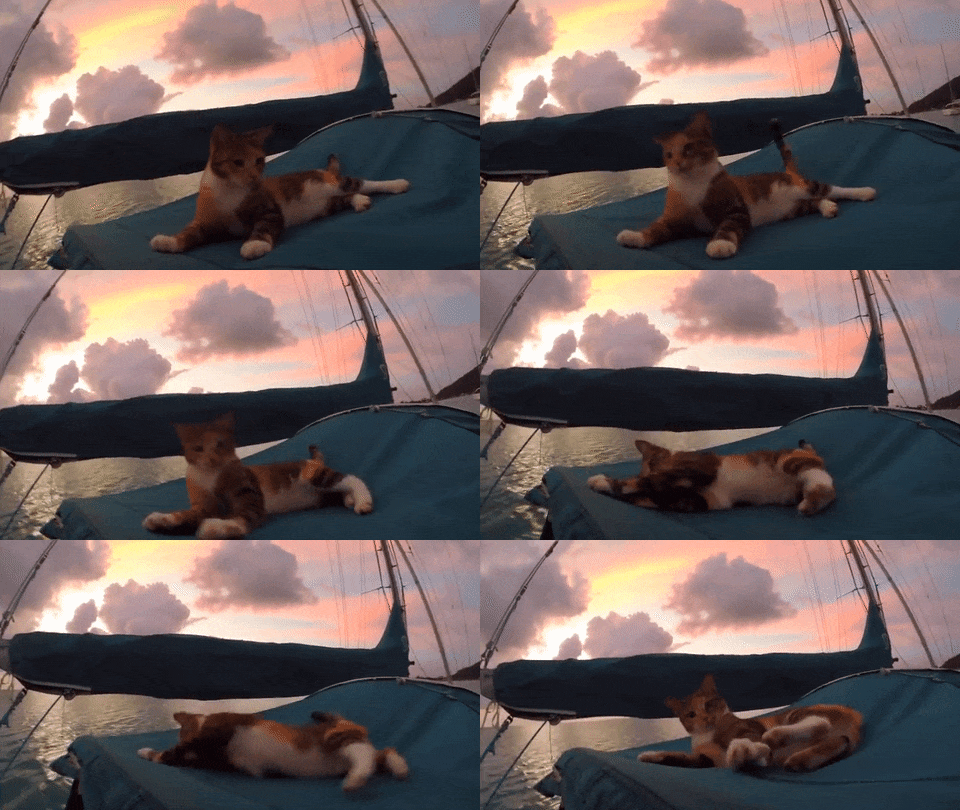
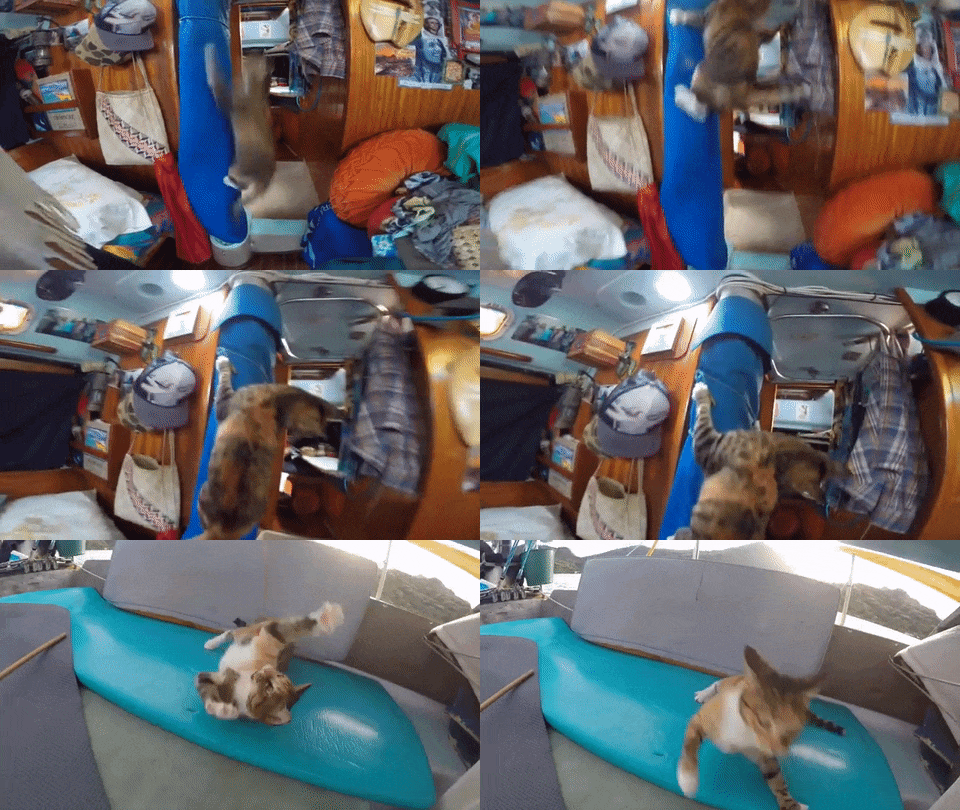
It didn't take long for Amelia to get used to life aboard a sailboat.
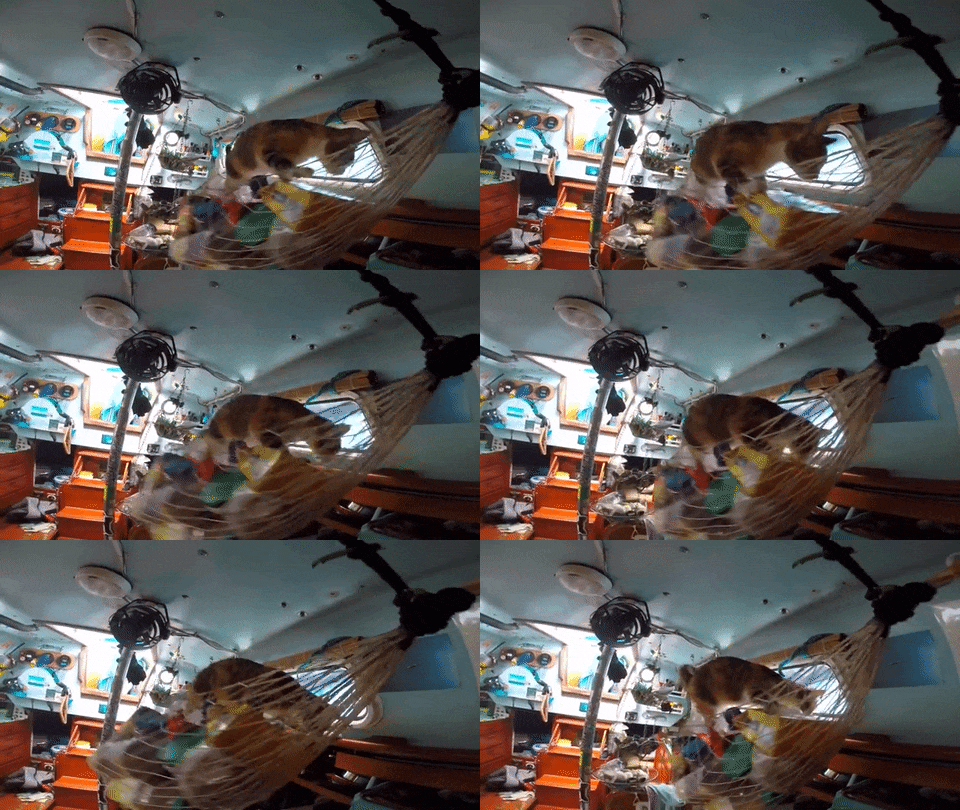
She had lots of places to climb …

... and jump ...

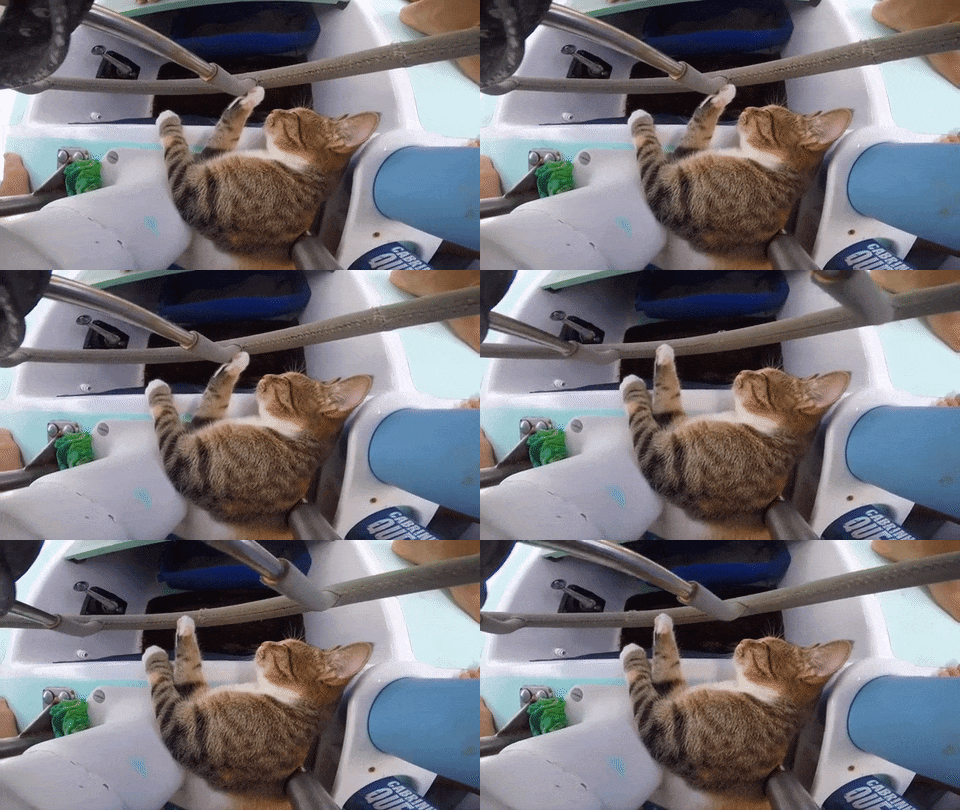
... and play ...

... and play.

She earned the captain's trust to take the helm …

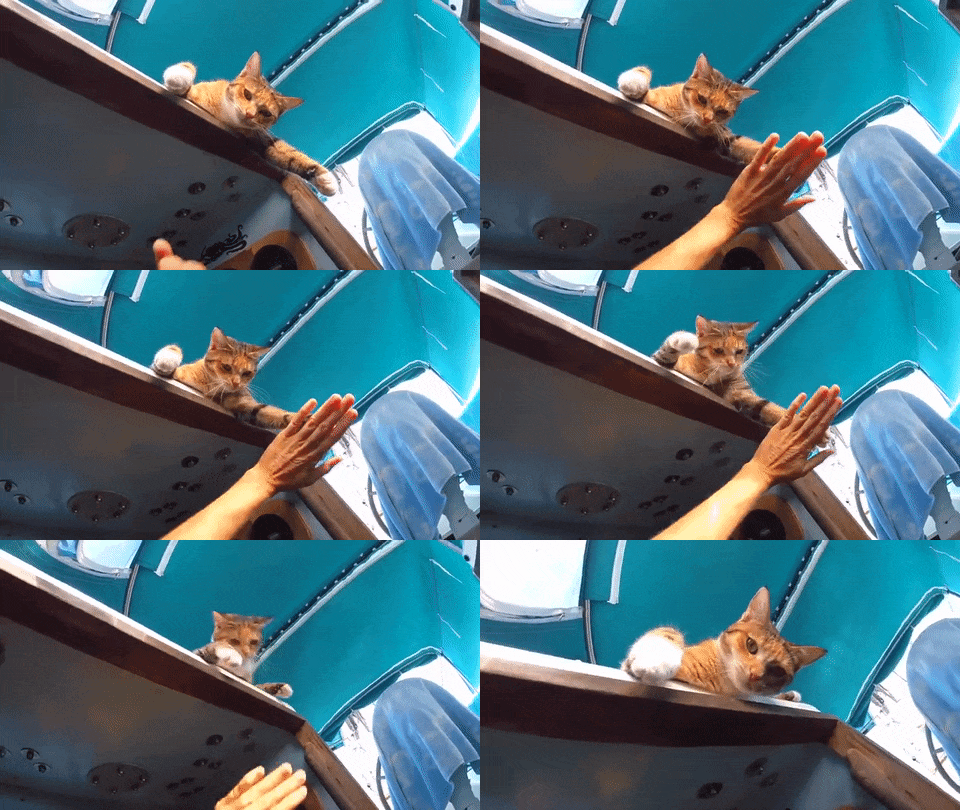
... and learned that she was nothing short of a rockstar on this boat. She was Amelia — Amelia the Tropicat!

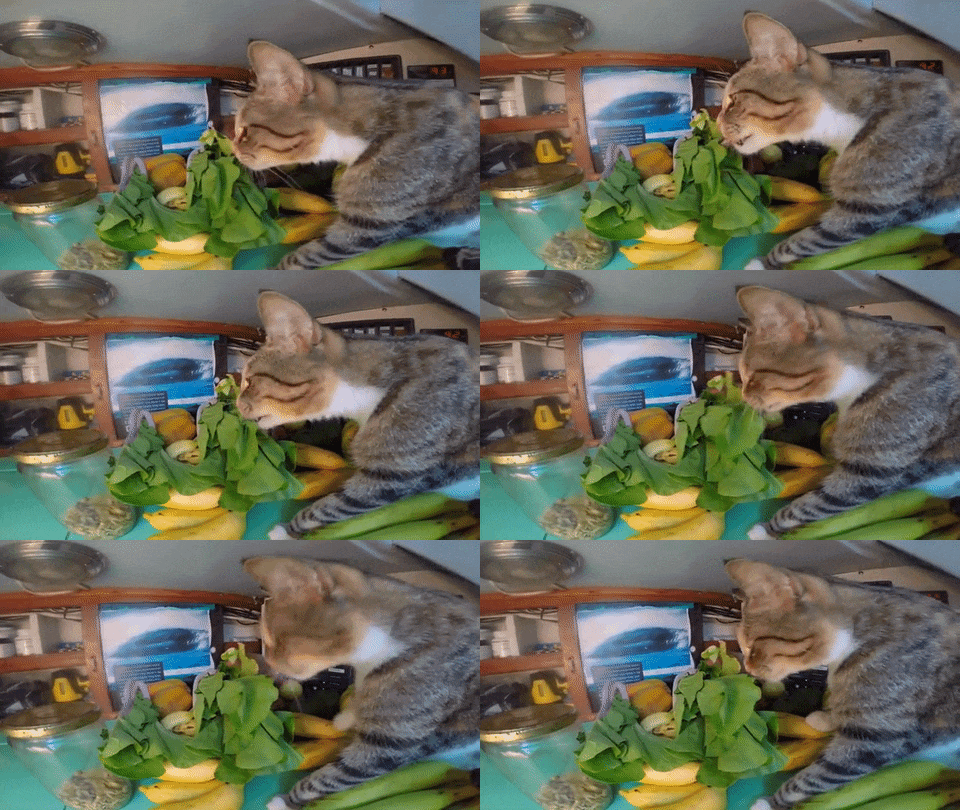
One thing Amelia didn't seem too keen on was Clark's vegan food …

… so she tended to shirk galley duty.

Amelia did run away once, disappearing on a tropical island for 42 days. Clark never stopped looking for her, but tried to come to terms with the fact that Amelia might not want to come back.

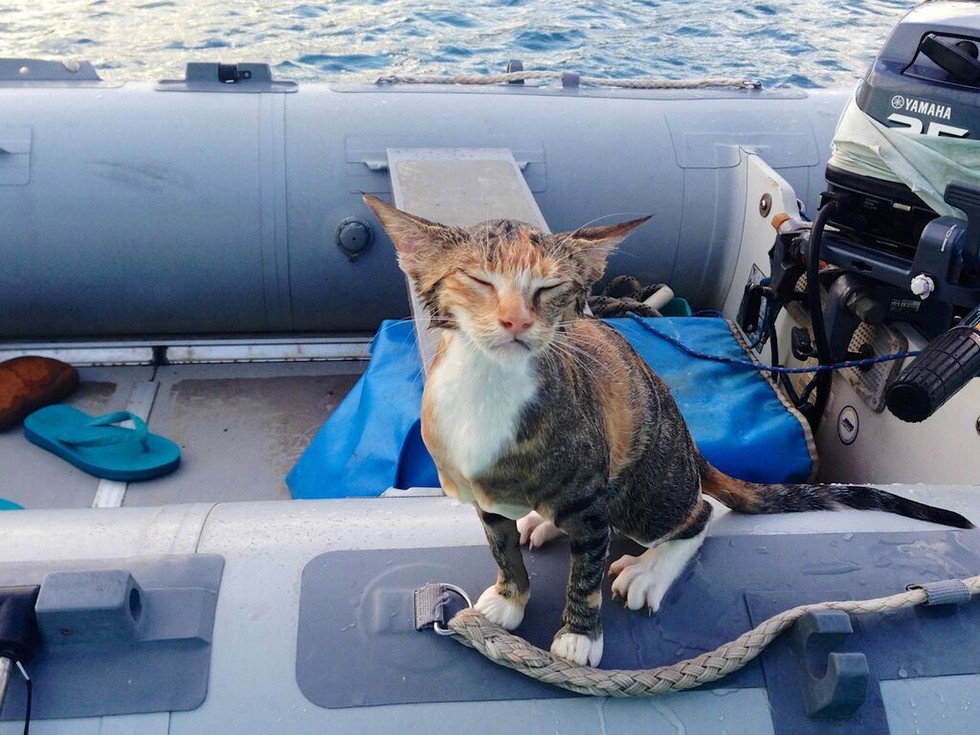
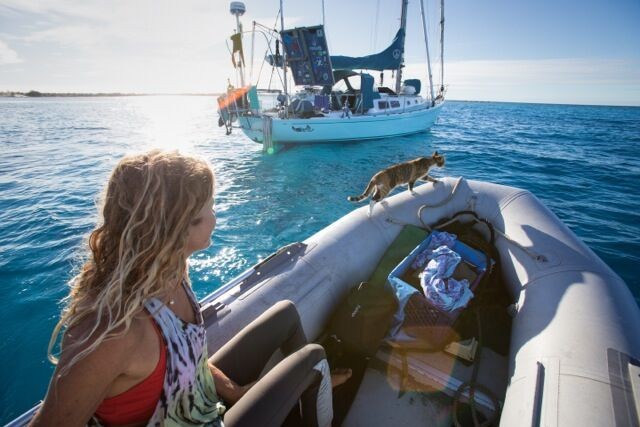
But eventually, Amelia did come back. She hasn't left Clark's side since. She accompanies Clark to dinners on other boats, restaurants, pool halls and other places on land. She's also learned to travel on dinghies, cars, motorbikes and canoes.

"She keeps her cool through it all, so long as I'm reassuring and not far away," Clark tells The Dodo. "We've grown to share a beautiful trust in each other, and I know she feels safe with me even when she's out of her comfort zone. Building trust with an animal is one of the most rewarding opportunities to come into my life. The more liberty and respect I give her, the more she surprises me with her intelligence, individuality and desire to show me love."

Want to know more about Amelia the Tropicat? Check out this video:

You can also follow Liz Clark's adventures by following her blog and instagram account.
read more "Amelia the Tropicat "