Fun Animals Wiki,Videos,Picture,Stories
Showing posts with label Owl. Show all posts

Friday, February 23, 2018

These 7 Animals Would Absolutely Crush It at the Winter Olympics


The Olympics are designed to test elite athleticism, at least in the human realm. But what about the animal world? How would Arctic foxes fare in the Winter Olympics, or snowy owls for that matter?

These Arctic animals, and others, are fast flyers and runners, and they hunt prey with deadly accuracy.

Granted, these animals might not follow all the rules (penguins, after all, slide on their bellies, not sleds), but here are seven animals that would excel at the Winter Olympics and likely win a few gold medals while they're at it. [Beasts in Battle: 15 Amazing Animal Recruits in War]

1. Artic fox

The Arctic fox (Vulpes lagopus) would crush any cross-country-skiing competition. This small carnivore has thick fur that helps it survive in weather as cold as minus 50 degrees Fahrenheit (minus 45 degrees Celsius), according to the San Diego Zoo. Its lush tail can curl like a scarf around its body, keeping it warm, the San Diego Zoo added.

These foxes don't use skis to get around, but the fur on their feet gives them traction as they run, acating like a natural snowshoe. In fact, their species name, lagopus, means "hare-footed" in Greek, according to the San Diego Zoo.

2. Flattie spider

Whenever the web-less spider notices a potential meal, it keeps one leg anchored and spins around until it catches its target.The flattie spider (Selenopidae) can spin much faster than an Olympic figure skater. To be exact, this arachnid can spin around in one-eighth of a second, which is nearly three times faster than the blink of an eye, according to a study published Feb. 12 in the Journal of Experimental Biology.

Just like figure skaters draw their arms closer to their body to spin faster, flattie spiders pull their remaining legs toward themselves, which allows them to spin up to 40 percent faster and nail a perfect landing, with their mouth positioned next to the prey, according to the researchers who conducted the study. You can watch a video of it below.

During ski jumping, Winter Olympic athletes zoom off a ski jump and lean forward, with their skis in a V-shape as they zoom through the air and land at record distances for their respective countries.

We nominate the Arctic hare (Lepus arcticus) for this event, given that the hare can go airborne, too, as it bounds through the snow at speeds as high as 40 mph (64 km/h), according to National Geographic.

4. Seal

There are few things more intense than speeding down a steep racetrack on a skeleton sled. But a seal probably wouldn't mind. These fin-footed pinnipeds slide all the time on their fat bellies as they enter and exit the water, according to Seals-World.

5. Penguins
Penguins would make world-class bobsledders. That's because they're epic tobogganers.

Bobsledding became a sport in the late 19th century, when Swiss athletes attached two skeleton sleds together and added a steering mechanism to make a toboggan, according to Olympics.org.

Likewise, penguins plop down on their stomachs and then slide around on the ice and snow, using their feet and wings to guide and push them along. Some penguins glide on their bellies for miles at a time, according to the National Oceanic and Atmospheric Administration.

6. Crow

Curling is a complex sport rife with rules and tools — including brooms, stones and sliders. It's no leap of the imagination that crows would do exceptionally well … largely because they're so good at making and using tools.

New Caledonian crows, for instance, can fashion hooks from sticks to grab larvae and insects from crevices in logs or branches, Live Science previously reported. The Hawaiian crow is also a medal winner, finding the best sticks to reach food in awkward spots.

We're not sure if these crows would sweep the ice with brooms, but they would certainly sweep the competition if the goal were to use sticks to nab a snack.

7. Snowy owl

The biathlon has roots in Scandinavia, where people hunted on skis with rifles hung over their shoulders, according to Olympics.org.

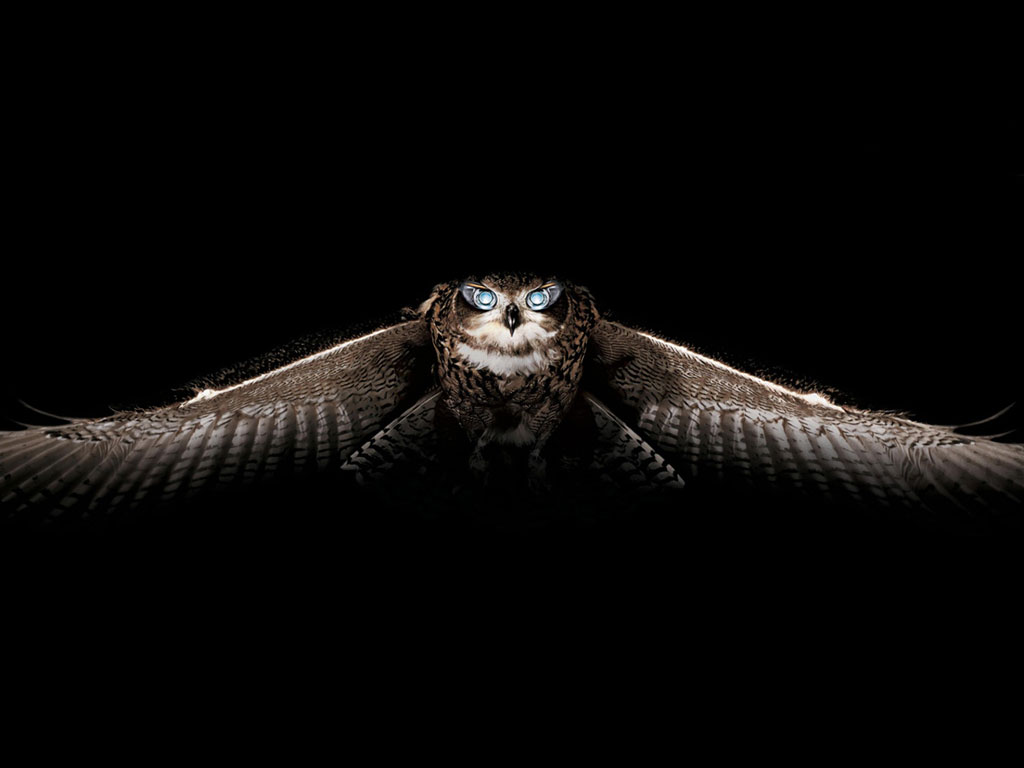
Snowy owls (Bubo scandiacus) don't ski and shoot, but they do fly with speed and have excellent hearing and vision that help them hunt with lethal accuracy. These owls would stand atop the podium at any animal Olympics, though they'd likely prefer a tasty lemming to a gold medal.
read more "These 7 Animals Would Absolutely Crush It at the Winter Olympics"

Tuesday, August 2, 2016

Cute Animal Feature - Barn Owls


Barn owls, Tyto alba, is the most common and widely distributed owl species, as well as one of the most widespread bird specie, on earth. These birds are often called the common barn owl, which helps distinguish it from the other species in its family (Tytonidae). The barn owl can be found in almost every part of the world, except from the desert and polar regions, areas north of the Himalayas, majority of Indonesia, and certain Pacific islands.
It’s seen in all continents, except Antarctica. The barn owl’s range covers all of Europe (except Malta and Fennoscandia), most of the area of Africa and parts of the Sahara, the indian subcontinent, Southeast Asia, all of Australia, many of the Pacific islands, and North, Central, and South America. Barn owls are considered to be sedentary, which means that they prefer to stay in one area where they can find food and mate. They would even stay there even when there are better foraging areas nearby. However, their movements seem to vary depending on where they are located. Barn owls in the United States and Europe travel the most distance, averaging at 998 mi. Those in other areas of the world would travel an average distances of 400 mi.

This medium sized bird has pale-colored feathers with long wings and a short, square tail. Sizes vary from subspecies with an average measurement of around 33 to 39 cm (13 to 15 in) in overall length, and a wingspan of 80 to 95 cm (31 to 37 in). They also vary in weight, depending on their location. Some weigh at 260 g (9.2 oz) while other can reach a whooping 555 g (19.6 oz). Researchers have generalised that those who live in smaller islands are smaller and lighter, mainly because of their diet, which is mainly composed of insects.  These birds also need to be lighter to help them stay agile while hunting through the forests.

Barn owls have a very specifically shaped tail what helps distinguish them from other owls while on flight. Other features that make them stand out are their undulating flight pattern and feather-covered legs that they dangle while flying. Their pale, heart-shaped face and black eyes give these birds a distinguishing look, which looks like a flat mask that has oversized, oblique black eye slits. Above their beak, these birds have a ridge of feathers that resembles a nose.

These birds come in a range of color between pale brown and shades of grey. Some of the subspecies that have a more richer brown color have small black and white speckles all over their body, but these are not as visible on their main wing feathers. Their heart-shaped face is commonly a bright white, however some have facial feathers in brown. The lower parts of their body, which includes the lower leg feathers, varies from white to reddish and may have little blacking-brown speckles.

Their spots are actually an indicator of how healthy they are. In the case of the female continental European populations of barn owls, female specimen who had more spotting were recorded to be healthier compared to those who had little to no spots. However, this does not apply to males since spotting varies across subspecies. Also, males tend to show fewer spots on the breast and underside and are paler in color compared to females. Their beaks come in a
variety of pale horn to dark buff, and their iris is blackish brown. Like their beaks, talons vary in color, ranging from dark pink to a pinkish-grey to black. 

Contrary to what most people believe, barn owls actually don’t hoot. Hooting is typically done by tawny owls and members of the Strix genus. Barn owls actually make a shrieking/screaming sound which can be ear shattering when you get too close. This long, drawn-out shriek is really more eerie than cute, but their looks compensate for their call. They can make a hissing sound, similar to that of a snake, to scare intruders away. It also makes a range of rasping sounds or clicking snaps when defending itself. During mating, males give out a shrill twitter, which signals the females that they are ready to mate.

Although barn owls are very common, there has been a great decline in their population since the end of the Second World War. this is mainly due to the conversion of their  natural habitats into farmlands, towns, suburbs, and other areas used for human dwelling.
read more "Cute Animal Feature - Barn Owls"

Friday, November 13, 2015

The funniest animal photos of 2015 revealed


The best entries in the inaugural Comedy Wildlife Photography Awards have been named
hamster
This year's winning photograph, by Julian Rad Photo: Julian Rad
The above image of a wild hamster, cheeks filled with food, expression of quiet determination writ large across its furry brow, has been named the funniest animal photo of the year at the inaugural Comedy Wildlife Photography Awards.  


The hamster, or rather Julian Rad, the Austrian who captured it, beat hundreds of rivals to the top prize, earning himself a one-week holiday in Tanzania and a Nikon D750 camera in the process.

stag
This stag took second place  Photo: William Richardson
Second and third place went to a pair of Britons: William Richardson, for his photo of an impeccably camouflaged stag in Richmond Park, and Oliver Dreike, for an image of a gorilla that swears it was just scratching its nose. Honest.

gorilla
This gorilla swiped third  Photo: Oliver Dreike


Given that the award is in its first year, the number of entries - more than 1,500 - was impressive, as has been its global reach, with those entries coming from as far afield as Iraq, Macedonia, Uruguay, Belize and Sri Lanka.

hippo
This distressed hippo was one of 10 "highly commended" entries  Photo: Marc Mol
Images of animals looking foolish clearly hold a special place in everyone’s heart - regardless of nationality.

So too was this graceful cheetah  Photo: Mohammed Alnaser
 Among the judges were Hugh Dennis, the actor and comedian best known for his role in BBC’s Outnumbered, and Kate Humble, the broadcaster and regular contributer to Telegraph Travel, as well as several respected wildlife photographers, such as Will Burrard Lucas and Tom Sullam.
squirrel
This ninja squirrel  Photo: Julian Rad
  “It was a pleasure to judge the inaugural Comedy Wildlife Awards,” said Hugh Dennis.

seal
This amused seal  Photo: Julie Hunt
He added: “The number and quality of the entries was fantastic. The finalists should be very proud of themselves, as should the animals they photographed, simply for looking so funny. Sadly there is no way of telling them.”

flapping bird
This flapping bird  Photo: Charlie Davidson

In addition to being extremely entertaining, the awards aim to raise awareness of the work of The Born Free Foundation, the conservation and animal rights charity.

owl
Photo: Megan Lorenz
And these clumsy owls
read more "The funniest animal photos of 2015 revealed"

Sunday, January 12, 2014

Snowy Owl Invasion Puzzles Scientists, Dazzles Enthusiasts

Snowy owls have been spotted in the Northeast U.S., all the way down to South Carolina since early December.
Snowy Owls
 Scientists aren't sure why the owls, who spent much of their lives around the Arctic Circle, have arrived in such large numbers.

Source: Here
read more "Snowy Owl Invasion Puzzles Scientists, Dazzles Enthusiasts"

Saturday, December 14, 2013

Grab Your Binoculars! Audubon's Christmas Bird Count Begins This Weekend

This winter, tens of thousands of birdwatchers across North America will bundle up and brave the elements, all in the name of science.
Snowy Owl
The National Audubon Society's 114th annual Christmas Bird Count begins Saturday (Dec. 14). Volunteer citizen scientists in all 50 U.S. states, all Canadian provinces, and parts of Mexico, Latin America, the Caribbean and the Pacific Islands are set to take part in the yearly tradition, armed with bird guides, binoculars and checklists.

Source: Here
read more "Grab Your Binoculars! Audubon's Christmas Bird Count Begins This Weekend"

Thursday, October 18, 2012

Owls

Owls, with their characteristically large eyes and penchant for being lone birds, are among the most easily identifiable birds in the world, often found as the “O subject” of countless alphabet flash cards for children.

Pivotal in the overall plot of the 2006 released movie, Hoot, the movie delved into how threatened certain owl species are, given how they are losing a lot of their natural habitats to urban human-population expansion.

As a species, owls consist of about 200 types of predatory birds, generally classified in two family types, the typical owl and the barn owl.
Owls
Generally, owls physically have larger sized eyes, smaller-sized beaks and wider-sized faces, with their nocturnal natures considered to be a basic attribute among owls, though not all owl species are only active at night.

Found in different parts of the world, different private individuals have kept owls as pets, though their keeping is not without its usual fair of regulations, permits and certificates.

Enclosures are almost always necessary in keeping owls as pets, given the fact that though certain pet owl owners have successfully domesticated them, the owl remains to be a wild bird – birds of prey, in fact.

In the wild, owls are expert hunters of insects, small mammals and even other birds. Some owl species are also quite skilled in catching fish, but rodents like field mice remain to be the owl’s generally preferred prey.

As nocturnal birds, the owl is built for the dark, with their capacity to adjust the focus of their eyes, leading to their keen eyesight. Speed is also one owl attribute that comes to their advantage, allowing them to quickly swipe their prey in a matter of milliseconds.

With their unique physique and their “grumpy old man look”, owls are certainly popular as birds, with their hoots considered to be another owl trademark that comes with the species.
Owl

Owl

Owl

Owls

 Owls Video
 
read more "Owls"

Tuesday, August 7, 2012

Monday, July 30, 2012

Owls


In the movie Legend of the Guardians: The Owls of Ga'Hoole, brother owls are kidnapped and taken by an evil owl king who wants to create an army of owls. One of the brothers escapes this fate and searches for the legendary Guardians, owls whose stories are told in myth, to ask their help in stopping the evil owl king. The brothers are separated, with each choosing their respective sides in the ensuing battle.
owl
The animated film perhaps stands out for featuring hundreds of different species of owls, wonderful creatures best known for hunting at night. These nocturnal birds are known for their large, expressive eyes that shine in the dark. The large eyes of owls serve a utilitarian purpose, helping them see in the dark, especially when hunting at night.

Owls are carnivorous, living mainly off small birds, lizards, bugs and smaller mammals like mice. They have very good hearing and can turn their heads 270 degrees around.

Owls come in different shapes and sizes, with some just a few inches tall with others having wingspans that reach up to 10 feet. These birds of prey also come in different colors, depending on the environment and the species of the owl. Another characteristic that owls are known to have is their familiar sound or call. They make a “hoot” sound when they are excited or threatened. It’s also a form of communication with other owls.

Interestingly enough, owls have always been shrouded in mystery, perhaps due to their nocturnal behavior. In the past, these birds were linked to the supernatural and the occult, a sad label since they are actually harmless. In fact, if a person gets too close to them, they usually just fly off to another tree and stay as far away as possible. They are very solitary creatures, which means that they prefer to be alone. You can find owls everywhere around the world, from tropical islands to cold and snowy countries.
Barn owl

Barred owls

Great grey owl

owls

cute Owls

Great horned owl
 Owl Video
 
read more "Owls"