Fun Animals Wiki,Videos,Picture,Stories
Showing posts with label dolphins. Show all posts

Sunday, January 28, 2018

See the World's Newest Marine Park in the Pacific Ocean


For the health of the ocean and all who depend on it, this is big news: In November, Mexico became the latest nation to create a large, fully protected marine reserve.
manta ray
The manta ray, shown here, is one of at least 37 species of sharks and rays that have been documented in the archipelago. 
The Revillagigedo Archipelago National Park, the country's largest marine protected area, is larger than the state of New York and protects 57,176 square miles (148,087 square kilometers) from fishing and other extractive activities.

The Revillagigedo Islands and their system of seamounts are a critical waypoint for large migratory species traversing the Pacific Ocean, including whales, dolphins, sea turtles, tunas, billfish and 37 types of shark and ray. The islands are also home to more than 360 species of fish, 26 of which are found nowhere else on the planet.

Take a dive beneath the surface with us and check out some of the natural treasures that are now safeguarded in Revillagigedo.
dolphins
The Revillagigedo Archipelago is a critical waypoint for migratory species such as dolphins, whales, sharks, tunas, and sea turtles.
Humpback whales
Humpback whales, which seek warmer waters for their calving grounds, make their winter home in Revillagigedo.
tuna
At least 366 species of fish, including 26 found nowhere else on the planet, call the Revillagigedo Archipelago home.
sharks
In May and June, large schools of silky, Galapagos, and silver tip sharks frequent Revillagigedo's warm waters.  
Matt Rand directs the Pew Bertarelli Ocean Legacy Project. He works with citizens, governments and scientists around the world to protect and conserve some of the Earth's most important and unspoiled marine environments.
read more "See the World's Newest Marine Park in the Pacific Ocean "

Thursday, April 27, 2017

5 animals that are better parents than humans


Humans have protected animals, killed them, caged them, freed them, loved them and hated them...and now parents can learn a thing or two from them. Here are five ways animals are better parents than some humans:

1. Barn Owls

Barn Owls
Humans can learn faithfulness from barn owls because these owls mate for life. If one dies their mate often dies soon after, unless there are little owlets to take care of. The male always provides food and protection for his mate untill his owlets are born. When the eggs hatch, the male makes it possible for his mate to focus her energy on teaching the little owls how to survive. Male and female barn owls will hunt for their owelts together once their little babies are able to be left in the nest.

2. Elephants


Elephants
These majestic creatures don't often have babies, but when they do the calf is well protected. Protection is important for these mothers, and the entire herd. Occasionally, another herd will steal a calf but when this happens the original herd will all attack the calf theives and get the child back to its mother. This protection is important lesson for human parents; Let your community help protect you and your child and do the same for others.

3. Seals

 Seals
Seals are adorable to watch and the way they teach their children to survive is amazing. Not only do they begin teaching survival techniques while their pups are young, seal parents protect their pups fiercely. It is a difficult balance to keep their pups safe while teaching them to survive, but somehow they manage. From seals, human parents can learn how to keep their kids safe, while still letting them experience life.

4. Orangutans

Orangutans
Orangutan mommies spend up to nine years in seclusion to teach their children how to feed and protect themselves and ensure mom and baby have a strong bond. When these orange cuties can't handle a danger themselves, they know mom will be there to protect them. That level of trust in a crisis is something all human parents should strive to have with their children.

5. Dolphins


Dolphins
I cannot talk about animal parents without mentioning playful dolphins. Dolphins have strong parental instincts - instincts that provide them extraordinary patience. Dolphin mothers will keep watch over her newborn calf for over a month, non-stop, without any sleep. They also patiently teach their calf how to swim, breath and survive the the ocean. But on top of all, dolphins also teach their young to be playful.

Humans do a great job raising our children (most of the time) but we could all use a little help learning faithfulness, protection, parent-child bonding, patience and playfulness...good thing we can learn from animals!

read more " 5 animals that are better parents than humans"

Saturday, June 27, 2015

7 of the Smarts Animals On Earth


Humans may have the power of consciousness, but we are not the lonely smart beings on the planet. Some animals are actually quite smart, even when you least expect them to be. Scientist noticed that animals are also capable of solving problems, giving them a lot of edge in the wild.

Here are some of the smartest animals.

Bees
Bees
According to researchers, bees have a sort of kaleidoscopic memory d the flowers they see in the environment, which helps them figure out which flowers are the best to feed on. They also self-medicate inside their hives. They’re also great engineers, creating complex hives with honeycomb structures that we even use as an inspiration for a number of buildings.

Octopus
Octopus
They might have squishy tentacles, but don’t let these fool you. Octopuses are very intelligent animals. They spread cultural information, communicate through colors, flashing, and patters, and even mimic others. Octopuses also have an advanced navigational abilities and spatial learning capacity. Their tentacles act like fingers that can manipulate objects.

Elephants
Elephants
The largest mammal on land also has highly evolved social skills, much like us humans. Elephants are able to shoe loving and compassionate behavior to their family members. They also have amazing memory skills and can remember enemies and friends for 50 years or more. They even have their own form of communication.

Ants
Ants
These tiny creatures are absolutely amazing team players. Along with their social skills, the also show a great amount of individual intelligence. They’re great navigators and can remember lengthy routes. Studies on ants show that they know how to care and become altruistic amongst members of their colony.

Dolphins
Dolphins
Dolphins have long interest researchers.  They have a certain communication system, identify themselves in the mirror, and are creative in finding new ways to capture fish. Like humans, they are also very social and work together as a team. Wild dolphins are also known to help herd fish into fishermen nets, expecting their share afterwards.

Crows
Crows
Crows are one of the smartest birds on the planet. They are able to use analogies and counting to solve problems. They can take on higher-order, relational-matching task spontaneously. Crows also use tools to finish tasks. Studies have also shown that crows are able to comprehend the Archimedes principle, which successfully abled them to access food by manipulating water levels.

Anole
Anole
Lizards don’t really get a lot of recognition for cognitive abilities, but the Anole has impressed researchers with their intelligence.  They demonstrate that they know how to count, and they have advance problem solving and learning skills. They also have extraordinary memories.
read more "7 of the Smarts Animals On Earth "

Wednesday, December 3, 2014

4 Animal Species That Seemslike are Take over Earth


Humans reign supreme over other animals, there are some species that are so numerous that it looks like they’re about to take over. Although this sounds like a plot for a monster movie, these animals are actually beating us in terms of population.

Argentine Ants


Ants are known to build massive colonies, but imagine a colony that actually spans from four different continents. The Argentine ants are probably Argentina’s most common export. Experts say that these ants have spread a colony that spans through Asia, Australia, Europe and the Americas. Thankfully, these ants don’t do anything much that could harm humans, unlike those that spit out acid that burns your skin. Their legacy is named “global mega-colony” and is estimated to be made out of more than 22 million anthills which compose of no less than 10,00 members. That’s roughly around 200 billion ants.

Jellyfish


Although we’d all most like swim away when we see a jellyfish, it’s going to be really hard to do that if it’s a gigantic swarm of these creatures. In some areas in japan, people are experiencing jellyfish problems. What makes it even scarier is that these specific specimen are the giant jellyfishes, often times growing to around 440-pounds. So imagine swimming into the ocean and finding yourself in the middle of a giant swarm of giant jellyfishes.  The though it enough to give you nightmares. However, keep in mind that even though they do sting, these animals are actually not that aggressing towards people. So just keep away from beaches with jellyfish sightings.

Mountain Pine Beetles


Logging activities have seriously affected our forest in the past century. However, there is a certain beetle species that’s probably as harsh to tress as we humans are. Mountain pine beetles are native to parts of North America and have happily stayed in this area. However, when they started to swept across certain areas of Canada, they killed around half of the lodge pole pine trees there, wiping out forests of these.  The beetles started to move up to Canada because of climate change. Warmer winter meant that they could survive all year-round, which increased their food intake. Various attempts have been done to stop these bugs from eating all the pine trees in the area.

Dolphins


Dolphins are commonly portrayed as heroes in movies, but in the wild, dolphins can actually be pretty brutal. They’re one of the very few species, along with humans, that appear to kill others purely for their own enjoyment. Gangs made up of male members would kidnap female specimens and keep them captive for months. Dolphins attacking humans are also not uncommon. Naturally, these animals travel in groups. However, there have been a few “superpods” which contain tens of thousands of individuals spotted in certain areas of the open ocean. Researchers still don’t know why these dolphins are groping by the thousands.
read more "4 Animal Species That Seemslike are Take over Earth"

Monday, September 22, 2014

Tucuxi Dolphin

The tucuxi dolphins is a freshwater dolphins found in the rivers of amazon basin. This dolphins have a light colored to bluish grey on its back and its side.


read more "Tucuxi Dolphin"

Northern Right Whale Dolphin

Northern Right Whale Dolphin has a small, curved, narrow and pointed flippers, the body is mostly black while its underside is partly lighter in color. This dolphins usually travels in group of 5 - 200 and as they travel they like making low leaps together reaching as far as 7meters in one leap. This dolphins usually avoid boats


read more "Northern Right Whale Dolphin"

Thursday, February 20, 2014

Dolphins Affected by BP Oil Spill in Grave Health Situation

The year was 2010. The world saw one of history’s worst oil spills, wreaking havoc on all sorts of marine animals in the US gulf coast and to this day, causing problems in the region.

A study conducted over the years that followed the spill shows that dolphins affected by the BP oil spill are now plagued with a host of severe health problems. Close to half of the 32 dolphins observed from Louisiana's Barataria Bay in 2011 were discovered to be in grave condition, this according to the study spearheaded by National Oceanic and Atmospheric Administration, and recently published in the journal, Environmental Science and Technology.

Around 17 percent of the observed dolphin population were categorized as being in grave condition and likely to expire from poor health. A team scientists and researchers from the government, academic and private sector, conducted the study a year after the oil spill as part of the Natural Resource Damage Assessment (NRDA).

According to government estimates, the disastrous Deepwater Horizon spill churned out at least 4 million barrels of oil into the Barataria Bay in the Gulf of Mexico.

Among the health problems found in the Louisiana dolphins include extreme lung disease and low levels of adrenal stress-response hormones. One-fourth of the dolphins were also malnourished. Overall, researchers report most of the diseases observed in the Barataria Bay dolphins are rare but have been observed in dolphins exposed to oil and toxicity.


More about this story on Discovery News.
read more "Dolphins Affected by BP Oil Spill in Grave Health Situation"

Thursday, January 2, 2014

High-seeking dolphins take puffer, pass it round

Dolphins are thought of as one of the most intelligent species in the animal kingdom - and experts believe they have put their ingenuity to use in the pursuit of getting "high".
Dolphins
In extraordinary scenes filmed for a new documentary, young dolphins were seen carefully manipulating a certain kind of puffer fish which, if provoked, releases a nerve toxin.

Source: Here
read more "High-seeking dolphins take puffer, pass it round"

Wednesday, October 30, 2013

SECRET DOLPHIN SPECIES reveals itself to stunned boffins

A previously unknown species of humpback dolphin has been blithely swimming the waters off northern Australia, according to boffins.

new_humpback_dolphin_species

A research team made up of scientists from the Wildlife Conservation Society (WCS), the American Museum of Natural History and other groups set out to figure out the number of distinct types of humpback dolphins using physical features and genetic data.

Source: Here
read more "SECRET DOLPHIN SPECIES reveals itself to stunned boffins"

Saturday, October 19, 2013

Dolphin calf born at Brookfield Zoo

Dolphin shows at Brookfield Zoo have been temporarily canceled to allow a male calf born Wednesday to bond with his mother.
Dolphin
The 40-pound calf was born to Tapeko and is about 3-1/2 feet long, according to a release from the zoo. Staff are “cautiously optimistic that the calf is healthy and doing well,” zoo spokesman Jamie Hansen said in an email.

Source: Here
read more "Dolphin calf born at Brookfield Zoo"

Thursday, September 5, 2013

Stunning hidden similarity found between bats, dolphins

t’s a small world after all—at least from an evolutionary standpoint. A new study from Queen Mary University of London and published in Nature has found that bats and dolphins, though virtually unrelated species, independently underwent the same evolutionary process to develop the highly specialized biological system echolocation.
dolphins
“We had expected to find identical changes in maybe a dozen or so genes but to see [changes in] nearly 200 is incredible,” said lead author Joe Parker in a statement. “We know natural selection is a potent driver of gene sequence evolution, but identifying so many examples where it produces nearly identical results in the genetic sequences of totally unrelated animals is astonishing.”

Source: Here
read more "Stunning hidden similarity found between bats, dolphins"

Tuesday, August 13, 2013

Dolphins Memorize Better than Elephants

A new discovery has come up with findings that Dolphins have a better memory than elephants. Dolphins have undoubtedly become the most popular species for online readers. Besides, biologists and scientists see human of the sea as the most exciting creatures to study.
Dolphins

The study has revealed that Dolphins have a great memory. It has been provided that Dolphins can remember distinctive whistle sounds from fellow Dolphins over two decades. The memory keeping period could be higher, as a matter of fact 20 years is as far as scientists have actually been able to study so far.

Source: Here
read more "Dolphins Memorize Better than Elephants"

Saturday, August 10, 2013

Dolphins can recognize whistles from old tank mates from over 20 years ago, study finds

Dolphins have long impressed people with their sharp minds and humanlike traits, such as calling each other by name, goofing off and even understanding numbers. Now a scientist has found that the mammals can recognize an old friend’s whistle, even after they have been apart for 20 years — the longest social memory ever recorded for a non-human.
Dolphins
In a study released Tuesday, dolphins largely ignored calls from unfamiliar dolphins but responded when an old tank mate’s signature whistle was played back to them. It didn’t matter how much time had passed since the two had last seen each other or whether they had been tank mates for only a few months: The dolphins appeared to remember a familiar whistle.

Source: Here
read more "Dolphins can recognize whistles from old tank mates from over 20 years ago, study finds"

Tuesday, July 23, 2013

Researchers Find More Evidence That Dolphins Use Names

For decades, scientists have been fascinated by dolphins’ so-called signature whistles: distinctive vocal patterns learned early and used throughout life. The purpose of these whistles is a matter of debate, but new research shows that dolphins respond selectively to recorded versions of their personal signatures, much as a person might react to someone calling their name.
Dolphins
Combined with earlier findings, the results “present the first case of naming in mammals, providing a clear parallel between dolphin and human communication,” said biologist Stephanie King of Scotland’s University of St. Andrews, an author of the new study.

Source: Here
read more "Researchers Find More Evidence That Dolphins Use Names"

Sunday, May 27, 2012

“Talking” to Dolphins


Based on a feature from Discovery News, a new “translator” on-the-works has been developed in Japan, a device primed to facilitate the communication between humans and dolphins.

The “translator” essentially reproduces the sounds made by dolphins, dealing with various pitches and frequencies, including those which dolphins utilize in communicating with each other.
Dolphins
It allows for further research and understanding over the “language” of dolphins, and as a work in progress, its success proves to be promising as a means for human beings to understand what dolphins are “talking” about.

Currently, researchers and scientists are eager in giving the new device a go, with plans on conducting a number of tests, touching up on the vocalizations and sounds aspect of dolphin “talk”, in relation to responses.

It is hoped that gathered research data would lead to further understanding over the dolphin language, kind of like a Rosetta Stone equivalent, which would then lead to the development of a language-translation system between human lingo and dolphin talk.

As amazing as the device is, many have raised a question pertaining to the intent of its creation. Why would humans want to talk to dolphins, anyhow?

Many are not aware of how dolphins have been helpful in undersea tasks done by dolphins, given their versatility and trainability.

They’ve been helpful in mapping undersea trenches, as well as have helped in the rigging of sonar sensors for deep sea explorations. Developing a system that allows for better interaction with them will surely make things easier for concerned parties.

That plus it just may be that dolphins have something interesting to tell human beings.

“So long, and thanks for all the fish,” maybe.
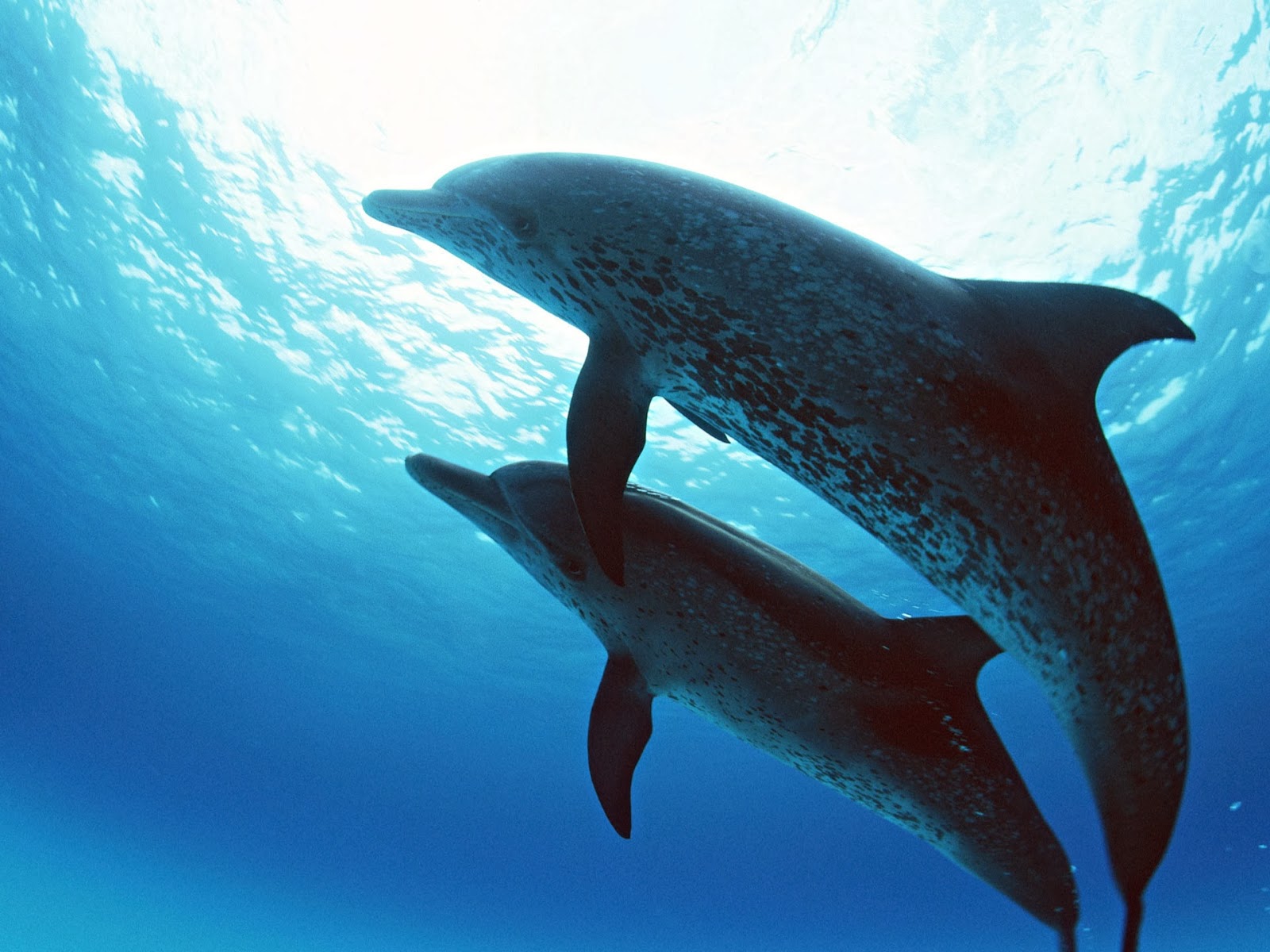
Dolphins Pictures
Dolphins
Dolphins image
Dolphins picture
Dolphins images
Dolphins pictures
Dolphins picture
Dolphins
Dolphins Wallpapers
Dolphins Wallpapers
Dolphins Wallpaper
Dolphins Wallpapers
Dolphins Wallpaper
Dolphins Wallpapers
Dolphins Wallpaper
Dolphins Wallpapers
Dolphins Wallpaper
Dolphins Wallpaper
Dolphins Wallpaper
Dolphins Wallpaper
Dolphins Wallpaper
Dolphins Wallpaper
Dolphins Video

read more "“Talking” to Dolphins"